“Folding” means three different things
Before you compare prices, work out which kind of folding you are actually buying. The word covers three mechanisms with very different consequences:
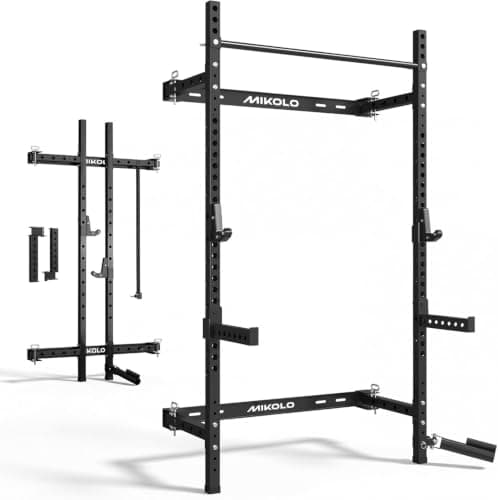
- Wall-mounted folding. The uprights hinge at the wall and swing in against it. You get the entire floor back and lose a few inches of wall depth permanently. It is the most complete answer and the least reversible one — the bolts go into studs.
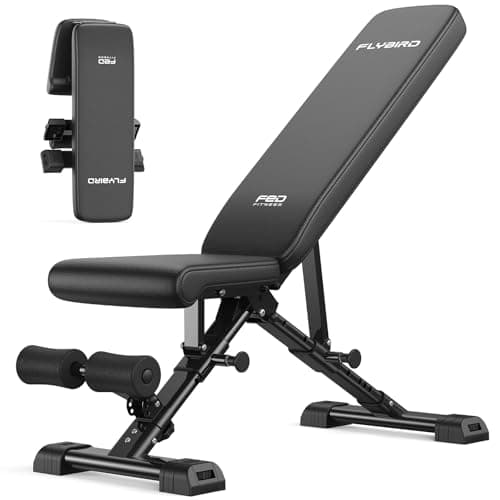
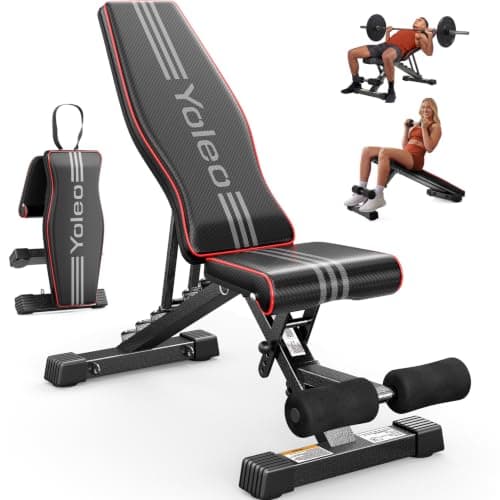
- Fold-flat (benches). The back pad and seat collapse so the whole thing lies flat or leans upright against a wall. No tools, no installation, and it moves room to room. This is the renter’s version.
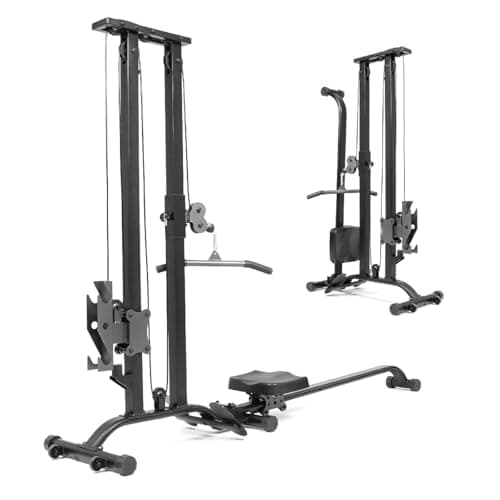
- Fold-and-roll (machines). The frame hinges and the unit rolls away on casters, so the floor is clear but something the size of a suitcase now lives in a closet. Honest trade: you keep the exercise, you lose the closet.
The question to answer before you buy: can you use studs?
This single question splits the page in half. A folding wall rack is bolted into framing — that is what makes a rack rated to 1,000 lb safe when it is hanging off a wall. If you own the wall and can locate studs (or you are mounting to a garage’s exposed framing), the Mikolo is the best-value square footage in home gym equipment: a real rack for the depth of a coat rack.
If you rent, or the only candidate wall is masonry, brick veneer or something you are not drilling into, the wall rack is off the table and you should not talk yourself into it. Build around a fold-flat bench and either dumbbells or a freestanding stand instead — which is exactly what the apartment home gym build does, and what wall-mounted vs. freestanding racks works through in detail.
What folding costs you
Folding gear is not free of compromise, and three of them matter.
Hinges are moving parts. Every fold point is a joint that can develop play. On a wall rack that means checking the mounting hardware periodically — the same maintenance habit we recommend in maintaining home gym equipment. On a bench it means the pad adjustment and the fold latch both want a look every few weeks.
Deployment friction decides whether you train. A bench that unfolds in five seconds gets used. A machine that needs unrolling, unfolding and plate-loading takes a few minutes, and on a tired evening those minutes are real. Rank your own picks partly on how lazy you are willing to be.
A lighter frame flexes more. The TOUSAINS is the lightest machine we rank at 51 lb, which is precisely why it folds and rolls — and also why it is the one most likely to feel flexy under a heavy pull. Its 400 lb figure is a whole-machine rating, as the listing itself states, not a per-pulley one. If you want a stiffer cable setup and do not need it to disappear, the fixed options are in best home gym cable machines.
A folding gym that still trains everything
The complete small-room setup, in buying order: a fold-flat bench plus adjustable dumbbells covers pressing, rows, curls and lunges in a footprint you can clear in a minute. Add a folding wall rack with a barbell and plates when you want to squat and press heavy on your own — safety arms included, because nobody is spotting you. A folding cable machine or a doorway pull-up bar finishes the pulling side.
That order is deliberate and it is the same one we cost out in the $1,000 build: the bench and dumbbells first because they train the most for the least money and space, the rack second because it is the big-ticket safety purchase, and the cable last because it is a second-phase upgrade rather than a starter item. If your room is genuinely tiny, read how much space you need for a home gym and the spare-room setup before you buy a single thing — measuring first is free, and it is the step most people skip.
One last honest note. Folding gear is bought for the room, not for the lifting, and the lifting still has to be safe. A folding rack with safety arms is safer than a freestanding stand without them; a bench that folds is not safer or less safe than one that does not. Keep the safety decision separate from the storage decision, and see home gym safety for the version of that argument with the details.