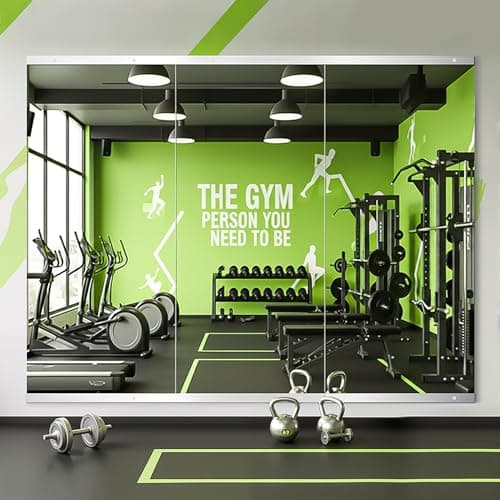
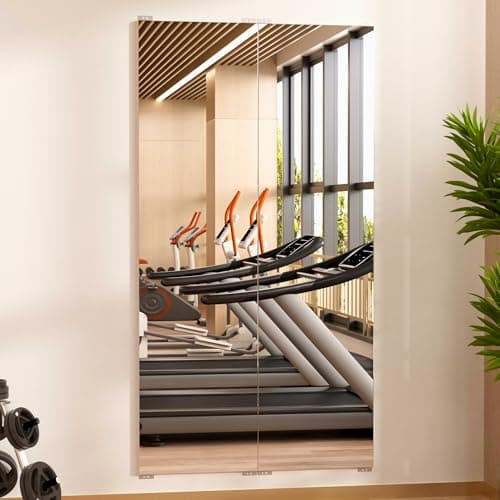
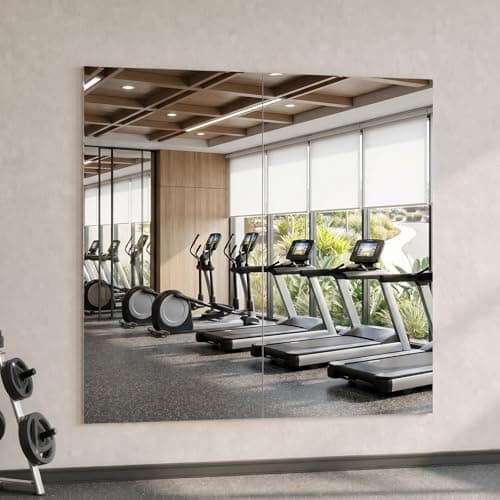
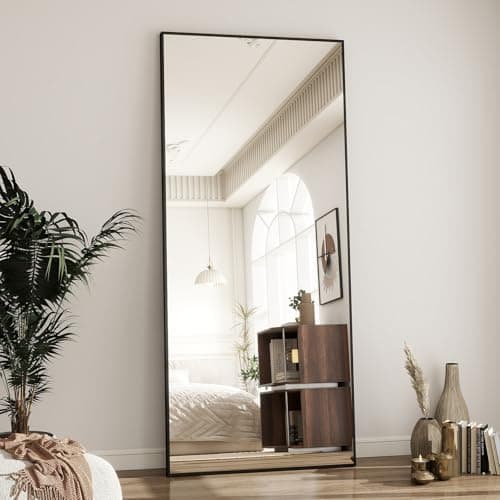
Start with the wall, not the mirror
Every mistake in this category comes from buying a mirror and then looking for somewhere to put it. Do it the other way around. Stand where you actually train - in front of the rack, at the end of the bench, in the middle of the floor space - and look at what is in front of you. Measure the clear, flat, unobstructed rectangle you are facing. That rectangle is your budget, and it decides everything else.
Three measurements settle the purchase. Width of clear wall tells you how many panels you can fit. Height from the floor to the first obstruction - a window sill, a shelf, a garage door track - tells you whether a 63-inch panel will physically go on. And what the wall is made of - drywall, bare stud, painted block, a steel garage door - decides whether you are screwing, sticking or magnetizing.
Glass or not glass: the decision that actually matters
This is the one specification on this page with a safety consequence, and most buying guides skip it entirely. A home gym mirror is a large flat panel mounted at exactly the height where a dropped dumbbell, a swung kettlebell or a stumbled-into barbell end would hit it.
Tempered glass - the Delma, FICTOR and pertetey picks here - is the cheaper and optically better option. Tempered means that if it does break, it fractures into blunt granules rather than long shards, which is a genuine safety improvement over plain mirror glass. The BEAUTYPEAK adds a film behind the glass specifically to hold fragments in place. None of that makes glass a good idea six inches from where you set down a 50 lb dumbbell.
Non-glass panels- the two brisafe picks - trade a little optical flatness for not being made of glass at all. They are dramatically lighter (brisafe publishes 2.8 lb per 63" x 20" panel against roughly 21 lb per Delma panel), which means one person can hang them, and they will not produce a floor full of glass if something clips them. The trade is cost: you pay a clear premium per square foot, and the reflection is very slightly less flat than plate glass. For form checks it is more than good enough.
The rule we would give a beginner: glass on the wall you face, non-glass on any wall within reach of a weight. If those are the same wall - common in a single-car garage or a spare bedroom - buy non-glass and stop thinking about it. Our home gym safety guide covers the same logic for racks, collars and training alone.
How much mirror do you actually need?
Less than a commercial gym has, and more than one bathroom mirror. The useful target is simple: you want to see your whole body at the bottom of your deepest lift. That means the bottom edge needs to be low enough to show your feet and knees in a squat, and the panel needs to be tall enough that your head is still in frame when you stand up.
- Height. A 48-inch panel mounted with its bottom edge around a foot off the floor covers a standing lifter from roughly shin to crown. The 56-, 63- and 65-inch panels here give you more margin and suit taller lifters or a lower mounting point.
- Width. Two 24-inch panels - about 4 feet - is the point where you stop stepping out of your own reflection during a lunge or a lateral raise. One narrow panel is fine for checking a squat and frustrating for everything else.
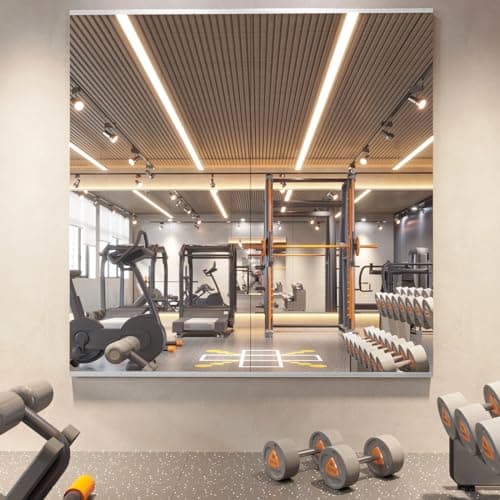
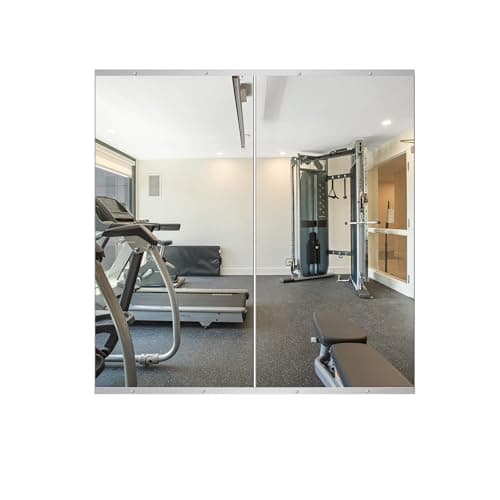
- Panel count beats panel size. Frameless panels are designed to butt together. Two or three smaller panels are cheaper to ship, far easier to carry upstairs and much easier to align than one oversized sheet - and the seam disappears from your attention within a week.
Mounting: the part that goes wrong
Every mirror here ships with a mounting route, and the routes are not equivalent. Read this before you order, because it is the difference between an afternoon and a weekend.
- Screws and anchors are the only route we would trust for glass. The Delma, FICTOR and pertetey sets all include frame bars or clips plus hardware. Find the studs, use the bars, and treat the adhesive strips in the box as alignment aids rather than as the thing holding 20 lb of glass over your head.
- Adhesive-only is offered by several makers and is genuinely fine for light non-glass panels on smooth, clean, sound paint. pertetey says it plainly in its own listing: screw-mount on textured, humid or garage walls. Believe them.
- Magneticis the renter’s route. The brisafe magnetic pair sticks directly to a steel garage door or metal shelving with no plates at all, or to drywall via included adhesive magnetic plates. It is the only pick here designed to come down again.
- Nothing at all. The BEAUTYPEAK stands or leans. On carpet or over a gym mat, give it a wide base and keep it out of the drop zone - a tall leaning mirror in a dumbbell area is a hazard, and it is the one real drawback of the no-install route.
One practical note that applies to all of them: mirrors need light to be useful, and most home gyms are underlit. If your reflection is a silhouette, the fix is a bulb, not a bigger mirror. Our home gym lighting guide covers what to put overhead.
Who each pick is for
- Delma 48" x 24" 2-Pack - you have a normal flat wall and want the most real glass for the least money. The default answer.
- FICTOR 50" x 25" 3-Pack - you have the wall and you want the room to feel like a studio rather than a corner with a mirror in it.
- brisafe 63" x 20" Shatterproof Nano- the mirror is going within arm’s reach of iron, or you are hanging it alone and 2.8 lb a panel is the feature you are buying.
- brisafe 48" x 24" Magnetic No-Drill - you rent, or the wall is a steel garage door, and a drill is not an option.
- BEAUTYPEAK 65" x 24" - there is no usable wall, or the gym is temporary. Zero install, full height, moves rooms.
- pertetey 56" x 16" 2-Pack - the only clear wall you have is two narrow strips either side of a door or a rack.
What we left off this page
No smart mirrors. A screen that streams classes is a subscription appliance, not a mirror, and it costs more than the entire $1,000 build this site is organized around. If you want a trainer in the room, the honest cheap version is a phone and a free program.
No mirror tiles or peel-and-stick acrylic sheets. They are the cheapest thing in the category and the most frequently regretted: thin acrylic bows, the panels never quite line up, and a wavy reflection is worse than no reflection when the whole point is checking whether your hips are level.
No secondhand commercial gym mirrors, even though they are the genuine value play. A 6 ft x 4 ft sheet of plate glass from a gym refit is cheap, enormous, dangerous to transport and impossible for us to link or price. If you have a van, a helper and a glazier friend, go look on the local listings - that option is real, and this page cannot rank it.
And finally, no mirror as a first purchase. If you are building from nothing, the order that works is load, then a bench, then the floor, then the mirror - which is exactly how our what to buy first page sequences it. A mirror makes a gym better. It does not make a gym.