Skip to content

01

Best Home Gym Mats in 2026

Most people searching for gym mats do not want to floor a room - they want one mat, under one thing, before next week. Five mats ranked by the spot each one is for, with live prices and the published thickness of every single one.

By Stephen V., Home-gym enthusiastLast updated October 11, 2026How we pick
Affiliate disclosure: Barbell & Bench earns a commission when you buy through our links, at no extra cost to you. We only make money if you buy — never for recommending. How this works.

Buy the Mohawk Heavy-Duty Rubber Stall Mat. It is the right answer for the overwhelming majority of people typing “gym mats for home gym” into a search box: a single dense rubber mat, bought one at a time, that goes under a rack, a bench or a dumbbell station and does the three jobs you actually want - protects the floor, cuts the thud, and gives the equipment a flat, planted base. It is also the cheapest real gym flooring on this site per mat, which is why it is the mat we put in the $1,000 Build.

If the thing you are protecting the floor from is a dropped barbell, do not buy a stall mat - buy the Titan Fitness Rubber Lifting Tiles. At a published 1.6 inches they are the only mat here whose maker rates it for deadlift and Olympic-lift drops, and two 24-inch tiles under the ends of the bar is a drop zone without flooring the room. If you are on wood, laminate or tile and the real enemy is scuffs, sweat and bench feet rather than impact, the Marcy Equipment Mat covers a 78 by 36 inch station in one thin piece for less than a pair of lifting straps.

Carpet changes the answer again. On carpet, a thin mat sinks and the bench wobbles, so the pick is the ProsourceFit Extra Thick 1" Puzzle Mat - a full inch of EVA foam that spreads equipment load instead of pressing it into the pile. And if the job is bodyweight work, stretching, kids and a shared room rather than iron, the thinner ProsourceFit ½" tiles are lighter, cheaper and pull up in minutes.

One honest caveat before you spend anything. This page is for buying mats. It is not the page for flooring a whole gym. If you are covering a garage bay or a spare bedroom end to end, mats bought in ones and twos are the expensive way to do it and you want our home gym flooring roundup, which ranks the same registry plus a 40 sq ft rubber roll for exactly that job. Prices below come from our live price layer and were last verified October 21, 2026. We have not drop-tested any of these mats; every thickness, size and drop rating on this page is the manufacturer’s own published figure.

02

The picks, ranked

Five mats - ranked by the spot they are for

#ProductBest forScorePrice
1
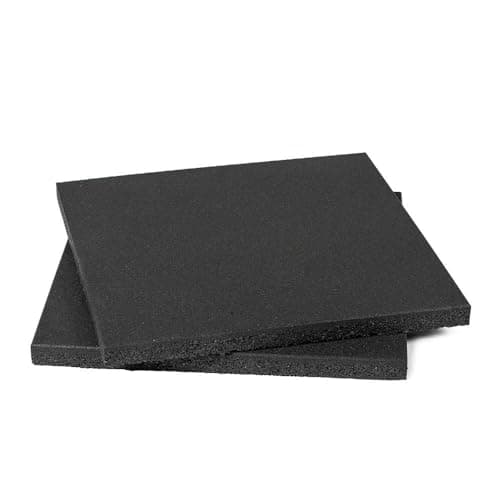
Mohawk Heavy-Duty Rubber Stall Mat

A thick rubber mat that protects the floor, kills noise, and gives a stable base — the cheapest real gym flooring.

Budget flooring8.3
$29.99 · View on Amazon

$34.99 14% off

#ad · Price as of October 21, 2026 · Affiliate disclosure

2
Titan Fitness Rubber Lifting Tiles (2-pack, 1.6")

Inch-and-a-half shock-absorbing rubber tiles built for the one job budget flooring fails at — taking a dropped, loaded barbell.

Best drop zone8.2
$102.99 · View on Amazon

#ad · Price as of October 21, 2026 · Affiliate disclosure

3
Marcy Equipment Mat & Floor Protector (Mat-366)

A 6.5-foot by 3-foot quarter-inch mat — the cheapest way to protect wood or tile under one station.

Cheapest wide mat7.2
$42.29 · View on Amazon

#ad · Price as of October 21, 2026 · Affiliate disclosure

4
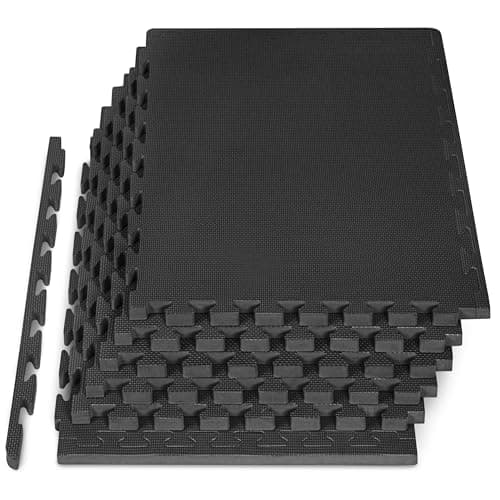
ProsourceFit Extra Thick 1" Puzzle Mat (24 sq ft)

The thickest foam here at a full inch — the most cushion you can get under bodyweight work, and the layer that saves a carpeted room.

Thickest foam7.9
$54.99 · View on Amazon

#ad · Price as of October 21, 2026 · Affiliate disclosure

5
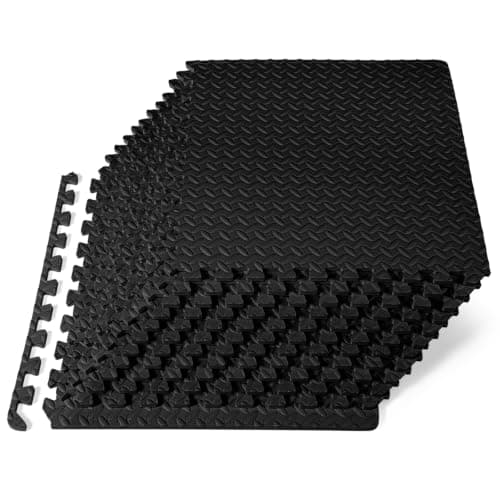
ProsourceFit ½" Puzzle Mat Tiles

Interlocking ½-inch EVA foam tiles — light, quiet, and renter-friendly flooring you can pull up in minutes.

Apartment flooring7.7
$49.99 · View on Amazon

#ad · Price as of October 21, 2026 · Affiliate disclosure

03

Every pick, reviewed

Mohawk Heavy-Duty Rubber Stall Mat
01
Budget flooring

Mohawk Heavy-Duty Rubber Stall Mat

Mohawk Home

8.3

A thick rubber mat that protects the floor, kills noise, and gives a stable base — the cheapest real gym flooring.

Material
Dense rubber
Use
Under rack / lifting platform
Bonus
Deadens noise

What we like

  • Protects floors and equipment
  • Cuts impact noise
  • Very low cost per mat

Trade-offs

  • Heavy to move
  • New-rubber smell fades over a week or two
$29.99 · View on Amazon

$34.99 14% off

#ad · Price as of October 21, 2026 · Affiliate disclosure

Titan Fitness Rubber Lifting Tiles (2-pack, 1.6")
02
Best drop zone

Titan Fitness Rubber Lifting Tiles (2-pack, 1.6")

Titan Fitness

8.2

Inch-and-a-half shock-absorbing rubber tiles built for the one job budget flooring fails at — taking a dropped, loaded barbell.

Thickness
1.6"
Tile size
24" x 24"
Pack
2 tiles (8 sq ft)

What we like

  • The only flooring here the maker rates for deadlift and Olympic-lift drops
  • Two 24-inch tiles make a drop pad under each end of the bar — no need to floor a room
  • Tiles lift and move if you rearrange the gym or take it with you

Trade-offs

  • By far the highest cost per square foot — this is a pad, not room coverage
  • 8 sq ft per pack, so a full platform means buying several
  • Thick enough to create a step up from the surrounding floor, which you have to plan around
$102.99 · View on Amazon

#ad · Price as of October 21, 2026 · Affiliate disclosure

Marcy Equipment Mat & Floor Protector (Mat-366)
03
Cheapest wide mat

Marcy Equipment Mat & Floor Protector (Mat-366)

Marcy

7.2

A 6.5-foot by 3-foot quarter-inch mat — the cheapest way to protect wood or tile under one station.

Size
78" x 36"
Thickness
0.25"
Use
Under a bench, bike or machine

What we like

  • Covers a bench-and-dumbbell station in one piece for very little money
  • Thin enough to sit flush against the floor, and it rolls up for storage
  • Keeps sweat, scuffs and equipment feet off wood, tile or laminate

Trade-offs

  • A quarter inch of protection only — almost no impact absorption
  • Nothing heavy should ever be dropped on it
  • Ships rolled, so the corners can hold a curl for the first few days
$42.29 · View on Amazon

#ad · Price as of October 21, 2026 · Affiliate disclosure

ProsourceFit Extra Thick 1" Puzzle Mat (24 sq ft)
04
Thickest foam

ProsourceFit Extra Thick 1" Puzzle Mat (24 sq ft)

ProsourceFit

7.9

The thickest foam here at a full inch — the most cushion you can get under bodyweight work, and the layer that saves a carpeted room.

Thickness
1"
Coverage
24 sq ft (6 tiles)
Material
Interlocking EVA foam

What we like

  • A full inch of EVA is genuinely comfortable for planks, floor work and stretching
  • Goes down with no tools, no adhesive and no holes — nothing a landlord can object to
  • Spreads equipment load over carpet far better than a thin mat

Trade-offs

  • Still foam — a dropped dumbbell or a loaded barbell will dent it
  • 24 sq ft per box, so a larger area needs two or three boxes
  • The extra height makes a bench or rack feel slightly less planted than it does on rubber
$54.99 · View on Amazon

#ad · Price as of October 21, 2026 · Affiliate disclosure

ProsourceFit ½" Puzzle Mat Tiles
05
Apartment flooring

ProsourceFit ½" Puzzle Mat Tiles

ProsourceFit

7.7

Interlocking ½-inch EVA foam tiles — light, quiet, and renter-friendly flooring you can pull up in minutes.

Thickness
½"
Type
Interlocking EVA tiles
Install
Tool-free, removable

What we like

  • Cushions floors and cuts noise
  • Snaps together and lifts up cleanly
  • Cheap and light

Trade-offs

  • Foam dents under heavy iron
  • Not for dropping loaded barbells
$49.99 · View on Amazon

#ad · Price as of October 21, 2026 · Affiliate disclosure

04

How to choose

Mats vs. flooring: the distinction that saves you money

These are two different purchases and conflating them is the most common way money gets wasted here. A mat is bought for a spot: the footprint of a rack, the area under a bench, the two patches where the ends of a barbell land. A floor is bought for a room, and it is priced and installed differently - rolls, full tile sets, wall-to-wall coverage.

The arithmetic matters. A single stall mat covers the footprint of most racks and most benches for the price of a takeout meal. Covering a 10 by 10 foot room in the same product means buying several, carrying several, and cutting at least one - at which point a rubber roll is cheaper, flatter and faster. So decide which purchase you are making before you add anything to a cart:

Which purchase are you actually making?

Buying mats (this page)Buying flooring
What it coversOne or two equipment footprintsA whole training area, wall to wall
Bought inOnes and twosRolls or multi-tile boxes
Typical spendThe price of one accessoryA line item in the build budget
Moves house?Yes - roll it up and goSometimes, with effort
ReadThis pageBest home gym flooring

The two numbers that decide which mat you need

Every mat on this page is described by its maker with two figures, and between them they settle the whole decision.

  • Thickness. A quarter inch protects a surface from scuffs, sweat and equipment feet. Half an inch adds a little cushion for floor work. A full inch of foam is comfort and load-spreading. An inch and a half of dense rubber is impact absorption - the only tier where a dropped loaded bar is in scope.
  • Mat size.Measure the footprint you are covering before you buy, not after. A squat stand’s feet, a bench’s four pads and your own standing area are usually a wider rectangle than people expect, and a mat that is two inches short on one side is a mat you will keep nudging back into place.

Published thickness and size - straight off the listings

MatThicknessSize / coverageRated for barbell drops?
Mohawk Stall MatDense rubber matOne mat per rack or benchNo - protect and quiet, not drop
Titan Lifting Tiles1.6"24" x 24", 2-pack (8 sq ft)Yes - the maker rates it for drops
Marcy Equipment Mat0.25"78" x 36"No
ProsourceFit 1"1"24 sq ft (6 tiles)No - foam dents
ProsourceFit ½"½"Interlocking EVA tilesNo - foam dents

Read that table in one direction and the whole page collapses into a rule: foam is for comfort and surface protection, rubber is for weight and noise, and only the thick rubber tile is for impact. Nothing in the foam column should ever have a loaded barbell dropped on it, no matter how thick the box says it is.

Which mat for which spot

Work from the piece of equipment rather than from the product. These are the four spots people actually buy a mat for.

  • Under a rack or squat stand. A dense rubber stall mat. It stops the feet gouging the slab, stops the whole frame drumming through the floor, and gives you a flat, grippy surface to stand on under load. See our rack picks for the footprints involved.
  • Under the ends of the barbell. Two thick rubber lifting tiles, one per end. This is a drop zone, and it is the one spot where the cheap mat is the wrong answer - the detail is in flooring for deadlifting.
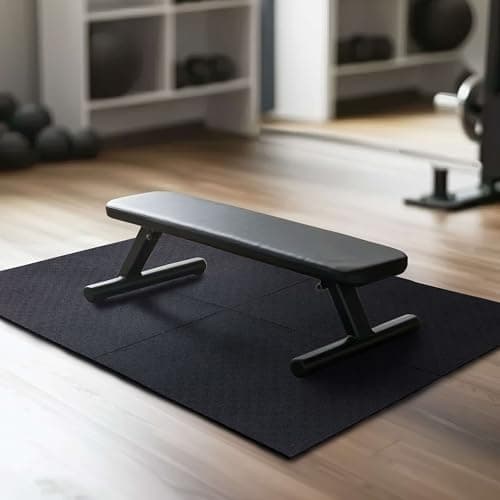
  • Under a bench and dumbbell station. A wide thin mat. You are protecting wood or tile from four bench feet, set-down dumbbells and sweat, and a quarter inch across 78 by 36 inches does that for very little money.
  • Over carpet, in a shared or rented room. Thick interlocking foam. It spreads the load so the bench stops sinking, it comes up without a trace, and flooring over carpet covers the trade-offs in full.

How many mats do you need?

Fewer than most buying guides imply. The honest sequence for a first home gym is one mat, then a second if the first one proves it was needed. One mat under the rack or the bench solves the floor-damage problem and the noise problem for the station you use most. A second mat under the barbell comes when you start deadlifting heavy enough to set the bar down hard.

Where people overspend is buying for a gym they do not have yet - a full foam floor for a room that currently holds one pair of dumbbells. Buy the mat for the equipment that is in the room today. Mats do not go stale, and they are easy to add to.

If you are on an upper floor or sharing walls, the calculation changes from floor damage to noise, and more mat genuinely does help. Our noise-reduction guide and can you put a home gym upstairs? cover that properly, and the short version is that mass plus a dropped-weight ban beats any amount of foam.

Who each pick is for

  • Mohawk Heavy-Duty Rubber Stall Mat - you want one mat, under one piece of equipment, for the least money. The default answer.
  • Titan Fitness Rubber Lifting Tiles - you deadlift, the bar comes down hard, and you need the one product here the maker actually rates for it.
  • Marcy Equipment Mat & Floor Protector - wood, laminate or tile under a bench or a machine, and the enemy is scuffs rather than impact.
  • ProsourceFit Extra Thick 1" - carpet, a shared room, or floor work where an inch of cushion is the point.
  • ProsourceFit ½" - the cheapest, lightest way to make a corner of a room usable, and the easiest to pull up when the room changes use.

What we left off this page

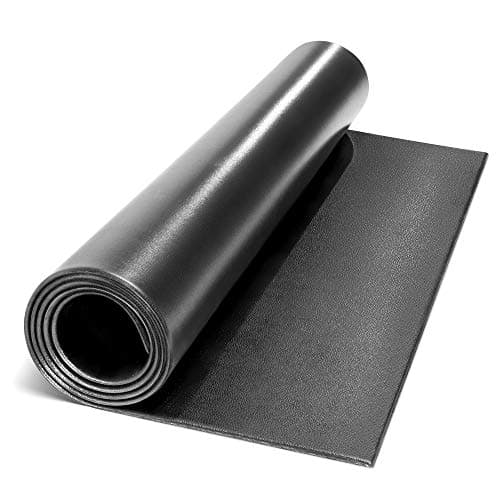
We deliberately did not rank the 40 sq ft rubber roll here even though it is in our registry and it is an excellent product - a roll is flooring, not a mat, and it belongs on the flooring pagewhere the question is “how do I cover this room?”. We also left off horse-stall mats bought at a farm store: cheaper per square foot than anything here, genuinely popular with garage lifters, and impossible for us to price or link honestly because availability is local and the cut sizes vary by store. If you have a farm supply nearby, go look - that is a real option this page cannot rank. Finally, no yoga or pilates mats. They are a different product for a different job and they will not survive a dumbbell.
05

Common questions

What are the best gym mats for a home gym?

For most people, a dense rubber stall mat - one mat, under the rack or the bench, for the least money. It protects the floor, cuts impact noise and gives equipment a flat base. Buy thick rubber lifting tiles instead if the problem is a dropped loaded barbell, a wide quarter-inch mat if you are protecting wood or tile under a bench, and thick interlocking foam if you are working over carpet.

How thick should a home gym mat be?

Match thickness to the job. A quarter inch protects a surface from scuffs, sweat and equipment feet. Half an inch adds light cushion for floor work. A full inch of foam is comfort and load-spreading over carpet. Only the inch-and-a-half dense rubber tier is sold with a drop rating, and that is the only tier to consider if a loaded barbell is coming down on it.

Do I need gym mats or full gym flooring?

Mats if you are protecting one or two spots - the footprint of a rack, a bench station, the two patches where the bar lands. Flooring if you are covering a room end to end, where buying mats one at a time gets expensive and a rubber roll is cheaper and flatter. Decide which purchase you are making first; it changes the product, not just the quantity.

Will foam mats work under a power rack?

They will protect the floor underneath, but they are the wrong choice for stability. Foam compresses under concentrated load, so rack feet press in and the frame can feel slightly less planted - and a dropped plate will dent the surface permanently. Under a rack, dense rubber is the better answer; keep foam for floor work, stretching and light dumbbell training.

Can you drop weights on rubber gym mats?

Only on mats whose maker says so. In our picks that is the 1.6 inch rubber lifting tiles, which are sold specifically for deadlift and Olympic-lift drops. A thin stall mat will protect your floor from set-down weights and cut the noise, but it is not a drop pad - repeatedly dropping a loaded bar on a quarter-inch or half-inch surface will eventually reach the slab under it.

How many gym mats do I need?

Start with one, under whichever station you use most, then add a second if you need it. One mat solves floor protection and noise for a rack or a bench; a second under the ends of the barbell is for when you start setting the bar down hard. Buying a full floor for a room that holds one pair of dumbbells is the most common overspend in this category.

What should I put under a weight bench on carpet?

Thick interlocking foam, or a thin wide mat laid over the carpet. The problem on carpet is not damage so much as instability - the bench feet sink into the pile and the whole thing rocks. An inch of EVA foam spreads that load over a wider area and gives the feet something firm to sit on, and it comes up with no marks when the room goes back to being a bedroom.

Read next

→

Flooring a whole room, not one spot?

Our flooring roundup ranks the same mats plus a 40 sq ft rubber roll, for when the job is a room rather than a rack.