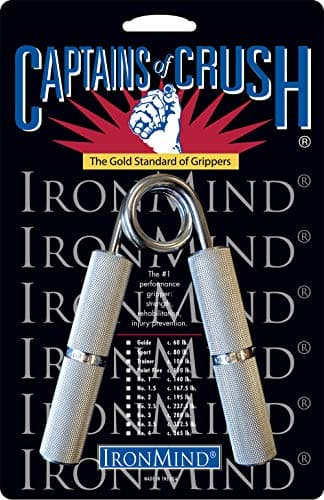
Four kinds of grip, and which tool trains which
“Grip strength” is four separate abilities. Buying the wrong tool for the one you care about is the main way money gets wasted in this category.
- Crush grip - closing your hand against resistance. This is what a gripper trains, and it is the one most people mean.
- Support grip - holding on to something heavy for time. This is what fails on a deadlift or a farmer carry, and a gripper barely touches it.
- Pinch grip - holding something between thumb and fingers, with no wrap-around. Trained with plates and pinch blocks, not with anything on this page.
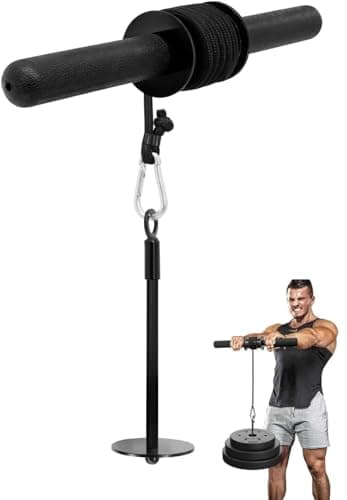
- Wrist and forearm - flexion, extension and rotation. Trained with a wrist roller; completely untouched by grippers.
Read that table and the sequencing writes itself. If you own weights, the thick-bar sleeves and the wrist roller fold into training you already do, and they progress by adding load - the same mechanism as every other lift. If you own nothing, a gripper is the only tool here that works on its own, in a chair, in front of a screen.
Calibrated vs. adjustable: why the price gap exists
A calibrated gripper has a known resistance. “Closed the 100 lb Trainer for three reps” means something, and it means the same thing next month and in somebody else’s hands. That repeatability is what you are paying several times the price of a plastic gripper for, plus machined aluminum handles that keep the same knurl for years.
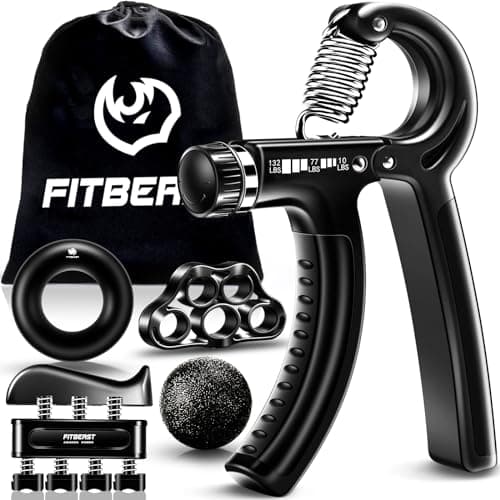
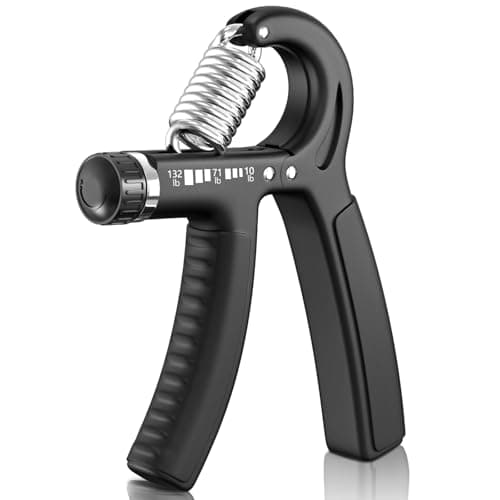
An adjustable gripper has a dial and a published range. It is genuinely useful - one tool spans a beginner and a strong adult, so nothing is wasted while you find your level - but the dial is a feel rather than a number. Setting 6 on your unit is not setting 6 on anyone else’s, and it drifts as the spring ages.
The honest recommendation: start adjustable, graduate to calibrated. Buy the cheap kit or the adjustable gripper, do grip work three times a week for a month, and if you are still doing it, buy the calibrated gripper at the rung that fits. That order costs about the price of one takeout meal more than buying the right calibrated gripper first, and it avoids the far commoner mistake of a $35 gripper in a drawer.
Where grip training actually belongs in a program
Grip is recoverable fast and fatigues fast, which means two rules. First, do grip work at the end of a session, never before - a pre-fatigued grip means a worse row and a worse deadlift, and those train your grip harder than the gripper does. Second, keep the volume small: two or three sets, three times a week, is plenty for hands. They are small muscles with a lot of tendon.
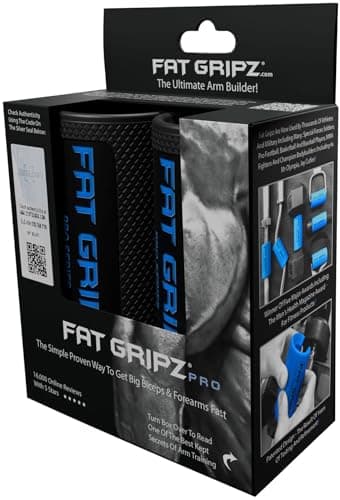
If your goal is a deadlift that does not slip, the most effective thing on this page is not a gripper at all - it is the thick-bar sleeves, used on rows and holds rather than on your heaviest pulls. A 2.25 in handle is a grip exercise; it is not a sensible way to do a back session. Program it as what it is. For the rest of the pulling picture, our home gym equipment for back page covers what actually loads the back, and how to do a farmer’s carry is the single best support-grip exercise you can do with dumbbells you already own.
When straps or chalk are the right answer instead
This is the part most grip roundups leave out because it sells nothing. If your grip is the limiting factor on a lift whose point is to train something else - rows, pulldowns, shrugs, heavy pulls - then the correct fix is usually a grip aid, not a grip training tool:
- Chalk fixes sweat, which is the actual problem more often than strength is. Cheapest intervention in the gym - see do I need gym chalk?
- Straps take grip out of the equation entirely so you can load the target muscle. Not cheating; just tool selection - do I need lifting straps?
- A different bar or handle. Sometimes the fix is a thinner handle, not a stronger hand. Our barbell buying guide covers shaft diameter and knurl.
Buy grip equipment when grip itself is the objective. Buy chalk or straps when grip is just in the way. Those are different purchases and this page is only honest if it says so.
What we left off this page
Three categories we deliberately did not rank. Pinch blocks and grip balls are a niche inside a niche - if you need them you already know which one you want. Electronic grip dynamometers measure rather than train, and the cheap ones disagree with each other enough that the number is entertainment. And heavy-spring grippers sold with no published resistance are a coin flip: either far too hard to close or so easy you will not use them. If a listing will not tell you the resistance, we will not tell you it is good.
Who each pick is for
- Captains of Crush Trainer - you already train, you want a number to beat, and you want a tool that will outlive the gym.
- Fat Gripz Pro - you own dumbbells, a barbell or a cable machine, and you want grip work without adding a single set.
- FitBeast 5-piece kit - you own nothing yet, you want to cover several bases cheaply, and a desk drawer is where this will live.
- Yes4All Wrist and Forearm Blaster - your wrists and forearms are the weak link, and you have standard 1 in plates for it.
- FitBeast adjustable gripper - you want the single cheapest useful tool, and one dial that covers beginner to strong.
None of this is a first purchase for a home gym. If you are still building the room, the order that matters is adjustable dumbbells, then a bench, then a rack - all of it costed in the $1,000 build. Grip tools are what you add once there is something in the room to hold on to. Train pulling hard on a cable or stack machine and the same thing happens eventually: the hands quit first.