Work out the rating you actually need
Do this before you compare anything. Add your bodyweight to the heaviest load you expect to have on the bar in the next two years, then add a margin. That total — not your press — is the number the bench has to carry.
- 180 lb lifter, 135 lb press: 315 lb on the bench. A 600 lb rating is already nearly double the load.
- 200 lb lifter, 225 lb press: 425 lb. A 600 lb bench is fine today; an 800 lb bench is the comfortable choice for the next few years.
- 250 lb lifter, 315 lb press: 565 lb. This is where a 600 lb rating stops being a margin and an 800 lb or 1,300 lb bench earns its price.
Two details the sum hides. A press is not a static load — the bar comes down with momentum and the bench takes a short peak above the dead weight. And the load is rarely centred: sitting up, rowing, or pressing one dumbbell at a time puts it off-axis, which is what finds a weak frame. Both are arguments for headroom, not for the biggest number on the page.
Certified, or just claimed?
A capacity number on its own is a manufacturer’s statement. An ASTM certification means the bench was evaluated against a published standard for the category — and it is rare at the bottom of the market, which is exactly why we call it out on the two benches here that carry one. Between an uncertified four-figure claim and a certified 800 lb figure at a similar price, we take the certification every time.
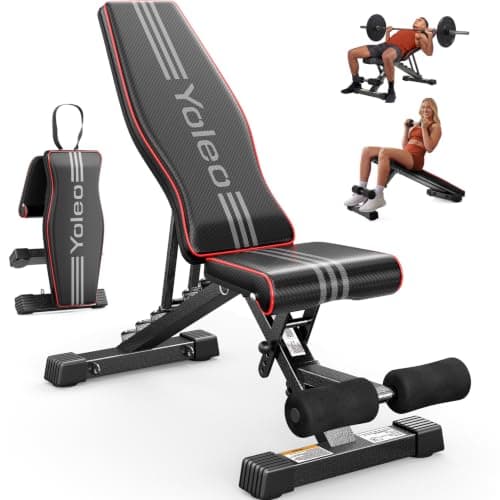
That is also the one rule we refuse to bend on a budget: never buy an uncertified bench to save fifteen dollars. The YOLEO exists on this page because it keeps its ASTM rating at the cheapest end of the market. What it gives up for the price is pad width and the number of back angles, which is a fair trade — unlike giving up the rating.
Why the highest number is not automatically the right bench
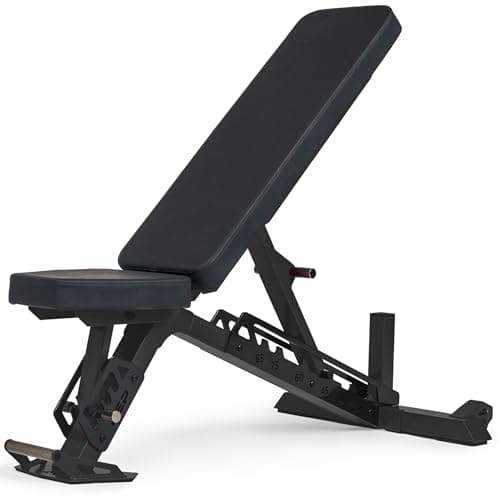
The REP Nighthawk sits second here on 700 lb, below benches rated higher, and we would still recommend it to plenty of people over the 1,300 lb pick. Three reasons, all honest trade-offs rather than hedging:
Steel beats stated capacity. Heavier-gauge tube, better welds and a stiffer frame are what you feel under a heavy press. The Nighthawk publishes 7- and 14-gauge steel; a four-figure rating on thin tube is a number, not a feel.
Adjustability is used every session. Seven back angles and a decline seat change how useful a bench is week to week far more than 600 lb of unused headroom ever will. The pad and the angles are the parts you touch.
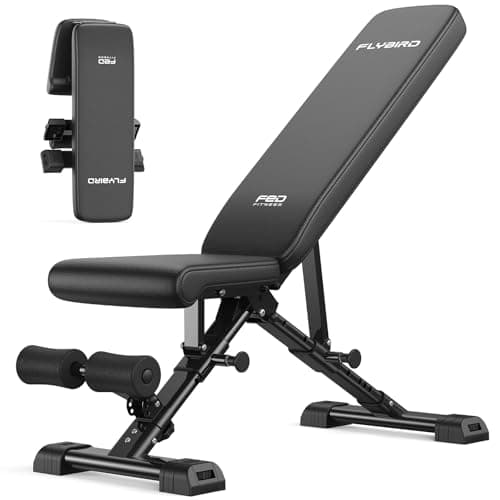
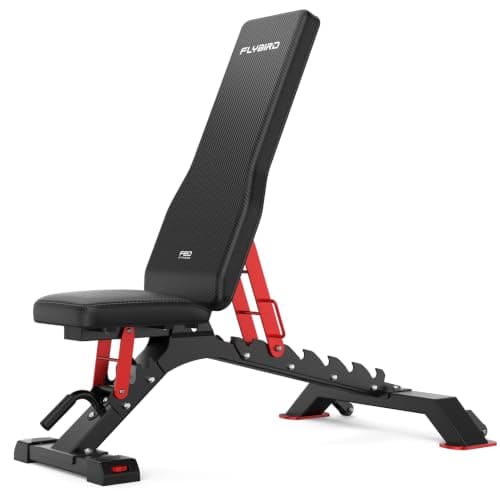
Bulk is a real cost. The WB7 is heavier and bulkier than the WB5 — the price of the wider frame. In a spare room that has another job, that matters. See folding home gym equipment if the bench has to disappear between sessions, and flat vs. adjustable bench if you are weighing the simplest, steadiest option instead.
The bench is only half of a heavy press
A high rating does not spot you. If you are pressing near your limit alone, the thing that keeps you safe is a rack with working safety arms set just below your chest, not the bench’s capacity sticker. That is the whole argument of training without a spotter, and it is why we cost a squat stand or rack into every build before an expensive bench.
Two assembly habits that make any bench on this page safer: torque every bolt properly on day one, then re-check the hardware after your first few sessions and after any move — the walkthrough is in how to assemble a weight bench. And put the bench on a firm surface. A thick, soft foam tile lets the feet sink unevenly and makes a heavy press feel tippy, which is one reason we send people to dense rubber in best home gym flooring and rubber vs. foam.
If you are choosing a bench from scratch rather than by capacity, start with how to choose a weight bench — pad width, back-angle count, gap between seat and pad and footprint all matter more day to day than a rating you will never test. And for the model-by-model comparisons, we have FLYBIRD WB5 vs. WB7 and the REP bench against the WB7.