The number that decides everything: the top pair
Dumbbell sets are marketed by total poundage - 100 lb, 150 lb, 210 lb, 300 lb - and total poundage is close to meaningless. You never lift the total. You lift one pair at a time, so the only figures that matter are the heaviest pair in the box and the size of the steps getting there.
A 300 lb set that jumps 10, 20, 30, 40, 50 lb has a magnificent ceiling and no 15 lb pair for lateral raises. A 150 lb set with 5, 10, 15, 20, 25 lb has five pairs you will use every week and a ceiling you will hit on rows within a year. Neither is wrong; they are answers to different questions. So ask the one question that matters before you buy: what will I be rowing and pressing twelve months from now?
Read the right-hand two columns together and the page sorts itself. Five-pound steps to a 25 or 30 lb top pair is the beginner sweet spot: small enough that progression feels smooth, heavy enough to still be useful when you are not a beginner. Ten-pound steps to 50 lb is an intermediate’s set that will leave gaps in your accessory work. One-to-three pound steps to 10 lb is not a strength set at all - it is conditioning and rehab equipment, and we have included one because plenty of people searching for a “dumbbell set” genuinely want that and should not be sold 300 lb of iron.
What a set costs you that an adjustable pair does not
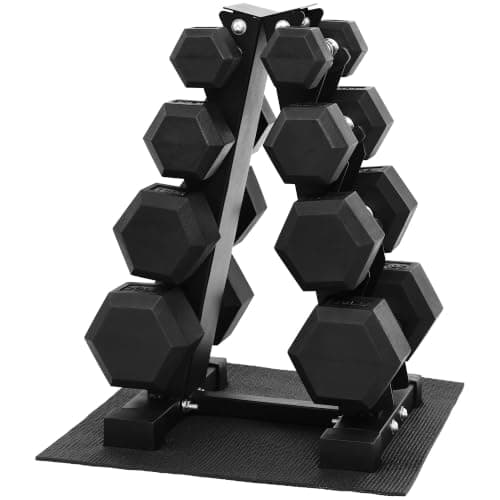
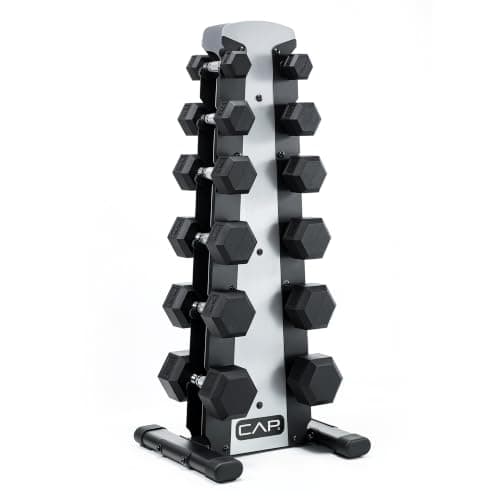
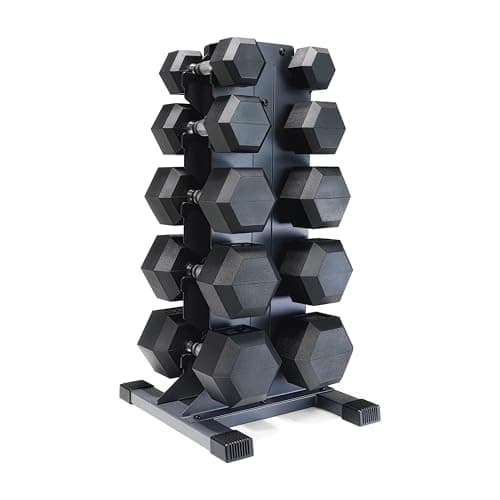
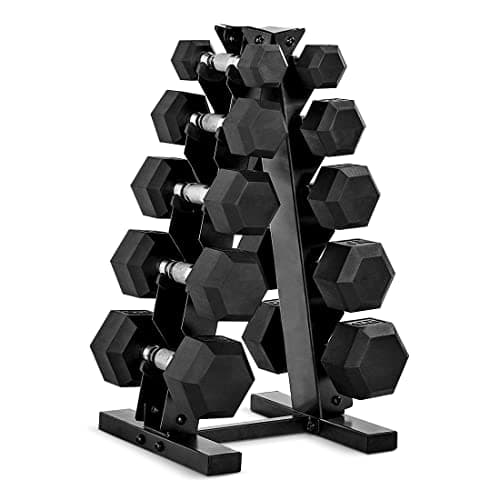
Space and honesty about space. Ten or twelve dumbbells plus a rack is a permanent installation in the room. The A-frame racks here sit in roughly a 14 by 13 inch footprint and come up to about knee height; the vertical towers trade floor for height, with the 210 lb rack standing around 46 inches tall. That is less space than people fear, but it is a fixed claim on the room - and unlike a bench, it does not fold.
The second cost is the weight ceiling. This is the real risk in the category, and it is worth being blunt: if you train consistently, a 20 lb top pair lasts months and a 25 lb top pair lasts about a year on rows and presses. When you outgrow a fixed set, you cannot upgrade it - you buy heavier pairs separately or you replace the set. An adjustable pair going to 52.5 lb per hand does not have that cliff. Our guide on what weight dumbbells to start with walks through realistic starting and 12-month numbers.
What you get in exchange is genuinely valuable, and it is why fixed sets persist in home gyms that can afford anything:
- Zero adjustment time. Drop-sets, supersets and circuits work properly because changing weight takes one second and no hands-free fiddling.
- Nothing mechanical to fail. No dial, no pin, no plastic housing. A rubber hex dumbbell is a lump of cast iron that will outlive the house.
- Two people can train at once on different weights, which a single adjustable pair cannot do at any price.
- Floor-friendly and quiet. Rubber-coated heads set down softly and do not roll - a real benefit in an apartment or over a finished room.
Hex, 12-sided, or neoprene?
Three coatings and head shapes show up on this page, and the differences are smaller than the marketing suggests.
- Rubber hex is the standard and the right default. Six flat sides mean the dumbbell stays exactly where you put it, the rubber protects the floor and deadens the set-down, and the cast iron under it is the cheapest durable load there is. All four hex sets here use knurled steel handles.
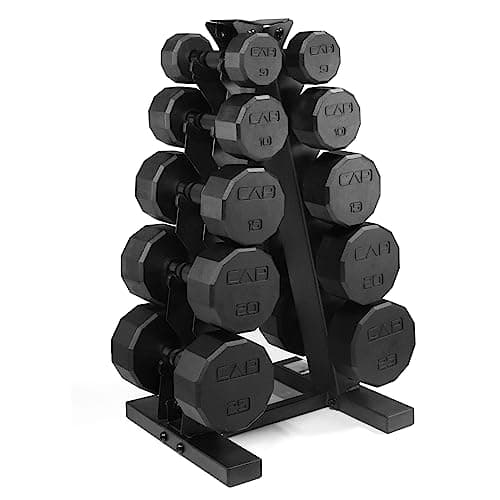
- 12-sided rubberis CAP’s alternative head shape - rounder, still with flats so it will not roll away. In the 150 lb set it holds the identical pair ladder and the identical rack as the hex version, which makes it a pure price play. Note that CAP’s own listing bullets for the 12-sided set still describe it as “rubber hex,” so check the photos if the head shape matters to you.
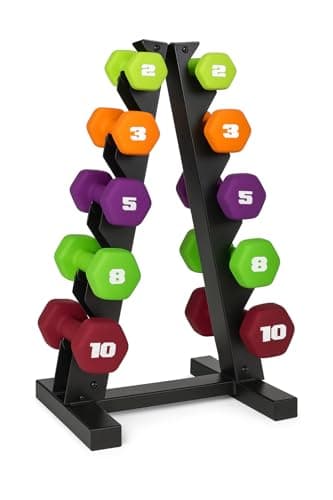
- Neoprene is for the light end. Iron dipped in a few millimeters of soft coating - kind to hands, kind to wood floors, color-coded so you can grab the right pair without reading. It is also the most expensive material per pound of iron, which is fine at 2 to 10 lb and absurd above that.
We have no pick here with bare cast-iron or chrome heads, deliberately. Uncoated iron marks floors, rings loudly when you set it down, and rusts in a garage - and our hex vs. round dumbbells guide covers why round heads that roll under a bench are a daily irritation rather than a saving.
Where a set fits in a first home gym
A dumbbell set is the load half of a two-purchase gym. The other half is a bench, and the order is not negotiable: without a bench, a dumbbell set gives you curls, presses from the floor and lunges. With a bench, it gives you a complete upper body. Pair any set here with something from our best adjustable weight benches roundup and you have a gym you can train in six days a week - our full-body dumbbell workout is written for exactly that kit.
Two practical notes from building this page. First, a rack of fixed dumbbells is the one piece of a home gym that genuinely benefits from a mirror in front of it, because almost everything you do with dumbbells is a unilateral movement where one side quietly cheats - see our best home gym mirrors picks. Second, put the rack on something. Ten dumbbells on a loaded A-frame is concentrated weight on four small feet, and a single mat under it protects the floor and quiets the whole station; our home gym mats roundup covers which one.
Who each pick is for
- CAP 150 lb Rubber Hex - the default. Five usable pairs, 5 lb steps, a compact A-frame. The set we would put in a spare room without a second thought, and the one we wrote a full review of.
- CAP 150 lb 12-Sided - the same thing, cosmetically different, often cheaper. Compare both live prices and buy whichever is lower.
- HulkFit 100 lb - smallest budget, smallest footprint, four honest pairs. Accept that 20 lb is a short ceiling.
- CAP 210 lb - you want to buy once. Six pairs to 30 lb with 5 lb steps is the most complete ladder here.
- CAP 300 lb - you already press real weight and you want dumbbells that can replace a barbell. Live with the 10 lb jumps.
- CAP Color Series 56 lb - conditioning, rehab, raises and barre-style work. Not a strength purchase, and we are not going to pretend otherwise.
What we left off this page
No loose pairs. Buying single pairs as you need them is a perfectly good strategy and often the cheapest route to a heavy top weight - but it is not a “set,” it leaves you with dumbbells on the floor, and the storage problem arrives about pair four. Every pick here includes its rack for that reason.
No adjustable dumbbells, even though two of them do the job of a whole set. They are a different product class with a different failure mode and they have their own page - best adjustable dumbbells - with six picks and a proper comparison of dial versus plate-loaded.
No spinlock or plate-loaded dumbbell handle kits. Cheap per pound and genuinely useful if you already own plates, but collars loosen, the handles are long, and changing weight mid-workout is slow enough that most people stop doing it. If that route interests you, read progressing from dumbbells to a barbell first - a barbell and plates may be the better version of that purchase.
And no sets above 300 lb. Commercial 550 lb and 1,200 lb sets on multi-tier racks are real products and they are in stock, but they cost several times the entire $1,000 build this site is organized around and they need a floor rated for a commercial gym. Out of scope on purpose.