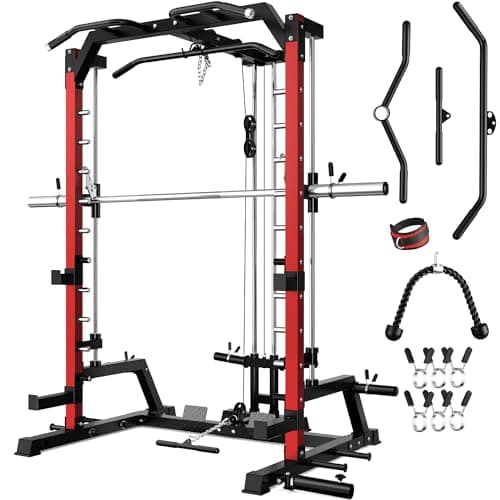
Start here: complete machine or attachment?
Everything else is detail. Answer this and three of the five picks disappear from your shortlist.
- No rack yet? Buy a complete machine. You get the frame, the guided bar, the safety hooks and usually a cable tower in one purchase, and you do not have to match any hardware to anything.
- Already own a 3 x 3 in cage? Buy an attachment. You are paying for two guide poles, a carriage and a bar instead of a second steel frame, and the rack you already trust keeps doing the rack work.
- Own a 2 x 2 in budget rack? Neither attachment on this page fits. Either live with the rack and train without a spotter using proper safety arms, or replace the rack with a complete machine.
What the published ratings do and do not tell you
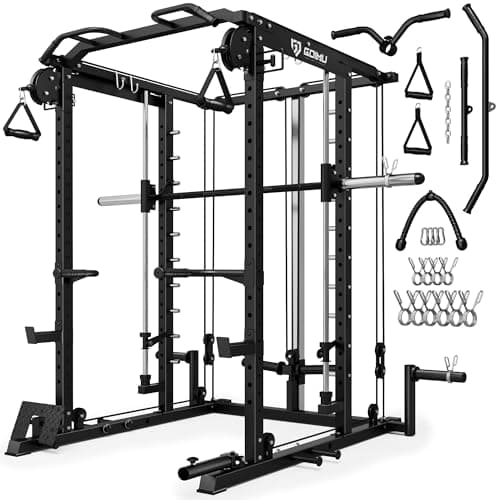
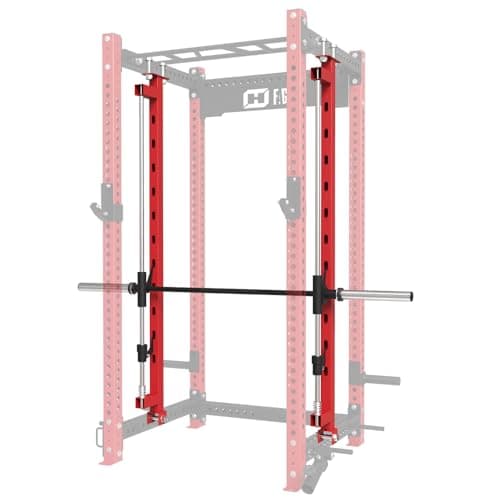
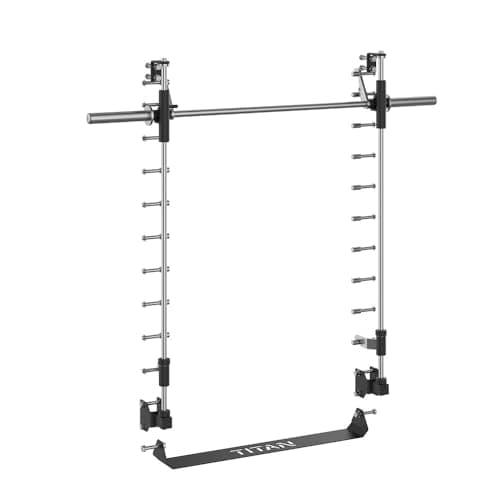
Every complete machine here claims a 2,000 lb frame. Treat that as a manufacturing statement about the steel, not a promise about your training. The number that actually constrains you is the carriage or bar rating - 1,000 lb on the Goimu, 800 lb on the FAGUS bar, 500 lb on the Titan attachment. Those are the parts with bearings and welds in the load path.
For context: a 500 lb bar rating is more than almost any home lifter will ever load onto a guided bar, so the Titan’s lower number is not a disqualification - it is simply the lowest here. What matters more is whether the rating is published at all. We have left several cheaper Smith frames off this page because nobody will say what they hold, and we are not going to guess a number for a bar that goes over your chest.
Second spec to respect: upright size. The JELENS uses 2 x 2 in tube; the attachments here need 3 x 3 in. Heavier tube is stiffer and takes standard rack attachments, which is why 3 x 3 in is the enthusiast default. Thinner tube is lighter, cheaper and completely adequate for the loads a beginner puts on a guided bar. It is a budget decision, not a safety cliff - but it does decide what you can bolt on later.
Height is the spec that sends these back
Smith frames are tall. The machines here run 81.5 to 84.3 in assembled, and a guided bar needs clearance above the top of its travel. A standard 7 ft basement ceiling is 84 in. Measure, subtract the thickness of anything you are putting underneath - rubber mats add up to an inch - and then decide. This is the same measurement discipline we push in minimum ceiling height for a home gym, and it is the single most common reason a big frame goes back on a truck.
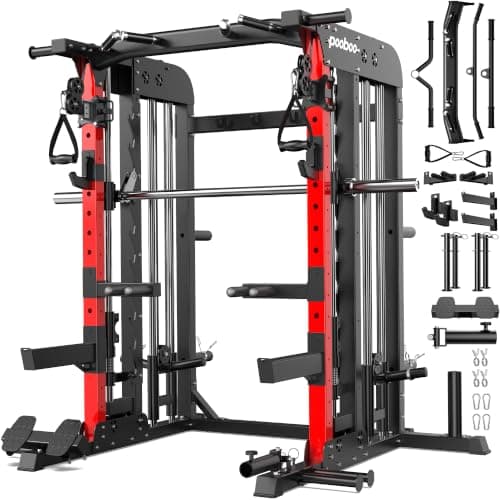
Footprint matters almost as much. The JELENS is a half-frame at 16.2 sq ft, the Goimu 17.9 sq ft, and the pooboo wider still once you account for its dip bars. Add a bar path and somewhere to stand, and a Smith machine occupies the same floor area as a full power rack. If floor area is the binding constraint, read folding home gym equipment first - nothing on this page folds or moves once it is built.
What you still have to buy
A Smith machine is not a gym in a box. None of these picks includes plates, and only one bundles an Olympic bar in a specific configuration, so budget for:
Assembly and the first week
These ship in two or three boxes and take an afternoon. The order matters more than on a plain rack: build the frame square and only finger-tight, then fit the guide poles or rails, then square the whole thing against the floor before torquing anything. A Smith carriage that binds halfway up is almost always a frame that was tightened out of square, not a faulty part.
After the first two or three sessions, go back over every bolt - the same ten-minute pass we recommend in how to assemble a power rack. If the frame is not bolted to the floor, check the feet for rocking under load every few weeks; how to anchor a power rack covers when bolting down is worth it and when it is not.
Who each pick is for
- JELENS SR01 - no rack, limited floor, and you want the guided bar plus a lat tower for the least money.
- Goimu S1-V4 - you want a genuine cage, a guided bar and cable crossovers in one buy, and you have the ceiling for an 84 in frame.
- pooboo P43 - you want the heaviest frame and every attachment included, and you are treating this as the one and only frame in the room.
- FAGUS H attachment- you already own a 3 x 3 in cage and want a guided bar for a fraction of a machine’s price.
- Titan Fitness X-3 attachment - your rack is a Titan X-3 80 in bolt-down and you want a part engineered for it rather than a universal fit.
And if, reading all that, what you actually want is a machine that handles the weight selection as well as the bar path, you want a weight stack rather than a guided barbell - that is a different page: best home gym machines.
Before you buy any of them
A Smith machine is the right answer for a narrower group of lifters than the marketing suggests, and the wrong first purchase for almost every beginner. Is a Smith machine good for a home gym? lays out who the guided bar path genuinely suits - training alone, pressing heavy, short on technique time - and who should buy a rack with safety arms instead. If what appeals is pins and stacks rather than a guided bar, weight machines vs. free weights is the comparison to read first.