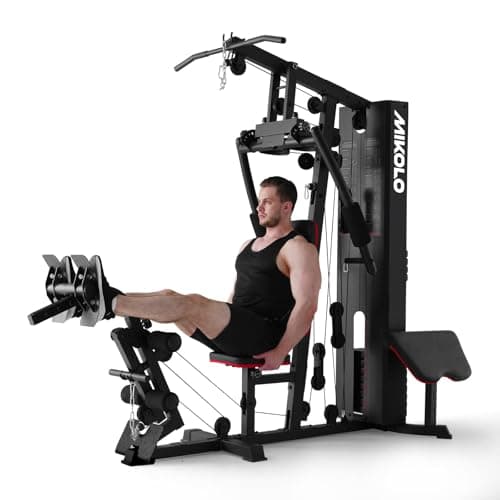
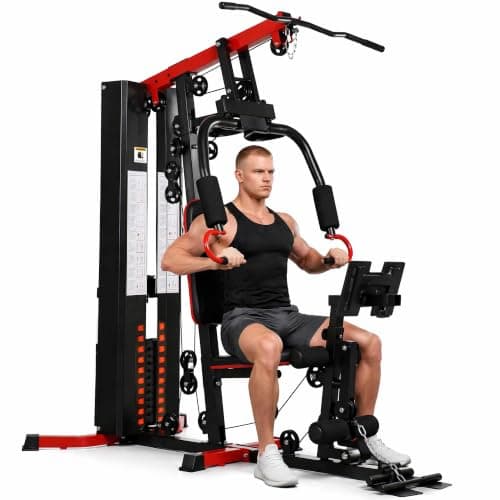
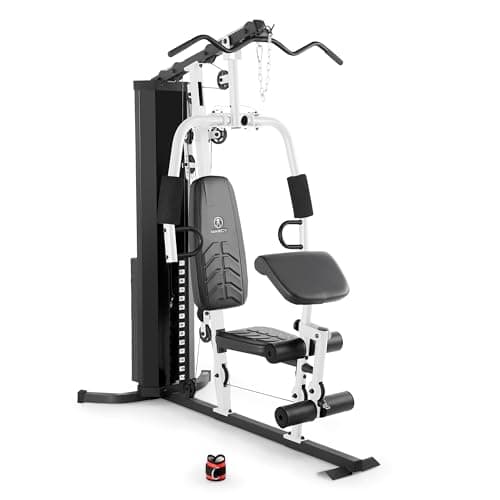
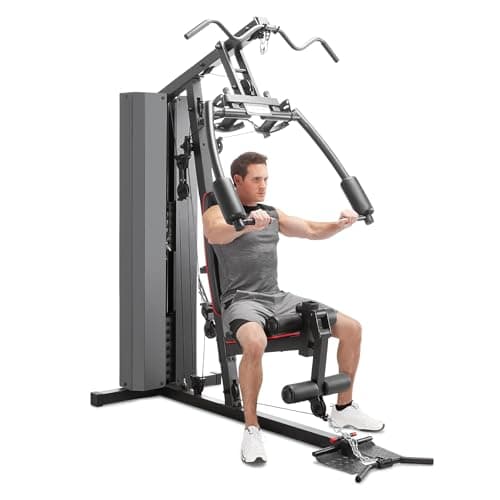
The four specs that decide this purchase
Machine listings are a wall of claimed exercises. Ignore almost all of it. Four numbers decide whether a given machine is right for you, and three of them are on the listing.
1. Stack weight. This is the ceiling on every exercise. It matters most on the lat pulldown and the row, where a trained adult gets to 100 lb faster than they expect, and least on the preacher curl, where 50 lb is a lot. A 122.5 lb stack is a genuine beginner stack. A 150 lb stack covers most people for a year or two of pressing and pulling. A 200 lb stack is the only one here that a strong intermediate will not finish.
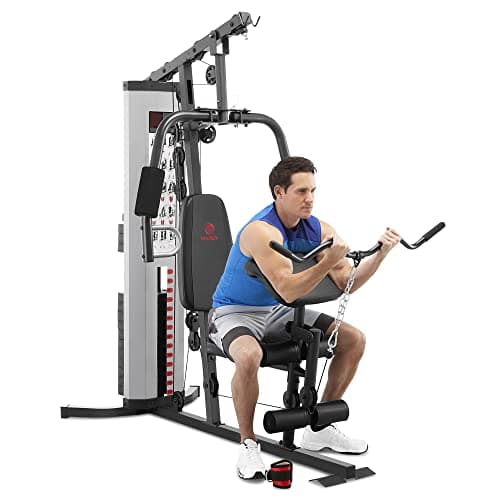
2. Station count.Count the physical stations, not the marketing exercise list. “90+ exercises” usually means five stations and a lot of imagination. The stations that matter are: press arms (chest press and fly), a high pulley (pulldowns, triceps), a low pulley (rows, curls, cable work), a leg station (extension and curl), and - on one machine here - a leg press.
3. Assembled height and footprint. This is the spec that sends machines back. These frames are 78 to 85 in tall and 42 to 47 in wide, and you need working room on at least two sides. In a basement with a 7 ft (84 in) ceiling, the tallest machine on this page physically does not fit. Measure the room before you read another review - ours included.
4. Warranty. A frame rarely fails. Cables, pulleys and upholstery do. The cover on this page runs from 30 days to a lifetime frame warranty, which is a wider spread than the price difference suggests.
Read that table and the ranking stops being mysterious. The two Marcy 150 lb machines are nearly the same purchase - the MWM-8147 adds a published 300 lb user capacity and throws in the lat bar and ankle strap, the MWM-988 is the cheaper one with the longer sales record. The Mikolo trades 3 in of height for the narrowest frame and the most stations. The HULKFIT is the entry ticket. The MKM-81010 is the only one you buy for the stack.
Machine or a rack and a barbell?
This is the real question behind “best home gym machine,” and the answer is not the same for everyone. Here is the trade in one table.
Our standing position on this site is that adjustable dumbbells and a certified bench are the best first purchase for most beginners, and a rack with real safety arms is the best second one. A machine is the right answer when the thing standing between you and training is not money - it is loading plates, finding a spotter, or the noise of iron in a shared building. If that is you, buy the machine and stop reading comparison pages.
What a machine like this will not do
Three limits worth knowing before the freight truck arrives.
It will not teach you to squat. None of these machines has a squat station worth the name - the leg work is extensions, curls and, on the Mikolo and the HULKFIT, a leg press. If you want to load a hinge or a squat pattern you need free weights, and our best home gym equipment for legs page is the honest route there.
It will not move. These are 280 to 417 lb assembled, in a frame that does not fold. Unlike folding home gym equipment, a multi-gym is a decision about a room, not about an evening. Put it where it will live.
It will not protect your floor. Hundreds of pounds standing on four feet will mark hardwood, laminate and tile, and the stack does make noise when it is set down carelessly. One dense rubber mat under the frame solves it - see best home gym flooring for the cheap end of that, and home gym noise reduction if you share a wall or a ceiling.
Assembly, honestly
Every machine here ships in multiple boxes - the HULKFIT in five - and every one of them is an afternoon of bolts with a printed manual. Three things make it go smoothly: wait until all the boxes have arrived before you open any of them, lay the hardware out by bag before step one, and leave every bolt finger-tight until the frame is fully square, then torque them in sequence. The same discipline applies to assembling a power rack, and it is the difference between a machine that creaks and one that does not.
Re-check the hardware after your first two or three sessions. Cables stretch slightly and bolts settle; a ten-minute pass with an Allen key in week one is the whole of the maintenance story, along with the routine wipe-down we cover in how to maintain home gym equipment.
Who each machine is actually for
- Marcy MWM-988 - you want a complete machine for the least money from a brand that has been selling the same frame for over a decade, and 150 lb is plenty.
- Mikolo Home Gym Station - you want the longest exercise list and a leg press, you have 80 in of ceiling, and a lifetime frame warranty is worth the premium.
- HULKFIT all-in-one - the budget is the constraint, the room is narrow, and you want a published user-weight rating rather than a shrug.
- Marcy MWM-8147 - you want the Marcy build with the fuller spec sheet and the accessories in the box, and the small step up in price does not bother you.
- Marcy MKM-81010 - you already train, 150 lb will not last you, and you have the 85 in of ceiling the extra stack costs.
Whichever you choose, the machine is one purchase in a gym, not the gym. The cheapest thing you can add to any of them is equipment under $100 - a kettlebell for the hinge the machine cannot train, bands for warm-ups, and a mat under the frame.
Stack or barbell? Settle that first
Every machine on this page is competing with a bar, plates and a rack for the same money and the same floor - and for most first home gyms the free weights win on both. Weight machine vs. free weights at home compares the two routes on the things that actually differ in a house: weight per dollar, the load ceiling, idle footprint, and whether two people can train at once. It also covers the cheapest way to buy the one movement a free-weight gym cannot load.