The six patterns, and what covers each
“Full body” does not mean one exercise per muscle. It means every movement pattern is loaded, because patterns are how the body actually works and how programs are written. There are six, and the whole point of this page is that you can cover them all with five purchases and no duplication.
Read down the “covered by” column and the shopping list explains itself. One pair of dumbbells appears in six of seven rows. A bench appears in three. The pull-up bar or pulley appears in exactly one row - and it is the row nothing else can fill, which is why a cheap bar beats a second pair of dumbbells every time.
Why dumbbells first, every time
People shopping for a full-body setup usually start by pricing a machine, because a machine looks like it does everything. On pattern coverage per dollar, an adjustable dumbbell pair wins and it is not close: five patterns, one purchase, a corner of a room, and a load range that spans a beginner’s first two years.
The specific reason to buy adjustable rather than fixed is the step size. A dial pair moves in 2.5 lb steps up to 25 lb a side, which is how you add load weekly instead of monthly - the mechanism that actually builds muscle. The trade-offs are honest and covered in adjustable vs. fixed dumbbells and are adjustable dumbbells worth it? If you want the full ranking of pairs, that is the dumbbell roundup.
What dumbbells cannot do is pull you up, and they run out of load on your legs long before your legs do - can you build muscle with just dumbbells? is the honest answer to how far they go. Those two limits are what purchases three, four and five exist to fix.
The vertical pull is the hole in almost every home gym
Here is the pattern test: look at a home gym and ask what moves a load downward past your shoulders. In most of them, nothing does. Dumbbells row, they do not pull down. That is why home-trained backs end up thick in the middle and missing the lats, and it is a one-purchase fix.
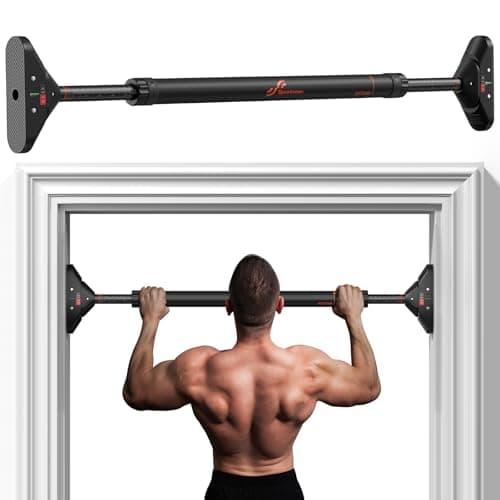
- A doorway pull-up bar if you can do one, or can do one with a band under your feet. Cheapest route, no holes, 440 lb published rating on our pick - check the frame and trim first.
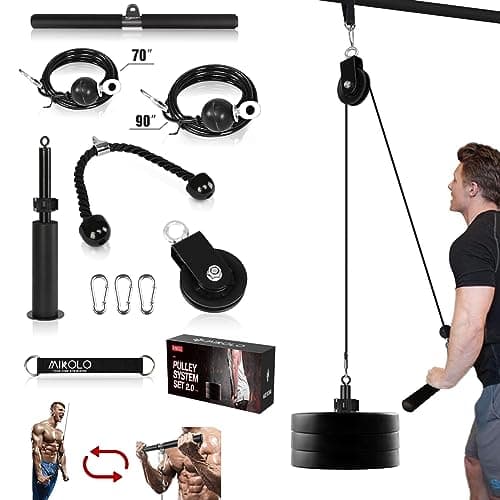
- A rack-mounted pulley if you cannot yet, or if you want to pick the load rather than fight your bodyweight. It needs a rack, a pull-up bar or a beam to hang from, and plates for the pin - so it is only cheap if you already own those.
Both are covered properly in home gym equipment for your back, pull-up bar vs. power rack and the cable machine roundup. Pick one; you do not need both.
When to add the rack - and when not to
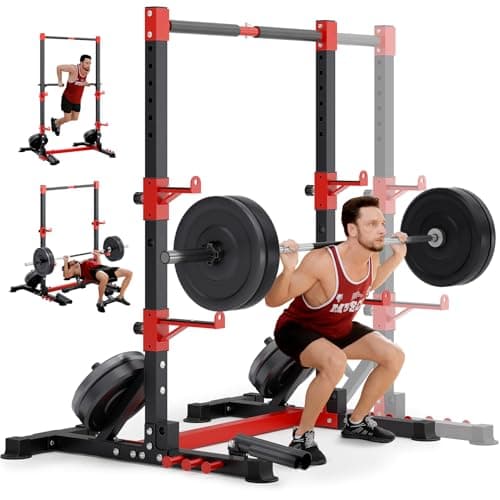
A squat stand is the fifth purchase, not the first, and the reason is sequencing rather than quality. A rack by itself trains nothing: it needs a barbell and plates before a single rep happens, which makes it the most expensive step in a home gym and the one most likely to sit unused. Buy it when you hit one of these:
- Your squats stopped getting harder. A 52.5 lb dumbbell goblet squat is a warm-up for most people within a year. The bar is how legs keep progressing.
- You want to bench more than you can get to your shoulders. Getting heavy dumbbells into position is its own skill and eventually its own limit.
- You have the space and the ceiling. Check how much space and ceiling height before ordering, not after.
And the safety point that is not optional: a stand or rack for solo training must have safety arms, set every session. That is the entire reason a rack exists for someone training alone - do I need a power rack? and training without a spotter cover it.
The order, and what each stage can do
Buy in this order and every stage is a usable gym rather than a half-finished one. That matters more than the total, because the most expensive home gym is the one that stalls halfway.
Costed end to end, stages one to three are roughly the $500 Build and all four stages are the $1,000 Build. If you would rather see the upgraded version of every item at once, that is the $2,000 Build.
Who each pick is for
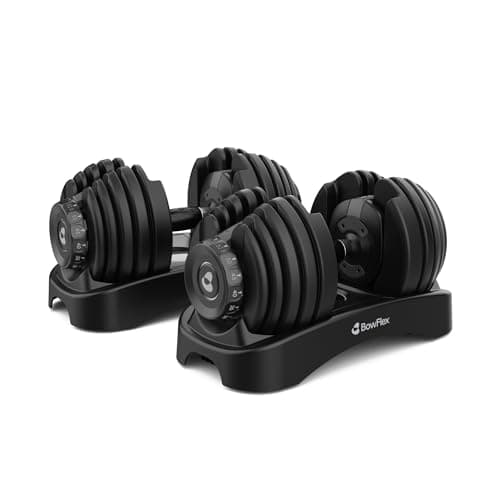
- Bowflex SelectTech 552 - the one purchase that covers the most patterns. Buy first, no exceptions.
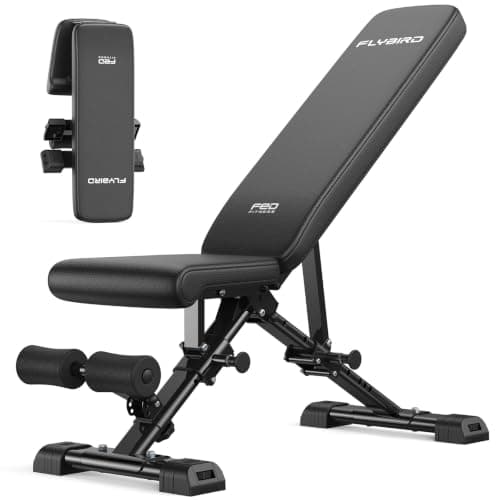
- FLYBIRD WB5 - makes the dumbbells twice as useful, folds away, and is ASTM-certified at a price where that is rare.
- YOLEO Squat Rack - you have outgrown dumbbell squats and want to load a bar alone, safely.
- Sportneer doorway pull-up bar - the vertical pull, for renters, with no drilling.
- Mikolo LAT pulley system - the vertical pull when you cannot do a pull-up yet, and you already own a rack to hang it from.
What a full-body setup does not need
Three things this page deliberately does not include. A second pair of dumbbells - the step size on a dial pair already covers the range, and a fixed set alongside it is money spent on overlap. Machines for individual muscles - a leg extension or a pec deck adds no pattern that the five picks above do not already load, which is the whole reason this page is organized around patterns. Cardio equipment - this site covers strength gear, and a treadmill is not a movement pattern. Walking is free. For what we would add after the five, see upgrading your home gym.