What a garage actually changes
Most home gym advice is written around an apartment or a spare room, where the binding constraints are noise, floor area and a landlord. A garage relaxes all three and tightens three different ones. That is the whole reason this page exists as a separate list rather than a reshuffle of the flagship roundup.
Read that and the buying order writes itself: stop paying for folding, start paying for frame and floor. The folding premium is real money, and in a garage it buys you nothing - you are not putting the rack away.
The concrete problem, in two layers
A slab is the best floor a home gym can have and the worst surface to put equipment directly onto. It does not flex, so it does not care about load - but it is abrasive, cold, and completely unforgiving to anything dropped on it. The fix is two different layers for two different jobs, and conflating them is the most common garage mistake we see.
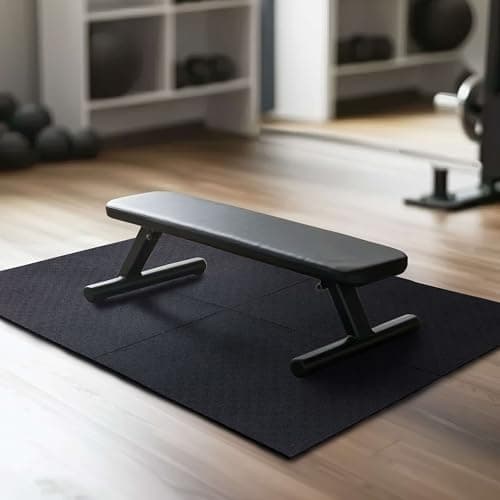
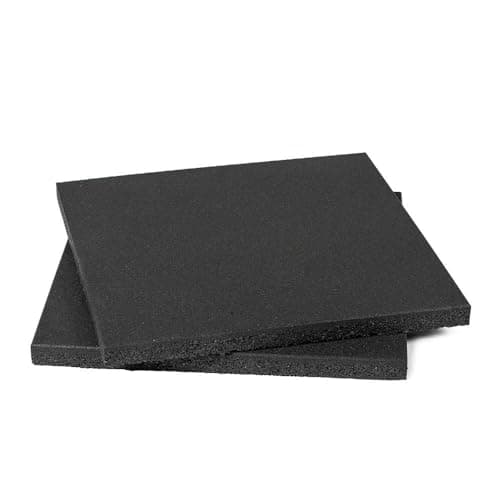
- Layer one - under the rack and the bench. A dense rubber stall mat. This is about the rack feet, your own footing, and taking the drum out of a hollow room. One mat per station.
- Layer two - under the ends of the bar. Thick rubber lifting tiles, the one product in our registry whose maker rates it for deadlift and Olympic-lift drops. Two 24-inch tiles, one per end, is a drop zone - you do not need to floor the bay.
Our home gym mats page ranks mats for exactly this spot-by-spot purchase, and flooring on concrete covers the moisture question that comes with a slab. If you are planning a full platform rather than two tiles, sizing is in flooring for deadlifting.
Cold, damp and rust: the garage tax
A barbell is bare steel with a thin finish, and a garage swings through the dew point twice a day in spring and autumn. Condensation forms on cold steel, sits in the knurl, and you have orange speckles within a season. None of this is a reason to avoid a garage gym - it is a reason to spend twenty dollars and ten minutes a month:
- Keep the bar off the floor and out of the corner where air does not move - a rack bar holder or wall hooks.
- Wipe the bar down after a session, oil the shaft occasionally, and brush the knurl. Full method in preventing rust.
- Bumper plates and rubber mats do not rust, which is another quiet argument for rubber plates in a garage over bare iron.
- Re-torque rack bolts after the first few weeks and then twice a year - maintenance and anchoring both matter more on a slab.
Measure these three things before you order
Garages are deceptive. The floor area is generous and the other dimensions are not, and every garage gym regret we have read about traces back to one of these three numbers.
- Ceiling height, measured under the lowest obstruction. Not the apex - the garage door track, the opener motor, the light. You need clearance to press overhead inside the cage and to hang from a pull-up bar; minimum ceiling height for a home gym has the figures.
- Door swing and track travel. An up-and-over door sweeps through the space a rack wants to occupy. Mark the arc on the floor in tape before you commit to a position.
- Barbell width plus walking room. A 7 ft bar is 7 ft before you add your elbows. You need to be able to walk around a loaded bar without turning sideways, which is usually a wider bay than people assume - how much space do you need?
Who each pick is for
- SPORTSROYALS Power Rack - you have the corner and you want the squat, press, pull-up and pulldown in one purchase.
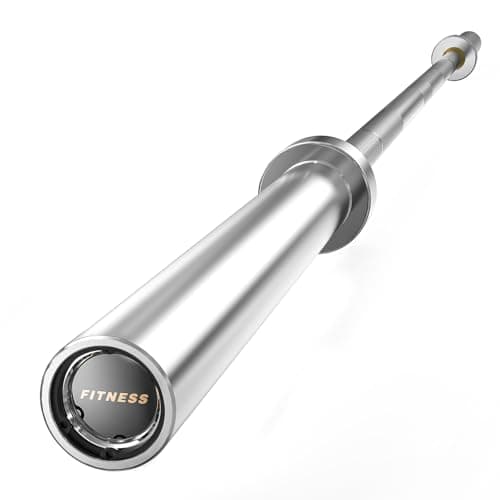
- PAPABABE 7 ft Olympic Barbell - a standard-length bar that fits any rack, with a hybrid knurl that is fine for every lift a beginner does.
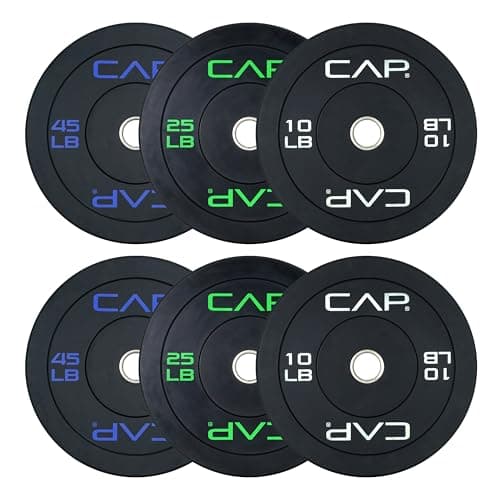
- CAP 160 lb Bumper Plate Set - rubber rather than iron, specifically so the bar can come down hard on a slab.
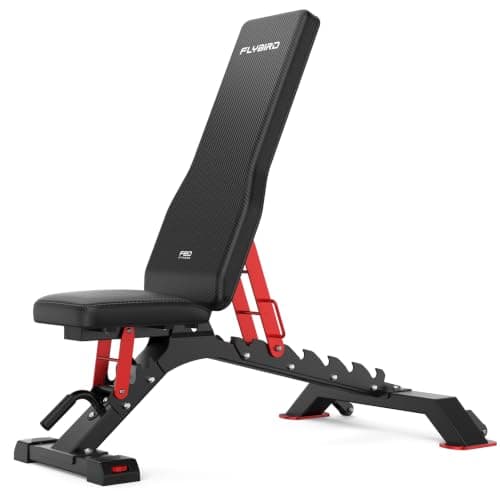
- FLYBIRD WB7 - a 1,300 lb published rating under a loaded barbell, in a room where you do not need it to fold.
- Mohawk Stall Mat - under the rack, the cheapest single improvement a concrete gym can make.
- Titan Rubber Lifting Tiles - under the ends of the bar, for the drops a stall mat is not built to take.
Buy in that order and the gym is usable after the first three items. Costed end to end, this list sits between the $1,000 Build and the $2,000 Build, depending on whether you take the cage and the heavy bench or start with a stand and an entry bench.
What we left off
No cardio machines: a treadmill or rower in an unheated garage is a maintenance liability and this site does not cover cardio equipment, so we will not rank what we cannot assess. No farm-store horse mats, which are a genuinely excellent garage floor and impossible for us to link or price honestly because stock and cut sizes are local - if you have a farm supply nearby, go and look. And no wall-mounted folding rack at the top of this list, even though we rate it elsewhere: in a garage, the folding premium buys a feature you will not use. It is the right pick only if the car still has to come in, and it is covered in our folding equipment roundup.