Core equipment is where home gym money gets wasted. The category is full of gadgets - rollers that steer, chairs that twist, boards that vibrate - and almost none of it loads the thing a core actually does. Your core’s job is to stop movement, not create it: it keeps your spine still while your arms and legs do work. Train that, and you get a trunk that holds up under a heavy squat. Train crunches on a machine, and you get better at crunches.
The short answer: one kettlebell. Carries, get-ups and goblet squats brace the whole trunk under real load, and one bell does all three. Add a band set with a door anchor for anti-rotation work and a pull-up bar for hanging leg raises, and your core kit is complete for less than most single-purpose ab devices cost.
The three jobs a core does
Every worthwhile core exercise falls into one of three categories. Cover all three and nothing is missing; buy for one and you have an expensive gap.
- Anti-extension - stopping your lower back from arching when something pulls it that way. Planks, dead bugs, ab-wheel rollouts, hanging leg raises.
- Anti-rotation and anti-lateral-flexion - staying square when a force pulls you sideways or twists you. Pallof presses with a band, suitcase carries with one weight, side planks.
- Bracing under load - holding everything rigid while your legs and back move serious weight. Front squats, deadlifts, overhead presses, loaded carries.
Notice that the third category is just hard lifting. If you already squat and deadlift, your core is working every session - which is why we treat direct core work as filling the first two gaps rather than as a separate program. Our home gym workout plan places it exactly there.
What to look for before you buy
Can the difficulty go up? This is the question that disqualifies most core gadgets. A plank progresses by adding seconds, and that stops working. A loaded carry progresses by adding pounds, which does not. Anything you buy should have a route to harder that does not involve buying a second one.
Does it double as something else? A kettlebell is a core tool, a conditioning tool and a leg tool. A band set is core work, pulling work and warm-ups. A dedicated ab machine is one thing. At this budget, versatility is the whole value proposition.
Is it quiet and small? Core work happens on the floor, often in the evening, often above a neighbour. Bands make no noise at all; a set-down kettlebell makes a thud worth a mat. If that is your situation, read home gym noise reduction and the apartment build.
Our core picks - live prices, last verified October 5, 2026
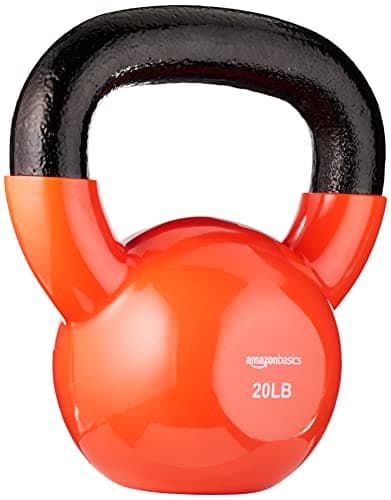
Amazon Basics 20 lb Kettlebell
A vinyl-coated 20 lb cast-iron kettlebell — one bell adds swings and carries for conditioning on a budget.
#ad · Price as of October 5, 2026 · Affiliate disclosure
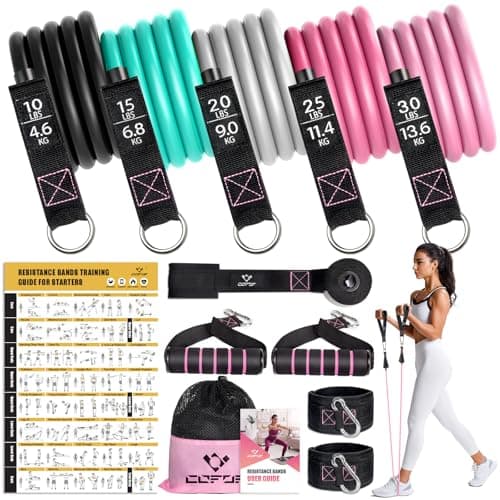
Resistance Bands with Handles (5-level)
A stackable 5-tube band set with handles and a door anchor — a real strength option when weights won't fit.
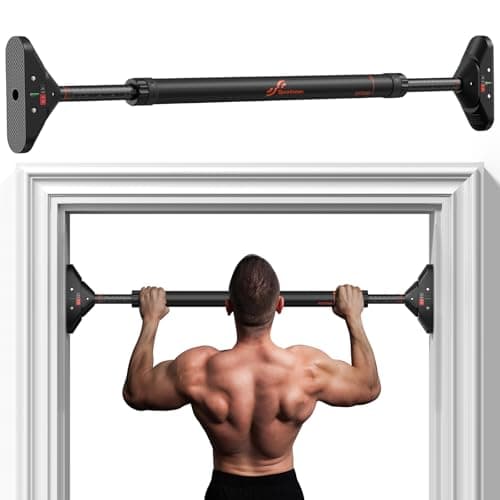
Sportneer No-Drill Doorway Pull-Up Bar
A no-drill doorway bar rated to 440 lb — adds the single best upper-back exercise without touching the wall.
#ad · Price as of October 5, 2026 · Affiliate disclosure
What each one actually trains
One honest omission. The cheapest genuinely good anti-extension tool is an ab wheel, and we are not recommending a model here because we do not carry one in our registry - we would rather say that than point you at something we have not put through the same checks as everything else on this site. The case for owning one, and what to look for, is in do I need an ab wheel? and how to choose an ab wheel.
What to skip
Ab machines and crunch benches. They take a permanent footprint to train one pattern, and that pattern is the least useful of the three. In a room where space is the binding constraint, that is the worst trade in the catalogue.
Anything sold on fat loss. Vibrating belts, sauna wraps and twist boards do not reduce fat over the muscle they sit on, and no equipment does. Visible abs are a kitchen outcome; strong abs are a training outcome. We would rather lose the sale than pretend otherwise.
A second kettlebell, at first. One bell is enough for months, and the upgrade path is a heavier bell or an adjustable one rather than a pair - see fixed vs. adjustable kettlebell and how to choose a kettlebell.
The verdict
Buy a 20 lb kettlebell first. It covers bracing and carrying, it doubles as your conditioning and leg work, and it costs roughly what a single month of a gym membership does. Add the band set with a door anchor for anti-rotation work - the one job a free weight struggles to load while you stand still - and a doorway pull-up bar if you want hanging work and the vertical pull for your back at the same time. That is a complete core setup, in a drawer and a doorway, for well under $100 at the prices our layer last verified on October 5, 2026. Skip the machines; the core responds to load and leverage, not to upholstery.