If your gym is going on a concrete slab, you already have the best base available - and the worst surface to actually train on. The slab does the structural job for you: it spreads a rack’s point loads, it does not deflect, and it will not transmit a deadlift into someone’s ceiling. What it does badly is everything at the surface. Bare concrete chips when iron lands on it, it is brutal on bars and plates, it sheds dust that makes the floor slick, and it is cold and unforgiving to kneel on.
So the answer is short: loose-laid dense rubber where the iron lives, and a foam tile or two where your knees do. Half an inch of rubber under the rack and the lifting area covers almost every garage and basement gym. You do not need glue, you do not need a subfloor, and you do not need to cover the whole room.
What flooring on concrete is actually for
On a wood-framed floor, flooring is partly structural - you are spreading load across joists so a rack is not standing on two of them. On a slab, that problem does not exist, and the job list shrinks to four things:
- Impact. Concrete does not give, so a dropped plate transfers everything back into the plate, the bar and the slab surface. Rubber absorbs it.
- Grip and dust. An unsealed slab constantly sheds fine dust, which is both slippery under a shoe and a nuisance on everything you own.
- Comfort. Planks, stretches and floor presses on bare concrete are miserable. This is a small, cheap problem to solve.
- Noise. Less about neighbours in a garage, more about the house attached to it. Dense rubber meaningfully quiets a set-down.
What to look for
Dense rubber, matched to your hardest impact. A quarter inch handles scuffs, rack feet and weights you set down. Half an inch is the default for barbell work. Only a genuine drop zone needs 1.5 inches or more, and only under the plates - the arithmetic is in flooring for deadlifts and how thick flooring should be.
Loose-laid, not glued. Heavy mats hold themselves down, tiles hold each other, and a roll can be seam-taped if it creeps. Adhesive on a slab traps moisture, makes removal destructive, and is a bad idea in any space you might one day hand back.
Moisture tolerance. Slabs on grade move vapour upwards. Rubber copes; foam traps damp underneath and can smell for it. If you see efflorescence - that white powder - or condensation under a mat, lift it occasionally and let the slab dry.
Coverage that matches the room’s zones. Measure the rack footprint plus a stride each way, and the bench-and-dumbbell area separately. You are flooring two zones, not a room, and that is what keeps the bill small.
What we would lay on a slab - live prices, last verified October 5, 2026
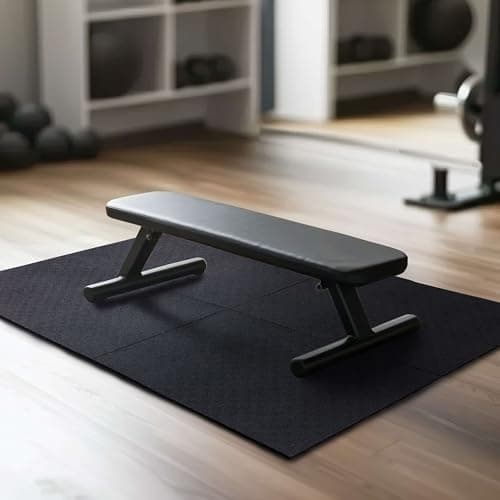
Mohawk Heavy-Duty Rubber Stall Mat
A thick rubber mat that protects the floor, kills noise, and gives a stable base — the cheapest real gym flooring.
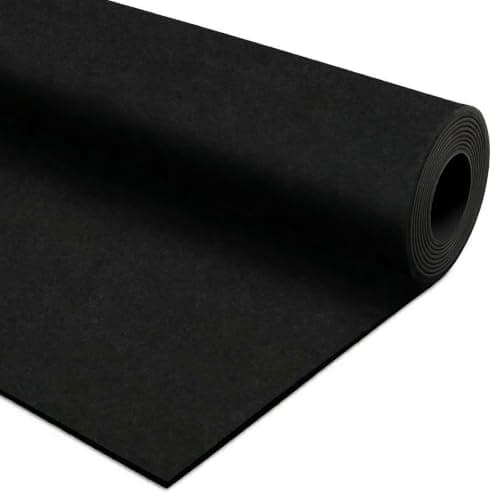
Traxxon 1/4" Rubber Gym Flooring Roll (4' x 10')
A 40 sq ft recycled-rubber roll that covers a whole training area in one piece — no tile seams to catch a toe or pop apart.
#ad · Price as of October 5, 2026 · Affiliate disclosure
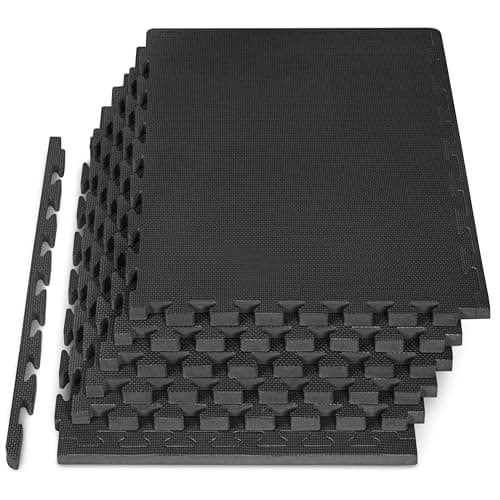
ProsourceFit Extra Thick 1" Puzzle Mat (24 sq ft)
The thickest foam here at a full inch — the most cushion you can get under bodyweight work, and the layer that saves a carpeted room.
#ad · Price as of October 5, 2026 · Affiliate disclosure
How the three layers compare
That is the whole system, and the order matters more than the brands. Rubber under anything that holds weight, foam only where a body touches the floor, and nothing thick and soft under a rack - a rack on deep foam settles unevenly and makes a loaded bar feel tippy.
The slab-specific problems nobody mentions
Cold. A slab in an unheated garage sits a few degrees above outside air for months at a time, and rubber does very little about it. Shoes, a longer warm-up and some heat in the room do more - that is the subject of the cold garage gym.
Rust. Where there is slab moisture there is rust, and bars and plates sitting directly on concrete are the first casualties. Keep the bar on a rack or wall hooks rather than on the floor, and see how to prevent rust on gym equipment.
Level. Garage slabs are often poured with a deliberate slope towards the door for drainage. It is usually small, but it is enough to make a rack feel off and a bench roll. Check with a level before you commit to a spot, and position the rack across the slope rather than along it. The wider room checklist is in garage gym setup, and for the floor below grade, basement home gym.
The verdict
On concrete, keep it simple and keep it loose. Lay half-inch dense rubber under the rack and the lifting zone, add a quarter-inch roll if you want a whole station covered in one seamless piece, and put one box of thick foam tiles in the corner where you kneel. Skip the adhesive, skip the plywood - the slab already does the job plywood would - and spend the difference on a thicker pad in the landing zone if you deadlift and drop. Prices in the picks above are live and were last verified October 5, 2026; every thickness and coverage figure comes from the manufacturer’s own listing, and we have not impact-tested any of them.