Who it’s for
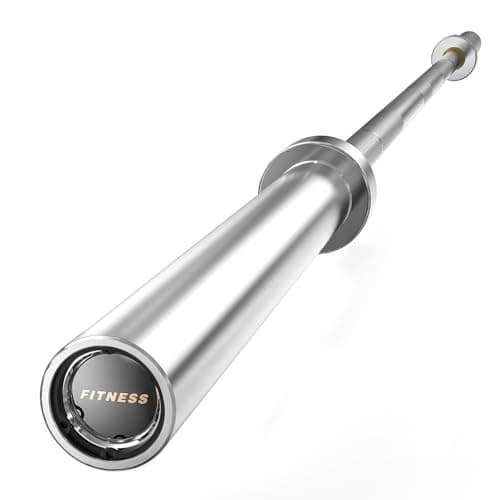
The PAPABABE 7 ft Olympic bar is for the beginner who’s ready to move past dumbbells and put a real barbell in the setup. It’s a 45 lb, 7-foot bar with 2-inch Olympic sleeves — the standard size and weight that every program, coach, and how-to video assumes. If your plan involves squats, deadlifts, bench, and overhead press, this is the tool those lifts are built around, and it’s a lot of honest bar for the money.
It’s also the barbell for the budget-minded first buyer. Barbell training has a reputation for being expensive, but the bar itself doesn’t have to be — and a straightforward Olympic bar like this is where the savings live without cutting anything that matters for a beginner’s loads. It’s the bar we slot into our $1,000 Build for exactly that reason: it does the job the big-name bars do, at a price that leaves room in the budget for a rack and plates.
One thing worth saying plainly: a barbell usually isn’t the very first thing a beginner buys — dumbbells and a bench often come first, and that’s the right order for most people. The bar earns its place the moment you want to load your legs and back properly, because nothing trains a squat or a deadlift the way a loaded barbell does. If you’re at that stage, or building steadily toward it, this is the bar to slot in without overthinking the decision.
The specs that matter
The first number is the 7 ft length. That’s not arbitrary — it’s the length that spans the uprights of a normal squat stand or power rack, so the bar sits where it needs to for racked squats and presses. A shorter bar simply won’t fit a full-size rack, which is why the standard length is the one to buy. If you haven’t chosen the frame yet, our squat stand vs power rack guide walks through it.
The second is the 45 lb weight. This is the reference weight the entire barbell world is built on: when a program says “add the bar,” it means 45 lb. Learning on a standard-weight bar means every starting-strength number, every plate-math shortcut, and every coaching cue lines up without conversion. The third spec is the 2-inch Olympic sleeves, which is the bore that fits the plates and collars sold everywhere — buy Olympic and you’re in the ecosystem that every rack and plate set is designed around.
Rounding it out is the hybrid knurl— the crosshatched grip texture, set to an all-purpose pattern. Rather than being tuned only for powerlifting or only for Olympic lifting, a hybrid knurl aims to work reasonably across every lift, which is precisely what a beginner running a general program needs from a single bar.
A word on capacity and safety. With any barbell, the real limit for a beginner isn’t the bar — it’s having a rack with safety arms to catch a missed rep. The bar handles far more than you’ll load for a long time; the frame is what keeps solo lifting safe. That’s why we always talk about the bar and the rack as a pair, never the bar on its own, and why choosing the right frame matters as much as the bar itself.
What owners report
We haven’t loaded this bar ourselves, so this is drawn from the spec sheet and the pattern of owner feedback rather than our own testing. The consistent theme is value: buyers note that it covers all the main lifts and fits any standard rack, which is really all a beginner asks of a first bar. The standard 7 ft length and hybrid knurlcome up as the practical wins — it drops into the rack and grips well enough for squats, pulls, and presses alike, so nobody feels they bought a bar that only does one thing.
The honest counterpoint owners raise is that it’s a basic bar, not a premium one. The finish is plain and the sleeves don’t spin like a competition bar’s — expected at this price and, for a beginner, not something you’ll notice under the loads you’ll actually lift for a long while. The takeaway from the feedback is steady: for a first barbell that has to fit a budget, it does everything it needs to and nothing it doesn’t.
Owners also tend to mention that it arrives ready to use with no real fuss — a barbell is a simple tool, and there’s a quiet satisfaction in a first bar that just works out of the box. The knurl draws the occasional comment for being grippy without being sharp, which is about right for a hybrid pattern: enough bite to hold a heavy pull securely, not so aggressive that it chews up your hands on higher-rep sets.
Where it falls short
The two honest limits are exactly what you’d expect from a value bar. It’s not a competition-spin bar— the sleeves rotate on basic bushings rather than precision bearings, so if you were doing fast, high-rep Olympic lifts you’d eventually want something with freer spin. For the squats, presses, deadlifts, and rows a beginner actually runs, that spin difference is close to irrelevant.
The other is the basic finish. It’s a plain coating rather than a hard chrome or specialty treatment, so it wants a little more routine wipe-down to stay clean, particularly in a humid garage. That’s ordinary barbell upkeep, not a defect — a quick wipe and the occasional pass with a brush keeps any bar healthy. Neither point should steer a beginner away; they’re simply the edges of a bar priced for a first build.
It’s also worth being realistic that a budget bar is a long-term starter, not a lifetime competition piece. If you eventually chase the platform — fast Olympic lifts or serious powerlifting totals — you may want a specialist bar somewhere down the road. That’s a good problem for future-you to have, and it says nothing about whether this bar is right for the years of steady training between here and there.
How it compares
A barbell only earns its keep once you have something to rack it in, so the more useful comparison isn’t against other bars — it’s about what you pair it with. A budget Olympic bar like this frees up money for the frame, whether that’s a two-post squat stand or a full power rack. Our best power racks and squat stands roundup lines those up, and the YOLEO squat rack— with its pull-up bar and extended safety arms — is the beginner-friendly frame we most often pair with a first bar for safe solo lifting.
Against pricier bars, the honest read is that a beginner won’t out-lift this one for a long time; the case for a premium bar is spin, finish, and feel, none of which change the loads you can move today. And against a cheaper standard 1-inch bar, the PAPABABE wins on the thing that matters most: it fits the Olympic plates, collars, and racks the rest of your gym will use. If you’re torn between a bar-based setup and a rack-based one, our squat stand vs power rack guide frames the whole decision.
The plates matter here too. Because the sleeves are standard 2-inch Olympic, you can start with a modest bumper set and add weight over time without ever rebuying the bar — the bar is the one piece of a barbell setup you truly buy once. That longevity is a quiet part of the value case: spend sensibly on the bar, and the money you’d otherwise overspend goes toward plates you’ll actually use.
The verdict
The PAPABABE 7 ft Olympic bar is the sensible first barbell: standard length, standard weight, 2-inch sleeves, and an all-purpose knurl, at a price that respects a beginner’s budget. It gives up competition-grade spin and a fancy finish, but it gives up nothing that limits what a new lifter can actually do — and for a first bar, that’s the right set of trade-offs.
In a sub-$1,000 build, the bar is the piece that turns a rack and a stack of plates into a real strength gym, and this is the one we reach for so the rest of the budget can go to the frame, the plates, and the floor. See how it all fits together in our $1,000 Build, then choose the frame to hold it in racks and squat stands. Buy a pricier bar only if you specifically want the spin or the finish; for building real strength on a beginner’s loads, this one is plenty of bar.
Think of the money you save on the bar as budget redirected to the two things that actually keep barbell training safe and productive: a solid rack and enough plates to keep progressing. Spend where it counts — the frame and the floor — and let the bar be the sensible, unglamorous workhorse it’s meant to be. For a first barbell in a beginner’s gym, that allocation is exactly right.