Skip to content

01

Best Barbells for a Home Gym

A barbell is the cheapest piece of equipment that will still be useful in twenty years. Six bars ranked on the four numbers that decide the purchase - weight, length, shaft diameter and capacity.

By Stephen V., Home-gym enthusiastLast updated October 23, 2026How we pick
Affiliate disclosure: Barbell & Bench earns a commission when you buy through our links, at no extra cost to you. We only make money if you buy — never for recommending. How this works.

For most people the answer is the papababe 7 ft 45 lb bar. It is a standard-length Olympic bar with a 190,000 PSI steel core, a 1,000 lb published capacity and a hybrid needle-bearing-plus-bushing sleeve, at roughly the price of a single pair of dumbbells. It will fit any rack you ever buy, take any 2 in plate you ever buy, and there is nothing about it a beginner will outgrow for years.

The honest complication is that the standard bar weighs 45 lb empty, and for a meaningful number of people starting out, 45 lb is already a hard overhead press. That is why the second pick on this list exists: the CAP 35 lb 7 ft bar is the same full length in a 10 lb lighter package, which turns the empty bar from a test into a starting point. If the room is the problem rather than the weight, the CAP 28 lb 6 ft bar is a foot shorter. If your hands are small, the papababe 25 mm women’s bar is the one change that fixes grip.

Worth saying plainly: a barbell on its own does almost nothing. It needs plates, and for squats and bench it needs something to rack it on. Budget for all three or buy the bar last - our barbell cost guide breaks down what the full package actually comes to, and do I need a barbell is the version of this page that tries to talk you out of it.

Prices below come from our live price layer and were last verified October 23, 2026. Every measurement on this page is quoted from the maker’s own listing; we have not loaded or bend-tested any of these bars and no tested claims appear here.

02

The picks, ranked

Six Olympic bars - ranked by how well each one fits a first home gym

#ProductBest forScorePrice
1
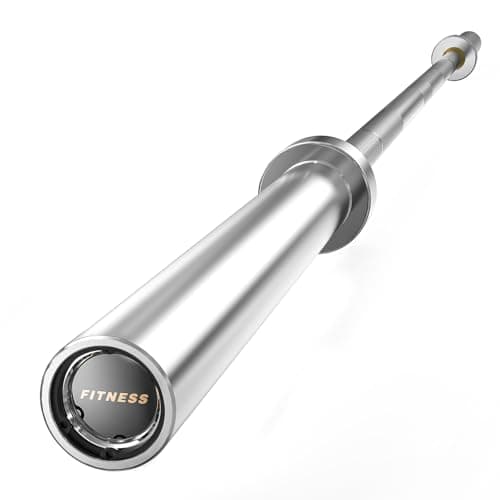
PAPABABE 7 ft Olympic Barbell (45 lb)

A 7 ft, 45 lb Olympic bar with a hybrid knurl — plenty of bar for a beginner's loads.

Budget Olympic bar8.0
$74.99 · View on Amazon

#ad · Price as of October 23, 2026 · Affiliate disclosure

2
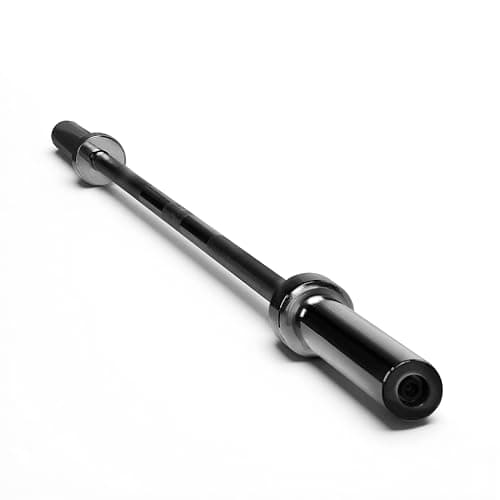
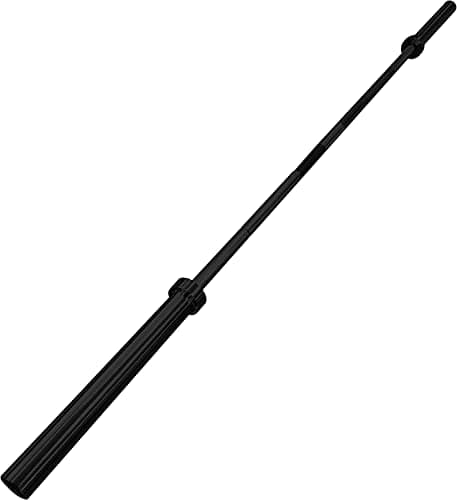
CAP 35 lb 7 ft Olympic Barbell (Black)

A full-length 7 ft bar that weighs 35 lb instead of 45 - the one change that makes a barbell learnable for a smaller or deconditioned beginner.

Best lighter full-length bar8.3
$89.99 · View on Amazon

#ad · Price as of October 23, 2026 · Affiliate disclosure

3
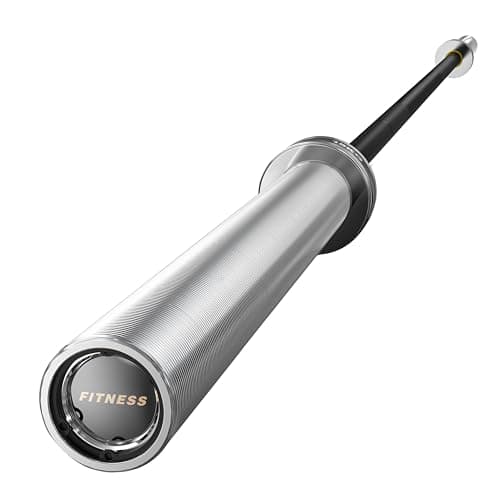
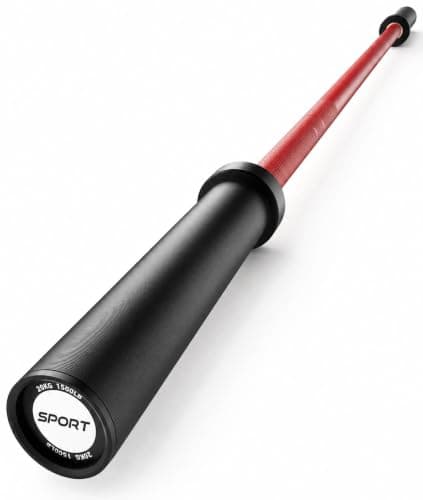
Garvee 7 ft Olympic Barbell, 1,500 lb (45 lb)

The highest published capacity in this roundup at 1,500 lb, with needle bearings and brass bushings - the bar to buy if you already know you will get strong.

Best for heavier lifting8.5
$99.99 · View on Amazon

$119.99 17% off

#ad · Price as of October 23, 2026 · Affiliate disclosure

4
CAP 28 lb 6 ft Olympic Barbell (Black)

A 6 ft, 28 lb Olympic bar for a room where a 7 ft bar does not physically fit - a real solution, with a real cost.

Best for a short room7.8
$69.99 · View on Amazon

#ad · Price as of October 23, 2026 · Affiliate disclosure

5
papababe 6.5 ft Women's Olympic Barbell (35 lb, 25 mm)

A 25 mm shaft instead of 28-30 mm: a thinner bar is easier to hold, and grip is the most common reason a smaller hand loses a lift.

Best for smaller hands8.2
$79.99 · View on Amazon

#ad · Price as of October 23, 2026 · Affiliate disclosure

6
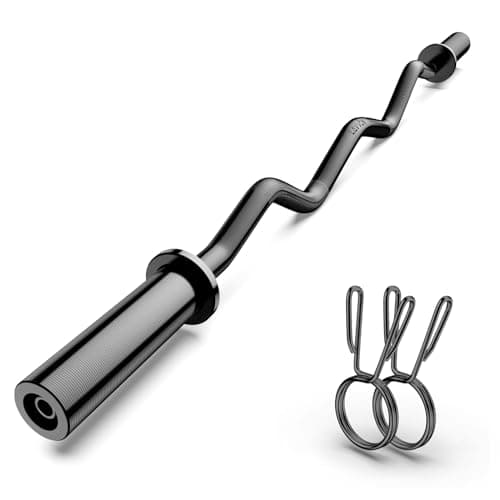
LAVVON 47 in Olympic EZ Curl Bar

Not a first bar - the cheap second bar that takes curls, skullcrushers and hip thrusts off your straight bar and off your wrists.

Best second bar7.9
$49.99 · View on Amazon

#ad · Price as of October 23, 2026 · Affiliate disclosure

03

Every pick, reviewed

PAPABABE 7 ft Olympic Barbell (45 lb)
01
Budget Olympic bar

PAPABABE 7 ft Olympic Barbell (45 lb)

PAPABABE

8.0

A 7 ft, 45 lb Olympic bar with a hybrid knurl — plenty of bar for a beginner's loads.

Length
7 ft
Weight
45 lb
Sleeves
2" Olympic

What we like

  • Standard 7 ft length fits any rack
  • Hybrid knurl works for all lifts
  • Inexpensive

Trade-offs

  • Not a competition-spin bar
  • Finish is basic
$74.99 · View on Amazon

#ad · Price as of October 23, 2026 · Affiliate disclosure

CAP 35 lb 7 ft Olympic Barbell (Black)
02
Best lighter full-length bar

CAP 35 lb 7 ft Olympic Barbell (Black)

CAP

8.3

A full-length 7 ft bar that weighs 35 lb instead of 45 - the one change that makes a barbell learnable for a smaller or deconditioned beginner.

Length / weight
7 ft / 35 lb
Capacity
500 lb
Sleeves
Bronze bushing, 2 in Olympic
Knurl
Volcano, with a center knurl
Steel
100,000 PSI tensile, hard E-Coat finish

What we like

  • Starting at 35 lb instead of 45 lb means the empty bar is a usable first working weight
  • Still a true 7 ft bar, so it sits in any standard rack and clears the uprights
  • Center knurl keeps it from sliding on the back during squats

Trade-offs

  • 500 lb capacity is half what the papababe bar claims - fine for years, not forever
  • Bushings only, so the spin is adequate rather than fast
  • The 10 lb you save off the bar is 10 lb you add back in plates sooner
Value
8
Beginner-friendly
10
Build quality
8
Rack fit
9
$89.99 · View on Amazon

#ad · Price as of October 23, 2026 · Affiliate disclosure

Garvee 7 ft Olympic Barbell, 1,500 lb (45 lb)
03
Best for heavier lifting

Garvee 7 ft Olympic Barbell, 1,500 lb (45 lb)

Garvee

8.5

The highest published capacity in this roundup at 1,500 lb, with needle bearings and brass bushings - the bar to buy if you already know you will get strong.

Length / weight
7 ft / 45 lb (20 kg)
Capacity
1,500 lb
Sleeves
Needle bearings + brass bushings, locking rings
Knurl
1.2 mm diamond, dual powerlifting/Olympic markings
Steel
190,000 PSI tensile, anti-oxidation coating

What we like

  • 1,500 lb published capacity, the highest here - it will outlast any home lifter's progress
  • Bearings and bushings together, which is the construction fast lifts want
  • Both powerlifting and Olympic knurl marks, so hand placement is repeatable

Trade-offs

  • Costs more than the 45 lb bars that do the same job at 1,000 lb
  • 45 lb starting weight is still 45 lb - no help to a beginner who cannot press it
  • Capacity ratings in this price band are manufacturer figures, not certified tests
Value
7
Beginner-friendly
7
Build quality
9
Rack fit
9
$99.99 · View on Amazon

$119.99 17% off

#ad · Price as of October 23, 2026 · Affiliate disclosure

CAP 28 lb 6 ft Olympic Barbell (Black)
04
Best for a short room

CAP 28 lb 6 ft Olympic Barbell (Black)

CAP

7.8

A 6 ft, 28 lb Olympic bar for a room where a 7 ft bar does not physically fit - a real solution, with a real cost.

Length / weight
6 ft / 28 lb
Capacity
500 lb
Sleeves
Bronze bushing, 2 in Olympic
Knurl
Hill-style
Steel
100,000 PSI tensile, hard E-Coat finish

What we like

  • A foot shorter than a standard bar, which can be the difference between fitting a room and not
  • 28 lb empty is the lightest real Olympic bar here
  • Takes the same 2 in plates as everything else, so nothing else in the gym changes

Trade-offs

  • Shorter sleeves hold fewer plates before you run out of room
  • Narrower grip span than a 7 ft bar - check it against your rack's J-hook width before buying
  • Not a squat bar in a wide cage: the shaft may not span the J-hooks safely on a full-size rack
Value
8
Beginner-friendly
9
Build quality
8
Rack fit
5
$69.99 · View on Amazon

#ad · Price as of October 23, 2026 · Affiliate disclosure

papababe 6.5 ft Women's Olympic Barbell (35 lb, 25 mm)
05
Best for smaller hands

papababe 6.5 ft Women's Olympic Barbell (35 lb, 25 mm)

papababe

8.2

A 25 mm shaft instead of 28-30 mm: a thinner bar is easier to hold, and grip is the most common reason a smaller hand loses a lift.

Length / weight
6.5 ft / 35 lb
Grip diameter
25 mm
Capacity
1,000 lb
Sleeves
Hybrid needle bearings + bushings, grooved
Shaft length
51.57 in (131 cm), fits a power cage

What we like

  • 25 mm shaft is noticeably easier to wrap a smaller hand around than a 28-30 mm bar
  • 35 lb empty weight, so the bar itself is not the obstacle
  • 1,000 lb capacity and hybrid bearings - not a downgraded bar, just a narrower one

Trade-offs

  • Thinner shafts flex more under heavy load, which some lifters dislike on squats
  • 6.5 ft length means shorter sleeves and a narrower grip span than a 7 ft bar
  • Most plates, collars and racks assume a 28-30 mm bar, so a thinner shaft can feel loose in J-hooks
Value
8
Beginner-friendly
9
Build quality
9
Rack fit
7
$79.99 · View on Amazon

#ad · Price as of October 23, 2026 · Affiliate disclosure

LAVVON 47 in Olympic EZ Curl Bar
06
Best second bar

LAVVON 47 in Olympic EZ Curl Bar

LAVVON

7.9

Not a first bar - the cheap second bar that takes curls, skullcrushers and hip thrusts off your straight bar and off your wrists.

Length
47 in
Sleeves
2 in Olympic
Capacity
500 lb
Finish
Nickel-plated chrome steel
Included
2 spring collars

What we like

  • The angled grips take the strain off wrists and forearms on curls and extensions
  • Short enough to use in a room where a 7 ft bar cannot be racked or rotated
  • Cheapest bar on this page, and it ships with collars

Trade-offs

  • This is not a squat, bench or deadlift bar - it cannot replace a straight bar
  • 47 inches is too short to rack safely in most power cages
  • 500 lb capacity is plenty for arms and irrelevant for anything else
Value
9
Beginner-friendly
8
Build quality
7
Rack fit
4
$49.99 · View on Amazon

#ad · Price as of October 23, 2026 · Affiliate disclosure

04

How to choose

The four numbers, in the order they matter

Barbell listings throw a dozen figures at you and most of them do not change your decision. Four do, and they are not the four the marketing leads with.

1. The bar’s own weight. This is the number everybody skips and it is the one that decides whether you can train at all. A standard Olympic bar is 45 lb before you add a single plate. For a strong beginner that is a non-issue. For someone coming back from an injury, a smaller lifter, or anyone who cannot yet press 45 lb over their head, a 45 lb bar means your first overhead press session does not happen. A 35 lb or 28 lb bar is not a toy; it is the difference between starting and not starting.

2. Length.Seven feet is the standard and it is standard for a reason - it is what rack J-hooks, bench uprights and plate-storage posts are all designed around. A 6 or 6.5 ft bar fits a smaller room and will not always sit safely in a full-size cage, because the shaft between the sleeves may not span the J-hooks with enough margin. Measure your rack’s inside width before you buy a short bar.

3. Shaft diameter.A men’s bar is 28-30 mm; a women’s bar is 25 mm. This has nothing to do with strength and everything to do with hand size. If the bar is too thick to wrap your fingers around properly, your grip fails before the muscle you are training does - and that is a problem no amount of effort fixes.

4. Capacity. Last, and genuinely last. The bars here publish 500 to 1,500 lb ratings, and a home lifter will not approach the bottom of that range for years. Treat capacity as a tiebreaker between bars you already like, and treat the figures themselves with mild skepticism: in this price band they are manufacturer ratings rather than independently certified tests.

The four numbers that decide it - all figures from the makers' own listings

BarOwn weightLengthShaftPublished capacity
papababe 7 ft45 lb7 ft28-30 mm1,000 lb
CAP 35 lb 7 ft35 lb7 ftNot published500 lb
Garvee 1,500 lb45 lb7 ftNot published1,500 lb
CAP 28 lb 6 ft28 lb6 ftNot published500 lb
papababe 25 mm35 lb6.5 ft25 mm1,000 lb
LAVVON EZ curlNot published47 inNot published500 lb

Where a listing does not publish a figure we have written “not published” rather than filling the cell with a plausible number. That is also useful information: a bar whose shaft diameter is not stated anywhere is a bar you should assume is a standard 28-30 mm men’s shaft.

Bushings or bearings: the question that matters less than you think

Every barbell sleeve has to rotate, because when you clean or snatch a bar the plates keep spinning after your wrists stop. Two mechanisms do that job. Bushings are a sleeve of brass or bronze that the sleeve turns on - cheap, durable and perfectly adequate. Needle bearings are rollers, which spin faster and smoother and cost more. Several bars here use both, which is the construction competition bars use.

Here is the honest version: if you are squatting, benching, pressing, rowing and deadlifting - which is everything a first home gym does - bushings are fine, and the difference between a bushing bar and a bearing bar will not show up in your training for years, if ever. Bearings matter for fast Olympic lifts, where the bar has to spin under your hands mid-rep. Do not pay a premium for spin you will not use; do take it for free when a bar like the papababe includes both anyway.

What you should care about more: the knurl. That is the cross-hatched grip texture, and it has a right answer for a home gym - moderate. Sharp “mountain peak” knurl grips brilliantly and shreds your hands; smooth knurl is comfortable and lets the bar slide. The bars here mostly use volcano or hill-style patterns, which are the moderate middle. A center knurl is worth having if you squat, because it stops the bar sliding down your back, and mildly annoying if you do a lot of cleans.

The thing the bar does not include

A barbell is the cheapest major purchase in a home gym and the most misleading, because the bar is maybe a quarter of what you actually need to spend before you can use it.

  • Plates. Non-negotiable, and usually more expensive than the bar. Our how to choose weight plates guide covers the sizes to buy first, and bumper vs. iron plates settles the choice that actually depends on your floor.
  • Something to rack it on. You can deadlift, row, curl and overhead press from the floor. You cannot safely squat or bench without a rack - there is no version of those lifts where putting the bar back is optional. See racks and squat stands.
  • Collars. Cheap, and the thing that stops plates sliding off one end mid-rep. Some bars include spring collars, some do not - do I need collars explains when you genuinely do.
  • Something under the bar. A deadlift set down on a bare floor is loud and expensive. Deadlift flooring covers the one spot that needs real protection.

All in, a usable barbell setup is a few hundred dollars rather than the price on the bar listing. That is still the best value in strength equipment - it is just not the number you see first. Our $1,000 build assembles the whole thing with the costs in the open.

Who each pick is for

  • papababe 7 ft 45 lb - the default. Standard length, 1,000 lb published capacity, 190,000 PSI steel, needle bearings and brass bushings together, and a 30 mm shaft the listing describes as suiting both men and women. If none of the special cases below apply to you, buy this and stop reading. We write it up in full in our papababe barbell review.
  • CAP 35 lb 7 ft - you want a full-length bar but 45 lb empty is too much. Same 7 ft footprint, 10 lb lighter, bronze bushings, volcano knurl with a center knurl for squats. The trade is a 500 lb capacity instead of 1,000 lb, which is not a real constraint for a beginner.
  • Garvee 7 ft 1,500 lb - you already know you intend to get strong. The highest published capacity here, needle bearings and brass bushings, locking rings on the sleeve ends, and both powerlifting and Olympic knurl marks so your hand placement is repeatable rep to rep.
  • CAP 28 lb 6 ft- the room is the binding constraint. A foot shorter and the lightest real Olympic bar here at 28 lb. Check it against your rack’s J-hook spacing first; in a full-size cage a 6 ft bar may not span the hooks with safe margin. If a short room is your whole problem, read equipment for low ceilings too.
  • papababe 6.5 ft 25 mm- the bar is too thick for your hands. A 25 mm shaft at 35 lb, with the same 1,000 lb capacity and hybrid sleeves as the 7 ft bar. It is sold as a women’s bar; it is the right bar for anyone whose grip gives out before their back does.
  • LAVVON 47 in EZ curl bar - a second bar, and we mean that. The angled grips take curls, skullcrushers and tricep extensions off your wrists, and at 47 inches it works in a room where you cannot rotate a 7 ft bar. It cannot squat, bench or deadlift. See EZ bar vs. straight bar before you make it your only bar, because it should not be.

What we left off, and why

No standard 1 in bars. They are cheaper and they are a dead end: 1 in plates are harder to find, they do not fit any rack’s storage posts, and every upgrade you make later will be 2 in Olympic. Paying a little more once is cheaper than replacing the whole system. The distinction is laid out in Olympic vs. standard barbell.

No duplicate colorways. Several bars on this list are sold in three or four finishes under separate listings, and a roundup that ranked the black one at number two and the silver one at number four would be padding. One entry per actual bar.

No trap or hex bar. It is a genuinely useful piece of equipment and it is not a barbell substitute - the grip position changes which lifts are even possible. It has its own pages: do I need a trap bar and trap bar vs. straight barbell.

No competition-certified bars. IWF- and IPF-certified bars are excellent, cost several times anything here, and buy you tolerances that matter when a judge is watching. Nothing on this site assumes a judge is watching.

And no bar-and-plate combo sets on this page. They are often good value and they are a different purchase with a different decision behind it - the bar inside a cheap set is rarely the bar you would have chosen on its own. Our how much weight do I need guide covers sizing the plates separately.
05

Common questions

What is the best barbell for a home gym?

For most people, a standard 7 ft, 45 lb Olympic bar with a published capacity around 1,000 lb and 2 in sleeves. It fits every rack and every plate you will ever buy, and a beginner will not outgrow it. The exceptions are specific: if 45 lb empty is already heavy for you, buy a 35 lb full-length bar instead; if your room cannot take a 7 ft bar, buy a 6 ft one; if the shaft is too thick for your hands, buy a 25 mm bar.

How much does a good barbell cost for a home gym?

A solid 7 ft Olympic bar sits in the low-to-mid double digits through to around a hundred dollars, and that range buys you everything a home lifter needs. Above it you are paying for competition certification and tighter tolerances; below it you are usually buying a 1 in standard bar, which is a dead end. The real cost is what comes with it - plates typically cost more than the bar, and a rack more again. Our barbell cost guide prices the full package.

Should a beginner get a 45 lb or a 35 lb barbell?

Whichever one you can press overhead with reasonable form today. A 45 lb bar is the standard and the long-term answer, but if the empty bar is already a struggle on overhead press you will skip that lift, and skipping lifts is worse than owning a lighter bar. A 35 lb full-length bar costs about the same, fits the same rack, takes the same plates, and lets you start training now. The 10 lb you give up is 10 lb you add back as a plate within months.

Do I need a 7 ft barbell or will a shorter one do?

Seven feet is standard because racks, benches and plate posts are built around it. A 6 or 6.5 ft bar genuinely solves a small room, but it has two costs: shorter sleeves hold fewer plates, and the shaft may not span a full-size cage's J-hooks with enough margin to rack safely. Measure the inside width of your rack before buying a short bar. If you have no rack yet, a short bar is a much easier decision.

What is the difference between a 25 mm and a 28 mm barbell?

Three millimeters of shaft diameter, which sounds trivial and is not. A 25 mm bar - usually sold as a women's bar - is easier for a smaller hand to close around, so your grip stops being the limiting factor on rows and deadlifts. The trade-offs are that a thinner shaft flexes more under heavy load, and that most collars and J-hooks are designed around a 28-30 mm bar, so a thinner bar can sit a little loose.

Are needle bearings worth it on a home gym barbell?

Usually not, at this price. Bearings spin faster and smoother than bushings, which matters for cleans, snatches and other fast lifts where the bar rotates under your hands mid-rep. For squats, bench, press, rows and deadlifts - everything a first home gym actually does - bronze or brass bushings are completely adequate. Take bearings when a bar includes them anyway; do not pay a premium for them.

Can an EZ curl bar replace a straight barbell?

No. An EZ bar is 47 inches long with angled grips, which makes it excellent for curls, skullcrushers and tricep work and useless for squats, bench press and deadlifts - it is too short to rack safely in most cages and the grip angle is wrong for pressing. Think of it as the cheap second bar that saves your wrists on arm work, bought after a straight bar rather than instead of one.

What capacity barbell do I need?

Far less than the listings imply. The bars here publish 500 to 1,500 lb ratings and a home lifter will not approach 500 lb on a bar for many years, if ever. Capacity is a tiebreaker between bars you already like on weight, length and shaft, not a primary criterion. Worth knowing too: in this price band those numbers are manufacturer ratings rather than independently certified tests, so treat a very large figure as marketing rather than a promise.

Read next

→

Not sure a barbell is your next purchase?

A bar needs plates and a rack before it does anything. Our decision guide walks through whether dumbbells get you further first.