Who it’s for
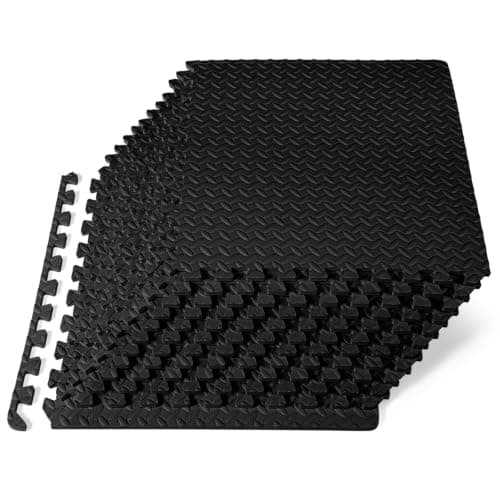
The ProsourceFit puzzle mat is for the beginner whose gym has to coexist with the rest of their life — and especially for renters. These are interlocking half-inch EVA foam tiles: light, quiet, and completely removable. If you’re building a dumbbell corner in a spare room, laying down a comfortable surface for a bench and some bodyweight work, or setting up in an apartment where a loud, permanent floor is a non-starter, this is the flooring designed for exactly that. It snaps together on the floor with no tools, no glue, and no holes, and it lifts right back up when you need it gone.
It suits you if your training is light-to-moderate: dumbbells, kettlebells, a bench, resistance bands, stretching and mobility. It suits you doubly if you rent, share walls, or expect to move, because everything about these tiles is built to be temporary and neighbor-friendly. It also suits the person who just wants a more comfortable, warmer surface than a cold slab under their feet during a workout. Our apartment home gym guide leans heavily on flooring like this for precisely those reasons.
Who should look past it? Anyone whose plan centers on a barbell. If you’re installing a rack, loading a bar, or dropping plates, foam is the wrong tool for the heavy part of that setup — you’ll want dense rubber there instead, which we cover in our Mohawk rubber stall mat review. Foam and iron can still share a room; they just can’t share the same square of floor. Match the surface to the load and both do their job.
What it does well
Start with the thing that matters most for a shared space: these tiles cushion the floor and cut noise. A layer of half-inch foam under your workout softens the sound of a dumbbell settling, takes the harshness out of footwork and jumps, and puts a forgiving surface between you and a hard floor. In an apartment or a room above someone else’s ceiling, that damping is the difference between a gym you feel free to use and one you tiptoe around. It won’t silence heavy iron — nothing this light will — but for the training it’s meant for, it keeps things quiet and comfortable.
The second strength is how easily it goes down and comes up. The tiles snap together and lift up cleanly, with no adhesive and no fasteners. You interlock them like a jigsaw to cover your workout footprint, and when you want the floor back — company coming, a move, a room that does double duty — you unclip them and stack them out of the way in minutes. That tool-free, reversible install is the whole reason foam tiles exist, and it’s what makes them so forgiving for a first setup where you’re still figuring out the layout.
The third is simply that they’re cheap and light. Foam tiles are among the least expensive ways to put a real surface under a home gym, and they weigh little enough to carry in one trip and rearrange on a whim. For a beginner watching the budget, that keeps flooring from eating into the money that should go toward weights and a bench. You can see how a light, affordable floor fits the bigger picture in our home gym flooring guide, which maps the whole room surface by surface.
There’s a fourth benefit that only shows up once you’re training on the tiles: they make floor work far more pleasant. A half-inch cushion takes the hard edge off planks, push-ups, mobility drills, and the between-set stretching a first routine is full of, and it puts a warmer, less clammy surface between you and a cold slab. That comfort sounds minor until you’re holding a plank on bare concrete — in practice it’s a big part of why a foam floor gets used more than a hard one. The tiles also give light gear a little grip, so a bench or a pair of dumbbells stays where you set it instead of creeping on a slick surface during a set.
Put those together and you get flooring that’s genuinely renter-safe. Nothing about these tiles threatens a deposit — no drilling, no glue, no permanent marks — and when the lease is up they come with you. For a first home gym that has to be quiet, temporary, and easy on the wallet, that’s a strong hand, and it’s why these earn a solid mark from us as apartment flooring.
Where it falls short
The honest limits here are all about load, and they’re the same two every buyer should hear up front. The first is that foam dents under heavy iron. A half-inch tile is comfortable and protective for its weight class, but park a heavy rack on it or set down loaded plates and the foam compresses and takes lasting impressions. It’s not built to bear the concentrated weight of a serious strength station, and asking it to will chew the tiles up. This isn’t a defect — it’s the nature of light foam — but it’s the reason foam belongs under the lighter parts of a gym, not the heavy ones.
The second, closely related, is that these tiles are not for dropping loaded barbells. If a bailed squat or a missed deadlift is anywhere in your plans, foam won’t take that impact — it’ll crush, and the floor underneath will feel it. Setting a dumbbell down under control is fine; a loaded bar coming down is not. For anyone lifting a barbell, the fix is straightforward: put a dense rubber mat in the drop zone and reserve the foam for the dumbbell and bodyweight areas around it.
Beyond load, the only other thing to plan for is coverage. A workout area made of interlocking tiles has seams, and a single kit covers a footprint rather than a whole room — you add tiles to extend it. For most beginners that’s a feature, since you buy only what you train on, but if you’re picturing wall-to-wall foam it’s worth knowing you’ll be laying and clipping a fair number of pieces. None of this changes what the tiles are good at; it just keeps expectations matched to what light, removable foam is designed to do.
How it compares
The comparison that matters is foam versus rubber, and the two aren’t rivals so much as teammates. Foam tiles are the light-duty specialist: cheap, quiet, comfortable, and easy to pull up, which makes them ideal for a dumbbell corner, a stretching zone, or a renter’s room. A dense rubber stall mat is the heavy-duty specialist: it takes dropped plates and anchors a rack, at the cost of being heavy and permanent. Choosing between them is really choosing what lands on that patch of floor. We put the two head to head in rubber vs. foam flooring if you want the full side-by-side.
The smartest setups often use both. A run of these foam tiles covers the light areas, and a dense rubber mat handles the heavy station where a rack sits or weight comes down. That split keeps the budget lean — you pay for rubber only where you drop iron and use cheaper, softer foam everywhere else. For a gym that’s entirely dumbbells and bodyweight, though, foam alone can genuinely be the whole floor, and that’s a perfectly legitimate first setup.
Against other soft flooring, half-inch tiles hit a sensible middle. Thinner mats give you less cushion and less noise control; thicker foam is plusher but bulkier and pricier to cover an area. For a general-purpose beginner floor that has to be quiet, comfortable, cheap, and removable, the half-inch tile is the balanced pick — enough underfoot for real workouts without paying for density you don’t need.
The verdict
The ProsourceFit puzzle mat is the flooring we’d hand a renter or an apartment lifter building a first gym around dumbbells, a bench, and bodyweight work. It cushions the floor, keeps the noise down for the people around you, and — best of all — snaps together and lifts up in minutes with no glue, no drilling, and nothing that risks a deposit. For a light-to-moderate setup that has to stay temporary and cheap, that’s exactly the right set of trade-offs, and it’s why these earn a solid mark from us as apartment flooring.
Just hold the two honest limits in mind: foam dents under heavy iron, and it’s not for dropping a loaded barbell. Neither one is a knock against what the tiles are for — they’re the reason you’d pair foam with a dense rubber mat the moment a rack or a bar enters the room. Keep the foam under the light areas, put rubber under the heavy ones, and you’ve got a floor that does every job well.
If you’re still planning the space, start with our home gym flooring guide to see what surface belongs where, and if you’re working in a rental, our apartment home gym guide shows how quiet, removable flooring like this anchors a setup you can take with you. Get the floor right and it disappears into the background — which, for a renter, is exactly the point.