Measure the lowest thing, not the ceiling
Almost every low-ceiling mistake starts with measuring to the wrong surface. The number that governs your gym is the distance from the floor to the lowest obstruction above the lifting spot - an exposed joist, a duct run, a sprinkler head, a light fitting, or in a garage the open door track. Drywall between the joists is irrelevant if a duct hangs eight inches below it.
Then subtract the floor you are going to add. An inch and a half of rubber tile is an inch and a half of ceiling you no longer have, which is a real trade in a basement: see flooring on concrete for how thin you can safely go. Measure with the flooring in place, or at least on paper.
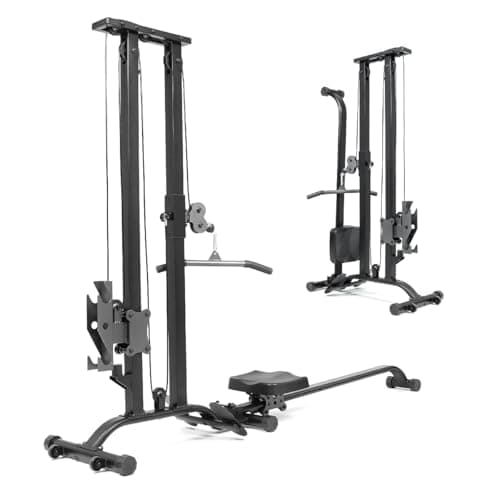
Read the middle column carefully. Only one pick on this page carries a published assembled height, and that is the TOUSAINS tower at 62.99 inches. The stand and the wall rack are adjustable or mounted, which is the whole reason they are here: you set the height, so the ceiling cannot veto the purchase. The dumbbells, bench and doorway bar have no vertical requirement beyond your own body.
Why a four-post cage is not on this page
A power cage is the right purchase for most home gyms and we recommend one elsewhere - best power racks and squat stands ranks five of them. In a low-ceiling room it is the wrong purchase for one structural reason: the top frame and the pull-up bar sit at a fixed height you cannot change, and on a full-size cage that height is close to seven feet. If the room is seven feet, the cage either does not go in or goes in with its pull-up bar unusable - and you have paid for a pull-up bar.
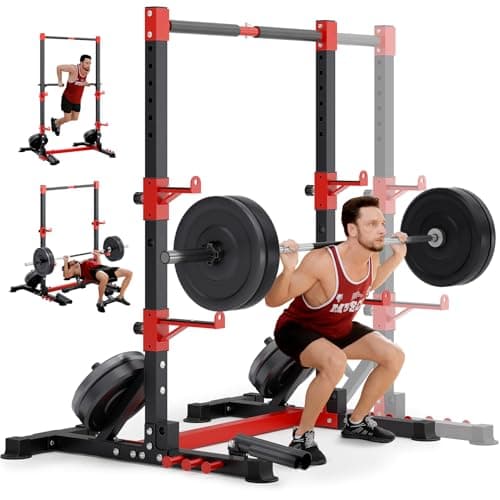
A squat stand has no top frame. Two uprights, adjustable J-hooks, adjustable safety arms, nothing above the bar. That is why it wins here even though a cage wins almost everywhere else. The trade is real and worth stating: a stand catches a failed rep on its safety arms rather than inside a steel box, so set the arms properly every session and read squat stand vs. power rack before you decide.
The folding wall rack, if you own the wall
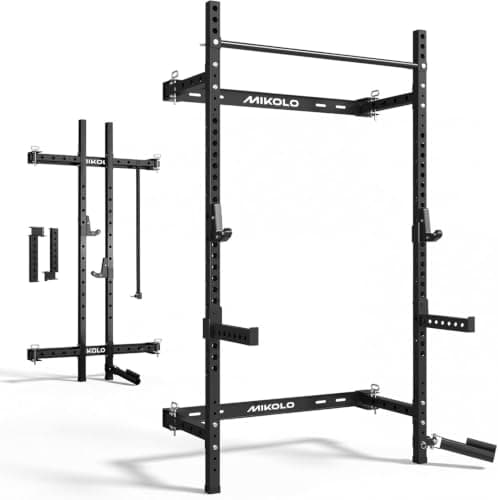
A folding wall-mounted rack is the most elegant answer to a low, awkward room and the most demanding one. You bolt it to studs or masonry at the height you choose, pull it out to lift, and fold it flat afterwards - our pick is rated to 1,000 lb on 2 x 2 inch uprights. In a basement with a ceiling you cannot change and a floor you need back, that combination is hard to beat.
What it asks for is permanent. You need a wall you are allowed to drill into, solid fixings, and the willingness to put holes in it - wall-mounted vs. freestanding walks through that decision, and renters should assume the answer is no. If you cannot drill, go back to the squat stand.
Cables and pull-ups: the two things a low ceiling really costs you
Most lifts fit in a short room. Two do not, and both have workarounds on this page.
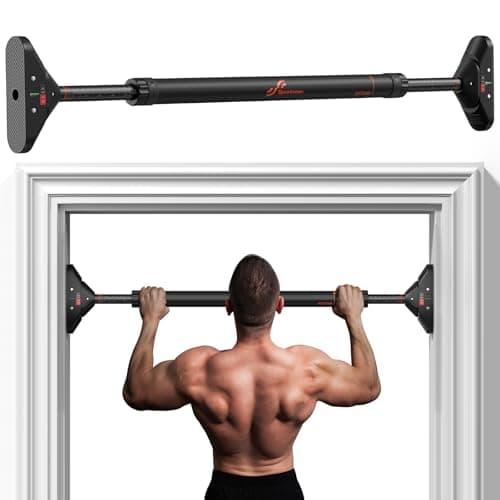
- Vertical pulling. A ceiling-mounted lat bar is out, and a cage-mounted pull-up bar may be out. The doorway bar solves it by borrowing the one place in the house with a structural header at a known height, and a cable tower solves it by bringing the pulley down to 63 inches. Our do I need a cable machine guide is the honest version of that decision.
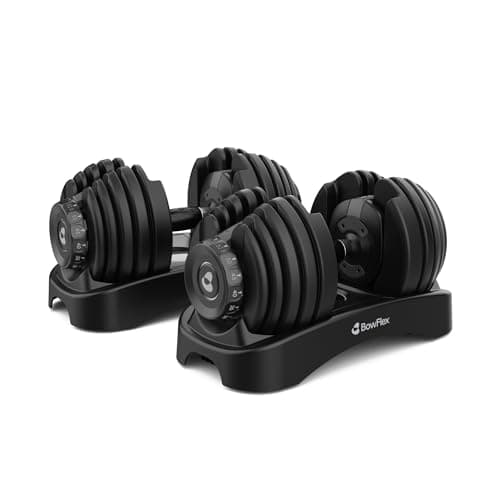
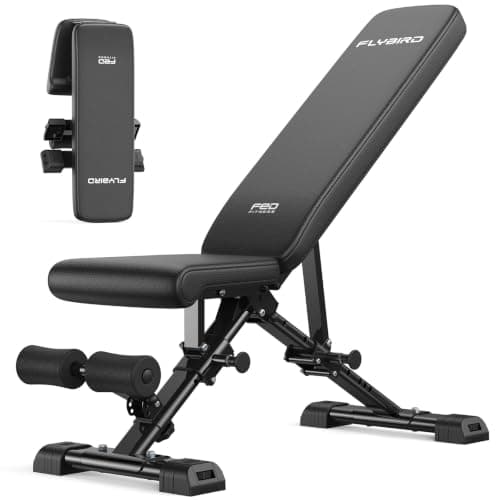
- Overhead pressing. Standing, with a barbell, is usually gone. Seated, with dumbbells, is not - and for a beginner it is arguably the better exercise anyway because the bench supports the lower back. That is most of the reason the SelectTech pair is on a ceiling-constrained list at all: a seated dumbbell press needs no more height than your own seated reach.
Everything else - squats, deadlifts, rows, bench press, hinges, carries, lunges - happens below six feet and does not care about your ceiling at all. A short room is not a reason to train less; our full-body equipment list covers the six movement patterns and every one of them is available to you.
Who each pick is for
- YOLEO Squat Rack - the default. Adjustable uprights, safety arms, no top frame, and a price well under a cage. Buy this unless you own the wall.
- Mikolo Folding Wall-Mounted Rack - you own the wall and want the floor back. You pick the mount height; the ceiling stops being a factor.
- TOUSAINS Foldable Cable Machine - you want pulldowns and the ceiling is the reason you have not bought a cable. 62.99 inches assembled, 2.92 sq ft folded.
- Bowflex SelectTech 552 - the load that never needs headroom. Seated presses, rows, curls and lunges from 5 to 52.5 lb per hand.
- FLYBIRD WB5 - the bench that makes seated and incline pressing the default instead of the compromise. ASTM-certified to 800 lb, folds flat.
- Sportneer doorway pull-up bar - vertical pulling without a ceiling fixing. Fits 29.5 to 37 inch frames, rated to 440 lb, no drilling.
What we left off
No four-post cages, for the reason above. No ceiling-mounted anything - rings, straps or a joist-mounted pull-up bar - because in a low room the fixing point is the problem rather than the solution, and in a basement it is often a joist you should not be loading. No Smith machine or all-in-one stack: both are tall, fixed-height frames, which is the same mistake as the cage in a heavier box. If a stack is what you want, read best home gym machines and check the published height against your room first.
And no drop platform. Deadlifting in a basement is fine; dropping a loaded bar onto a slab under someone else’s living room is a different conversation about noise, and putting a home gym upstairs plus our mats roundup cover it better than a product slot would.