The short answer: buy free weights for a first home gym, and buy a selectorized weight-stack machine when pin-select convenience is the thing that will actually get you training. A bench, a pair of adjustable dumbbells and a stand with safety arms cost less, fit a smaller room, cover more exercises and scale to whatever you can lift. That is the default and it is not close.
The case for the stack is narrower and real. Nobody re-loads plates, two or three people can train at different weights in the same hour, and one frame gives you a lat pulldown, a chest press, a row and a leg extension - including the vertical pulldown that free weights genuinely cannot load. If that description is your household, the machine is not a compromise.
What “selectorized” means, and why it costs
A selectorized machine carries its own stack of steel plates and a pin. You move the pin, the weight changes, and there are no loose plates in the room at all. A plate-loaded machine makes you supply and hang the weight yourself.
That stack is the reason multi-station machines cost what they do: it is the heaviest and most expensive component in the frame, plus the guide rods and the selector mechanism that hold it. Which is also why the honest free-weight comparison is not “machine vs. dumbbells” on features - it is what does the same money buy in pounds and in lifts.
Three rows decide most purchases. Weight per dollar favours free weights so heavily that it is the whole argument for a tight budget - see how much a home gym costs. Space when idle decides it in a shared room, because a machine never gets smaller. And two people at once is the row machine owners cite most: a stack with two pins beats a single adjustable pair whenever more than one person trains.
What a stack does that free weights do not
- The loaded vertical pull. This is the real functional gap in a free-weight home gym. If you cannot do pull-ups, nothing in a bar-and-dumbbell setup trains a pulldown with a weight you choose. Most stack machines include one, and the cheap alternative is a rack-mounted pulley.
- Constant tension through the range. A cable keeps load on the muscle where a dumbbell goes slack - at the top of a row, the bottom of a fly. Useful, and a refinement rather than a gap.
- Failure without risk. A pin-select stack can be pushed to the last rep with nobody home. A loaded barbell cannot, unless you have safeties set properly - training without a spotter covers doing that right.
- A near-zero learning curve. Sit, pin, push. For an older beginner or someone returning after years away, that is a genuine advantage, which is why guided paths feature in our equipment for seniors picks.
What free weights do that a stack cannot
Mostly: everything else, and cheaply. A bar and plates will squat, deadlift, press overhead, row, lunge, carry, hinge and clean. They scale from an empty 45 lb bar to more weight than you will ever lift, for roughly a dollar or two per pound. And they ask your body to stabilise the load, which is part of the training rather than a tax on it.
Dumbbells add unilateral work - one side at a time, where a weak side cannot hide behind a strong one. A folding bench plus one adjustable pair is still the most training per square foot money can buy at home, which is why it is the foundation of every build on this site, from $300 to $2,000.
Which to buy, by situation
Both routes, by situation - live prices, last verified October 21, 2026
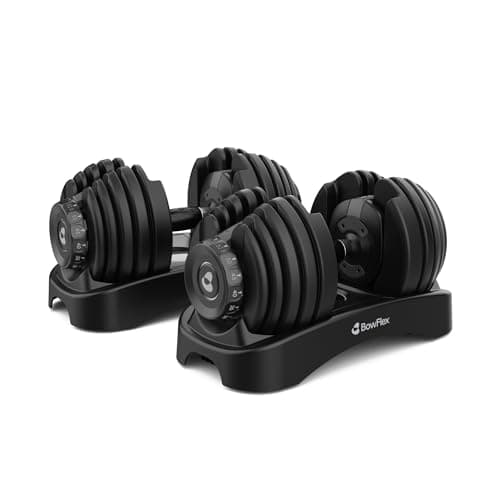
Bowflex SelectTech 552
The dial-adjust benchmark: one dumbbell replaces 15, from 5 to 52.5 lb, in a footprint the size of a shoebox.
#ad · Price as of October 21, 2026 · Affiliate disclosure
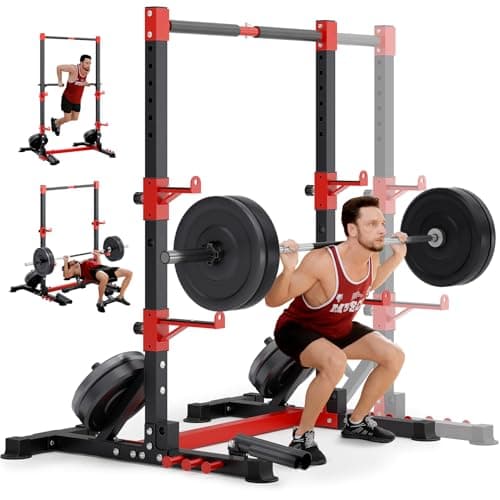
YOLEO Squat Rack
An adjustable squat stand with a pull-up bar and extended safety arms — the safest way for a solo lifter to start barbell training on a budget.
#ad · Price as of October 21, 2026 · Affiliate disclosure
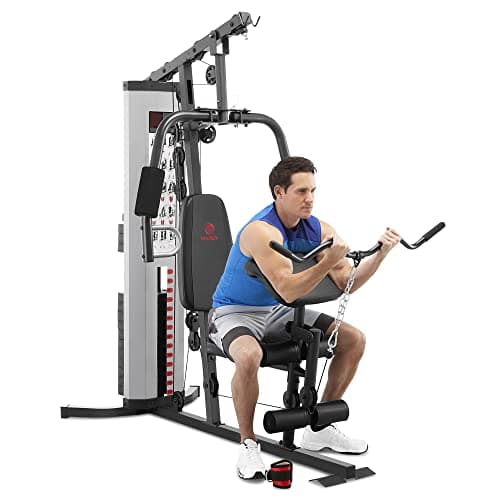
Marcy MWM-988 Home Gym System
The long-running budget multi-gym: a 150 lb selectorized stack, dual-action press arms and a leg developer in one frame, at the lowest price a known brand charges for a weight stack.
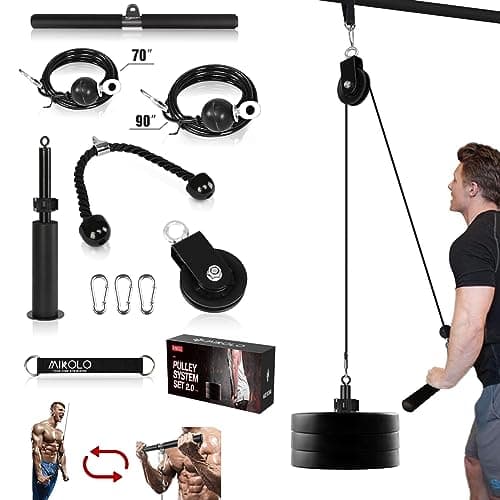
Mikolo LAT and Lift Pulley System
A loading pin, two cables and a pulley that hang off the rack you already own — the cheapest honest way to add cables to a home gym.
That last pick is the answer most people should hear. If the appeal of a machine is the pulldown - and in our experience of this question it usually is - then a pulley that hangs off a rack you already own gives you the pattern for a tiny fraction of a machine’s price, and leaves your free weights intact.
The combination most home gyms land on
There is no prize for purity. The setups that get used for years tend to look like this: adjustable dumbbells and a bench for pressing and rowing, a stand or cage with safety arms for heavy squats and presses, and one cable solution - a rack pulley, a wall station or a stack machine - for the vertical pull and the accessory work. Free weights for load, cables for the gap.
Buy in that order and you never waste money correcting it. Start with the machine and you will often end up buying dumbbells anyway; start with the free-weight core and the machine becomes an optional, well-understood upgrade. Our flagship equipment list is that core in one page, and best home gym machines is the stack route if you have decided the pin wins.