Three shapes of rubber, three different jobs
Rubber gym flooring is sold in three form factors and the search results treat them as interchangeable. They are not, and picking the wrong shape is a more expensive mistake than picking the wrong brand.
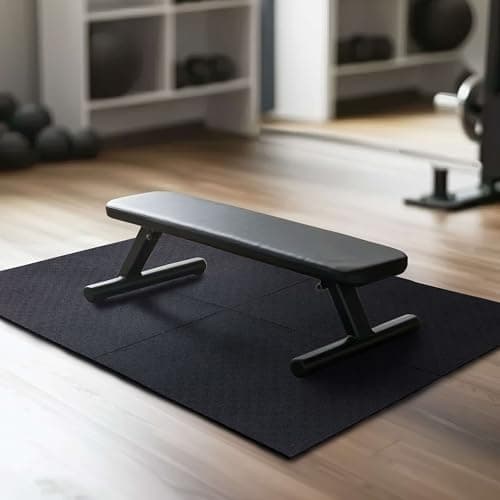
- Mats (stall mats, equipment mats). One dense piece for one spot. Heavy, cheap per mat, and the right answer under a rack, a bench or a machine. They do not interlock, so a gap between two mats stays a gap.
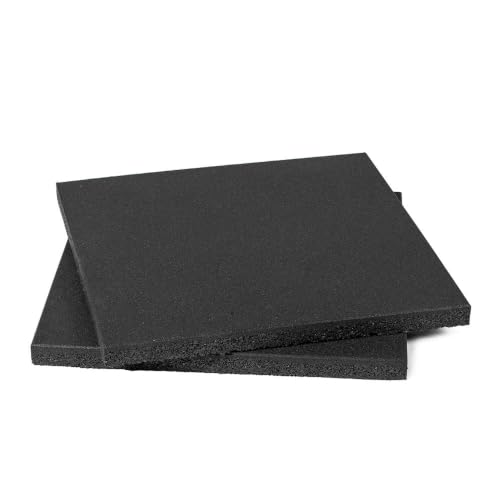
- Tiles. Squares you lay side by side, available much thicker than mats or rolls. This is the only form factor you will find rated for barbell drops, and it is priced accordingly. Tiles also lift and move if you rearrange or relocate the gym.
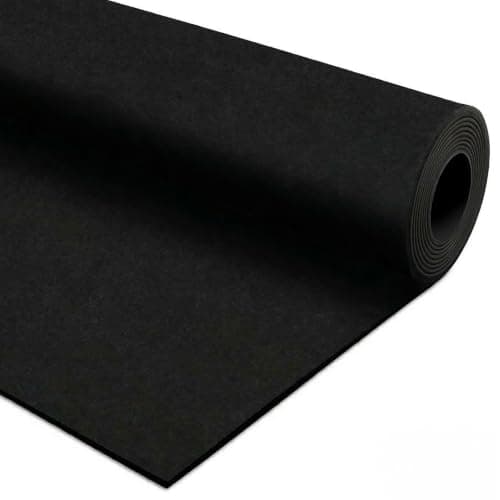
- Rolls. One continuous sheet, usually thin. The best way to cover a large area with no seams, and the worst way to absorb impact. Heavy and awkward to unroll alone.
Most finished home gyms end up with two of the three: a thin layer over the training area and a thick pad in the drop zone. That is not upselling, it is just what the physics forces.
Thickness, coverage and what each one is for
Note the first row. The Mohawk mat’s listing describes it as heavy-duty dense rubber but does not publish a thickness figure, so the table says so rather than filling the cell with a number we would be guessing at. That is the one spec we would like for this pick and do not have; stall mats of this type are typically sold in the half-to-three-quarter-inch range, and we are not going to state that as if it were on the listing.
Note also the 1.6-inch tiles create a step up from the surrounding floor. That is not a defect, it is arithmetic, and it is worth planning around before you lay them - a lip you trip over mid-set is worse than a slightly less protected floor.
Cost per square foot, not cost per item
The prices above are per item and they will mislead you if you compare them straight across. A single mat is cheap and covers one spot. The roll looks expensive and covers 40 square feet in one go. The tiles look mid-priced and cover 8 square feet per pack, which makes them by far the dearest per square foot of anything here.
So do the arithmetic for your actual room before you buy:
- Under a rack and a bench only - two or three stall mats. Cheapest total spend by a wide margin, and the right answer for most first gyms.
- A whole training area you walk and move equipment across - the roll. One piece, no seams, and cheaper per square foot than tiling the same area.
- A deadlift drop zone - one pack of tiles, under where the ends of the bar land. Two 24-inch tiles is usually enough; you do not need a platform. Best gym flooring for deadlifting sizes that properly.
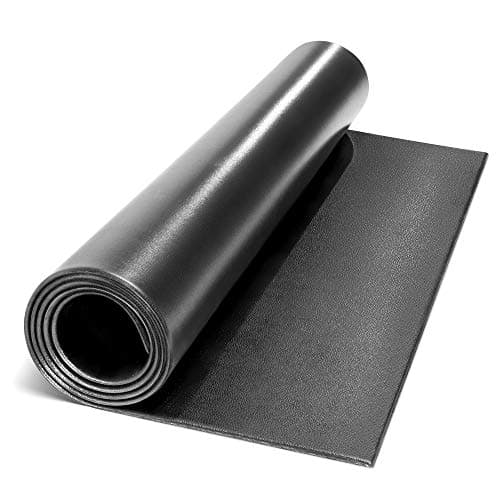
- A bench-and-dumbbell corner on wood or laminate - the Marcy mat. Wide, thin, cheap, rolls away.
What rubber flooring does and does not fix
Three honest limits, because flooring gets sold as a cure for problems it only partly touches.
- Noise: helped, not solved. Rubber absorbs the high-frequency clatter and much of the drumming. It does not stop low-frequency impact travelling through a joisted floor into the room below - that is structure, not surface. If you are upstairs or over a neighbour, read home gym noise reduction and can you put a home gym upstairs before you buy, not after.
- Concrete: rubber is for your joints and your plates, not the slab. A garage slab does not need protecting from a bench. It needs a layer so that the plates, the bar and your knees are not meeting bare concrete. Home gym flooring on concrete covers that, and best garage gym equipment covers the rest of the garage problem.
- Over carpet: possible, with caveats. Rubber over carpet is less stable under a rack and traps moisture beneath it. Home gym flooring over carpet is the page for that specific room.
Who each pick is for
- Mohawk rubber stall mat - almost everyone, and it is the cheapest thing here. One dense mat per spot under a rack, a bench or a machine. Heavy to move, and it smells of new rubber for a week or two.
- Titan Fitness lifting tiles - you drop loaded barbells. The only pick rated by its maker for deadlift and Olympic drops, at 1.6 inches. Buy one pack as a drop pad, not as a floor; it is the dearest per square foot on the page.
- Traxxon rubber roll - you want to cover a whole area properly. 40 square feet in one seamless piece, recycled rubber that shrugs off rack feet and dragged equipment. At a quarter inch it is not a drop pad, and it is awkward for one person to unroll.
- Marcy equipment mat - the cheapest wide option. 78 by 36 inches of quarter-inch rubber under a bench, bike or machine, and it rolls up for storage. Almost no impact absorption - nothing heavy should land on it.
What we left off, and why
No foam puzzle tiles, even the two we recommend elsewhere. Foam is the right answer for a renter, for a room where the floor has to go back to normal, and for anybody prioritising cushioning over durability - but it is a different material with different failure modes, and mixing it into a page titled “rubber gym flooring” would make the ranking meaningless. Both are on best home gym flooring, and rubber vs. foam picks between them.
No horse stall mats bought from a farm supplier, which is the classic garage-gym move and genuinely good value. We rank products we can resolve to a live listing with a live price; a local feed-store pallet price is not something we can verify or keep current, so it stays in the prose rather than in the ranking.
No invented thickness figures. One pick on this page does not publish a thickness and the table says so. We would rather have an honest gap in a cell than a plausible number nobody can check.
And no drop ratings we cannot source. Exactly one pick here is described by its maker as suitable for dropping a loaded barbell. The other three are not, and we have not implied otherwise - several would probably survive a controlled set-down, but “probably” is not a spec.