01
The $300 Home Gym Build
Four purchases, every major movement pattern, and no barbell in sight. This is the cheapest setup we would call a real gym rather than a drawer of accessories.
A pair of adjustable dumbbells, an ASTM-certified bench, a doorway pull-up bar and a band set. That is the whole build, it lands under $300 at today’s live prices, and it trains every movement pattern a beginner needs: push, pull, hinge, squat, carry. If you have been waiting to start until you could afford a rack, stop waiting - this is enough gym to get genuinely stronger for the next six months.
What makes it work is that nothing in the list is a toy. The adjustable dumbbell pair goes to 25 lb a side, which is more than most beginners press for reps in week one. The bench is ASTM-certified to 827 lb and arrives 98% assembled - it is the cheapest bench we trust, not the cheapest bench. The doorway bar is rated to 440 lb and needs no drilling, so it works in a rental. The bands cover the accessory work that keeps shoulders healthy while you build up to heavier pressing.
What is deliberately missing: a barbell, plates and a rack. Those three are the single biggest cost in any home gym - comfortably $400 together - and they are also the three things a true beginner can defer longest. Our $500 build adds conditioning and flooring to this foundation, and the $1,000 build adds the bar, the plates and a stand with safety arms. You are not buying a dead end; you are buying the first four rows of a bigger list.
The build, costed to the dollar
Every piece in buy-first order, with a running total and the budget left after each. Prices are live from Amazon and update automatically.

The load. One pair from 5 to 25 lb a side covers presses, rows, curls and lunges.
$139.99 10% off
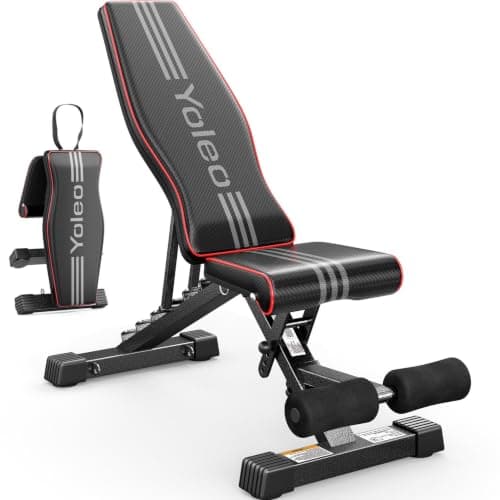
ASTM-certified to 827 lb, 98% pre-assembled, and it folds - the cheapest bench we trust.
$89.99 11% off
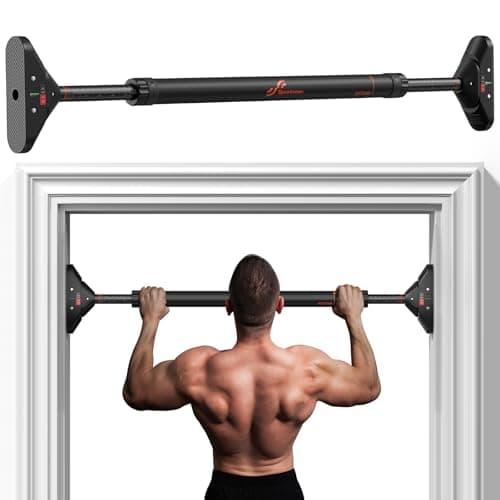
The vertical pull nothing else here loads, with no drilling and no deposit risk.
$49.99 20% off
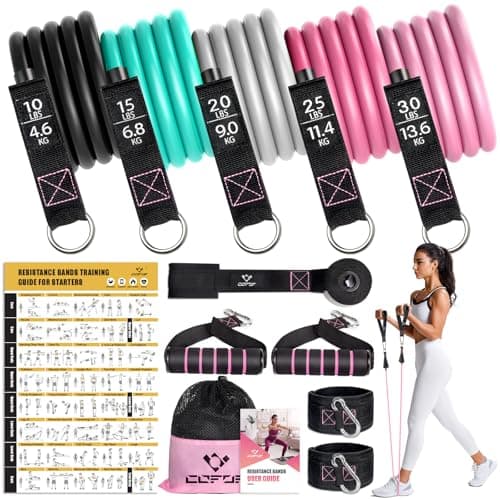
Door-anchored presses, rows and pull-aparts for the price of a takeaway.
$26.97 22% off
Room left for extras — plates, a second kettlebell, or a mat.
Notes, swaps, and where to save
Why these four, in this order
Buy the dumbbells first. They are the only item that loads real weight, and a pair of adjustables replaces a rack of fixed pairs in a shoebox of floor space - adjustable vs. fixed dumbbells explains why that is the right trade at this budget. With the dumbbells alone you can train presses from the floor, rows, curls, lunges, goblet squats and carries.
The bench is second because it roughly doubles what the dumbbells can do. Flat and incline pressing, supported rows, step-ups, hip thrusts and seated shoulder work all need something to lie or sit on, and a bench that is not certified is a bench you cannot trust under a load plus your bodyweight. The YOLEO is the one we point beginners at: how to choose a weight bench covers what the certification actually means.
Third, the pull-up bar, because a dumbbell-and-bench gym has one real hole in it: the vertical pull. Nothing in rows 1 and 2 loads a pulldown pattern. A doorway bar is the cheapest honest fix at this budget - no drilling, no cable station - and if you cannot yet do a pull-up, negatives and band-assisted reps are how you get there. See how to do pull-ups at home.
Fourth, the bands, which are the cheapest item and the one people skip. They do two jobs that matter at this stage: shoulder warm-ups before every pressing session, and door-anchored presses and rows on days when you want volume without more iron. Read bands vs. dumbbells for where the honest limits are - bands are a supplement here, not the load.
What about flooring?
It is not in the tally, on purpose. At this budget we would rather the $300 go to load, support and a pull-up bar than to a mat - and we would rather the running total keep real slack under the cap than squeeze a mat in and blow the number the week a price moves.
That said, if you are training over a finished floor or above someone else, buy one mat as soon as you can. A single stall mat under the bench and dumbbells is the cheapest version and it is genuinely worth it: it protects the floor when a dumbbell comes down, stops the bench feet marking, and kills most of the noise. Our home gym mats roundup covers the one-mat purchase, and home gym noise reduction covers the rest of what neighbours hear.
How to train on four items
Three sessions a week, full body, every session hitting a push, a pull and a leg movement. With this exact kit:
- Push - dumbbell bench press on the flat bench, then seated dumbbell shoulder press on the incline. Both are in our full-body dumbbell workout.
- Pull - pull-ups or negatives from the doorway bar, then single-arm dumbbell rows with a knee on the bench.
- Legs - goblet squats and split squats with the dumbbells, then hip thrusts with your shoulders on the bench.
- Finish - band pull-aparts and band curls or pushdowns, which cost nothing in recovery and keep the shoulders honest.
That is a complete beginner program, and our beginner workout lays it out set by set. The 25 lb per hand ceiling will start to feel light on rows and squats within a few months - which is the correct moment to add weight, not the moment to regret the purchase.
What to add next, in order
When you have another $200 and the habit has stuck:
- One mat (around $30) - the cheapest quality-of-life upgrade in a home gym.
- A 20 lb kettlebell (around $30) - swings, carries and conditioning that dumbbells do awkwardly. See do I need a kettlebell.
- Heavier dumbbells - the honest answer when 25 lb a side runs out. Stepping up to a 52.5 lb pair roughly doubles your ceiling; our adjustable dumbbells roundup has the value pick.
- Then the barbell tier - bar, plates and a stand with safety arms, which is where the $1,000 build picks up. Do not buy a bar before you have somewhere safe to rack it: squat stand vs. power rack is the decision that comes next.
One thing not to buy next: a cable machine. It is the most common early over-purchase, and at this stage a doorway bar already covers the pattern it adds - do I need a cable machine makes that case in detail.
Where this build has real limits
Three honest ones. The weight ceiling is 25 lb per hand, which is months not years - this is a starter load, and anybody already lifting will outgrow it immediately. There is no squat or deadlift under a bar, so your legs will be trained by goblet and split squats rather than by loaded barbell work, which is fine for a beginner and limiting after that. And there is no flooring in the tally, so if you are above a neighbour, add a mat before you add weight.
None of that makes it a bad purchase. It makes it the right first $300 - and every item stays useful after the upgrade, which is not true of the cheap all-in-one machines at the same price. If your budget is genuinely tighter than this, read the cheapest home gym setup and best equipment under $100 instead.
Common questions
Can you build a home gym for under $300?
Yes, if you skip the barbell tier. Four purchases - a pair of adjustable dumbbells to 25 lb a side, an ASTM-certified bench, a no-drill doorway pull-up bar and a band set - come in under $300 at current live prices and cover push, pull, hinge, squat and carry. What you cannot buy at this budget is a barbell, plates and a rack, which together cost more than the whole list.
What should I buy first with a $300 home gym budget?
The dumbbells. They are the only item that loads real weight, and an adjustable pair replaces a rack of fixed pairs in a fraction of the space. The bench comes second because it roughly doubles what the dumbbells can do - flat and incline pressing, supported rows, step-ups, hip thrusts. The pull-up bar is third because it fills the one hole a dumbbell gym has, and bands are fourth and cheapest.
Is a $300 home gym enough to build muscle?
For a beginner, yes, for months. Muscle responds to progressive tension, not to equipment cost, and a 25 lb per hand pair plus a bench plus bodyweight pulling gives you plenty of room to add reps, sets and weight. The limit arrives when 25 lb a side stops being challenging on rows and squats - at that point you add heavier dumbbells or move up to the barbell tier.
Why is there no flooring in this build?
Because at $300 the money is better spent on load, support and a pull-up bar, and because leaving the mat out keeps real slack under the cap when prices move. It is still the first thing we would add afterwards: one stall mat under the bench and dumbbells protects a finished floor, stops the bench feet marking it, and kills most of the noise for anyone below you.
Do I need a barbell to get strong at home?
Not to start. A barbell is the most efficient way to load squats, deadlifts and presses heavily, and it is also the purchase that drags a rack, plates and flooring in behind it. A beginner can build real strength with dumbbells and bodyweight for the first several months, then buy the bar once the habit is proven - which is exactly how our $500 and $1,000 builds are sequenced.
What is the difference between this and the $500 build?
The $500 build starts from the same dumbbells-and-bench foundation and adds the two things this list leaves out: conditioning (a 20 lb kettlebell) and flooring (foam puzzle tiles), with more budget headroom overall. Neither includes a barbell. If you can stretch to $500, the extra buys comfort and durability rather than a fundamentally different gym.
Will cheap equipment break?
Some of it will, which is why this list avoids the cheapest version of everything. The bench is ASTM-certified to 827 lb rather than untested, and the pull-up bar is rated to 440 lb. The honest weak point of a budget build is the adjustable dumbbell mechanism - plastic housings and pins take more care than a lump of cast iron. Set them down rather than dropping them and they last; see our guide on how long adjustable dumbbells last.
Read next
Ready for the barbell tier?
The $1,000 Build takes this exact foundation and adds a bar, 160 lb of plates and a stand with safety arms - itemized, with live prices.