Who it’s for
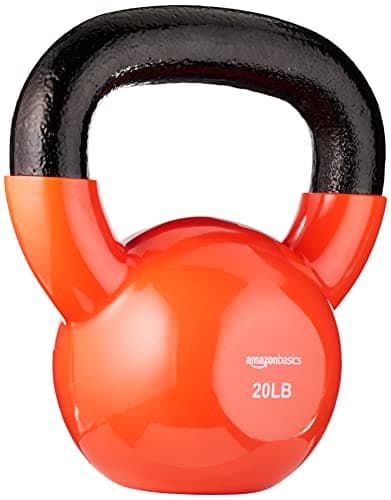
The Amazon Basics 20 lb kettlebell is for the beginner who already has some weights and wants to add a conditioning element without spending much or clearing more floor. It’s not the anchor of a home gym — dumbbells and a bench usually fill that role — it’s the affordable add-on that brings a different flavor of training into the room. One vinyl-coated, cast-iron bell unlocks swings, goblet squats, and loaded carries, which is a full circuit of movement patterns that free weights don’t cover in quite the same way.
It suits you if your workouts are all strength and no cardio, and you’d like a simple way to get your heart rate up at home. It suits you if you want to train your hips, legs, core, and grip with one object you can pick up and put down in seconds. And it suits the budget-minded beginner especially well, because a single fixed bell costs little and asks for almost no space — it lives in a corner and waits. If you’re still deciding whether a kettlebell or a dumbbell is the more useful first purchase, our kettlebell vs. dumbbell guide walks through where each one earns its place. Not sure a bell belongs in your gym at all? See do I need a kettlebell. Once you own one, learn the kettlebell swing, and if muscle is your goal, our honest take on whether you can build muscle with kettlebells covers the limits.
Who might want something else? If you already know you’ll want a range of kettlebell weights — a lighter one for pressing, a heavier one for swings — a plate-adjustable bell can save you buying several, and we cover that route in our Yes4All adjustable kettlebell review. But if you just want one honest bell to bolt conditioning onto an existing setup, a fixed 20 lb is the low-fuss, low-cost way in.
What it does well
The headline strength is versatility from a single object. One bell covers swings, squats, and carries — and that short list is deceptively complete. Swings train your hips and double as conditioning; goblet squats load your legs and teach a clean squat pattern; carries build a strong core and a vice grip while barely feeling like a workout. Stack those together and a lone 20 lb kettlebell can run a genuine full-body session on its own. For a beginner, that’s a lot of training returned from one inexpensive purchase.
The second thing it does well is protect your space. The vinyl coat over the cast iron gives the bell a floor-friendly skin — it’s gentler on hard flooring and quieter to set down than bare metal, which matters when you’re training in a room that shares walls or sits above someone else. It doesn’t change what’s underneath; this is still a solid cast-iron bell at its core, with the coating simply adding a layer of protection and a bit of hush. Pair it with the right flooring and you’ve got a quiet conditioning station; our home gym flooring guide covers what to put underneath.
The third strength is the one that lands it on a beginner site: it’s inexpensive. A single fixed kettlebell is one of the cheapest ways to add a whole category of training to a home gym, and it does it without electronics, moving parts, or anything to break. That low cost of entry makes it an easy yes as an add-on rather than a big decision. If you’re assembling the wider shortlist of what a beginner should actually own, our best beginner equipment guide shows where a kettlebell slots in among the essentials.
There’s also a simplicity here that’s easy to undervalue. A fixed cast bell has one job and does it the same way every time — nothing to adjust, nothing to fail, nothing to think about. You grab it, you train, you set it down. For a beginner still building the habit, a piece of gear that removes friction is worth more than one with extra features, and this bell is about as frictionless as equipment gets.
That low barrier is exactly why a single kettlebell tends to get used while fussier gear gathers dust. With nothing to load, no collars, and no adjusting, it’s the piece you reach for when you want a quick conditioning finisher at the end of a strength session, or a short, sweaty circuit on a day you’re pressed for time. A few minutes of swings, goblet squats, and carries with one bell is a complete workout when a longer one isn’t on the cards. For a beginner still cementing the habit, an object you can grab and put to work in seconds does more for consistency than a more capable tool that always needs setting up first.
Where it falls short
The honest limits are both about the fixed weight, and they’re worth stating plainly. The first is simple: it’s one weight, so you’ll want a second later. A single 20 lb bell is a great starting point, but different kettlebell movements call for different loads — you can press a weight you can’t swing easily, and swing a weight you can’t press. As you get stronger, you’ll bump into the ceiling of a single fixed bell and reach for a heavier one. That’s not a flaw in this bell so much as the nature of buying weight one number at a time.
The second, related, is that 20 lb is light for heavy swings. The swing is a hip-driven, powerful movement, and your posterior chain gets strong at it quickly. For that one lift in particular, 20 lb can start to feel easy sooner than it does for pressing or carrying. It’s the right weight to learn the pattern and build a base, but if hard, heavy swinging is your main goal, know that you’ll likely be sizing up before long. Again, that’s the trade you accept with a fixed bell — you buy the number, not a range.
Neither shortcoming makes this a poor first bell; they just define what it is. A fixed 20 lb kettlebell is a starting point and a conditioning tool, not a complete kettlebell setup on its own. If the idea of buying a second and third bell down the line puts you off, that’s the clearest signal to consider an adjustable one from the start — which is exactly the comparison worth making before you buy.
How it compares
The comparison that matters most is fixed versus adjustable. A fixed cast bell like this one wins on price, simplicity, and feel — it’s a proper solid kettlebell for very little money, with nothing to fuss over. An adjustable kettlebell swaps plates to change weight, so a single unit does the work of several bells; it costs more up front and its handle feel differs from a one-piece cast bell, but it grows with you and saves both money and space over time. We lay the two approaches side by side in fixed vs. adjustable kettlebell, and the Yes4All adjustable is our pick if the change-the-weight route appeals to you.
The other comparison beginners weigh is kettlebell versus dumbbell. They overlap, but they’re not interchangeable: dumbbells are the better all-round strength tool for pressing, rowing, and curling, while a kettlebell shines at swings, carries, and the conditioning side of training. For most first home gyms, dumbbells come first and a kettlebell is the add-on that fills the cardio and movement gaps — which is exactly the role this bell is built for. Our kettlebell vs. dumbbell guide makes the case for the order in detail.
Against other single bells, this one competes purely on value and floor-friendliness. You can pay more for a competition-spec bell with a precise size and finish, but for a beginner adding conditioning at home, a plain vinyl-coated cast bell does the same core job — swings, squats, carries — without the premium. It’s the no-drama option, and for an add-on purchase that’s usually the right instinct.
The verdict
The Amazon Basics 20 lb kettlebell is the easy way to add a whole category of training to a first home gym without much cost or space. One vinyl-coated cast-iron bell brings swings, goblet squats, and carries into a routine that’s otherwise all strength — a genuine conditioning circuit from a single, floor-friendly object. For a beginner who wants to raise their heart rate and train their hips, core, and grip alongside their weights, it’s a lot of value in a small, simple package, and it earns a solid mark from us as a budget conditioning pick.
Buy it understanding what it is: a fixed 20 lb bell is a starting point, not a complete kettlebell collection. You’ll likely want a heavier one down the road, especially for swings, and if that prospect bothers you, an adjustable bell is the alternative to weigh before you commit. But as the first kettlebell that adds conditioning to an existing setup, 20 lb of vinyl-coated cast iron is an honest, low-risk choice.
If you’re still shaping the wider gym, see where a kettlebell fits alongside dumbbells and a bench in our kettlebell vs. dumbbell guide, and check the full shortlist in our best beginner equipment roundup. Put it to work with our beginner kettlebell workout, and if you’re torn between a fixed bell and a plate-adjustable one, see Amazon Basics vs. Yes4All. Add one bell now, add a heavier one when your swings ask for it, and you’ve built a conditioning habit for the price of a couple of gym visits.