Pick the weight first, and only then the bell
Work out which exercise you will actually do most, then pick the weight for it. That order, not the reverse.
- Two-hand swings, goblet squats, deadlifts, carries. These are hip-and-leg movements and they want load. A reasonably active man should look at 35 lb; a reasonably active woman at 22-26 lb. If you are strong already, 50 lb is not unreasonable for swings alone.
- Overhead presses, single-arm rows, Turkish get-ups, snatches. Shoulder-led, and far less forgiving. Most beginners want 18-26 lb here, and plenty of people start a get-up with a bell light enough to feel silly.
- Both, from one bell. You will compromise. A 22-26 lb bell is swingable if you do higher reps and pressable if you are reasonably strong. That compromise is exactly why the three-bell set and the adjustable bell are on this page.
One honest warning: if you have never hinged at the hip under load, a swing is the movement most likely to hurt your back when done wrong, and that is a technique problem rather than a weight problem. Read how to do a kettlebell swing and how to hip hinge before the bell arrives, not after.
Coating: the difference you can actually feel
All six picks here are cast iron. What changes is what is on the outside, and it changes three things - grip, floor damage and noise.
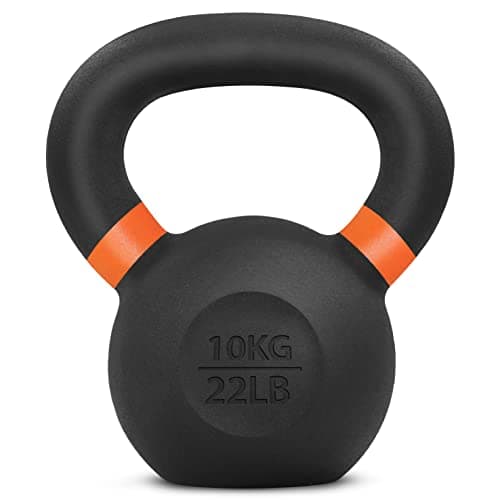
Powder coatis the enthusiast’s choice and the Yes4All 22 lb has it. It is slightly rough, which means it grips without chalk - the listing says so directly, and it is the main reason to prefer that finish. The trade is that a long set of high-rep swings is harder on the palms.
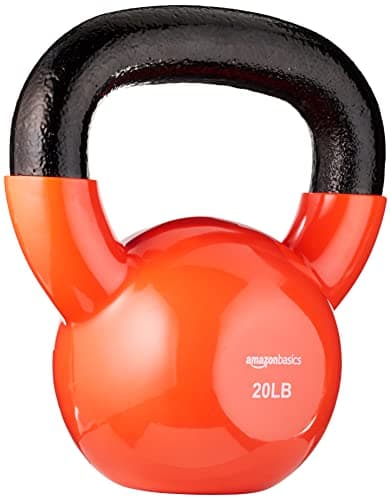
Vinyl or neoprene is the floor-friendly choice: a soft shell that does not chip your tiles or wake the people downstairs. The 20 lb Amazon Basics bell on this page is vinyl-coated for exactly that reason, which is why it also appears on our apartment home gym page. The trade is that the shell can split eventually, and the handle feels thicker than bare iron.
Painted or enamelled iron is the default - cheap, fine, and it chips. Both Amazon Basics listings on this page carry a warning that the finish may chip or crack if the bell is dropped on a hard surface. Take that literally. Which brings us to the thing most kettlebell buyers forget to budget for.
Buy a mat at the same time. Seriously.
A kettlebell is the one piece of home gym equipment designed to be set down fast while you are tired. It will meet your floor, repeatedly, and 35 lb of cast iron on a concrete slab or a tiled kitchen floor goes badly for the tile, the coating and the people below you.
A single rubber mat under where you swing solves all three problems for a small fraction of the bell’s price, and it is the cheapest insurance in a home gym. Our best home gym mats page ranks mats by the spot each one is for, and home gym noise reduction covers the apartment case specifically. If you train upstairs, read can you put a home gym upstairs first.
One bell, three bells, or an adjustable?
This is the second real fork and the money is small either way, so decide it on how you train rather than on price.
One fixed bell is right for most people, and it is right for longer than you would think. A single well-chosen bell covers swings, goblet squats, deadlifts, carries, rows and presses. You progress by adding reps and sets, not weight - which is a perfectly good way to progress for the first several months. It is also the cheapest, toughest and most compact option: one piece of iron, no mechanism, nothing to break.
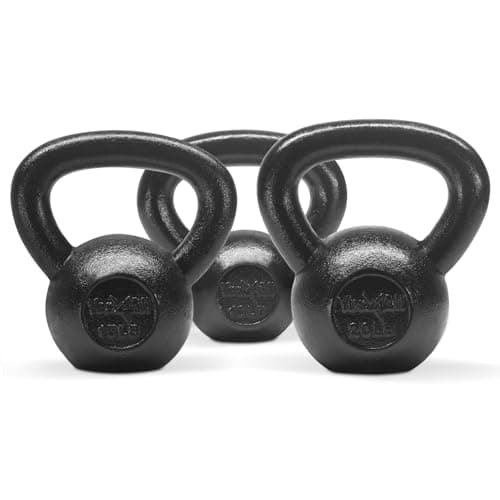
Three light bells - the Yes4All 10/15/20 set here - make sense in one specific situation: two people of different strength sharing the gym. One person swings the 20 while the other presses the 10. Three bells also give you the light weights that make get-ups and single-arm work learnable. The catch is that the top bell is 20 lb, which is genuinely light for a two-hand swing within a couple of months, and the set ships without a rack.
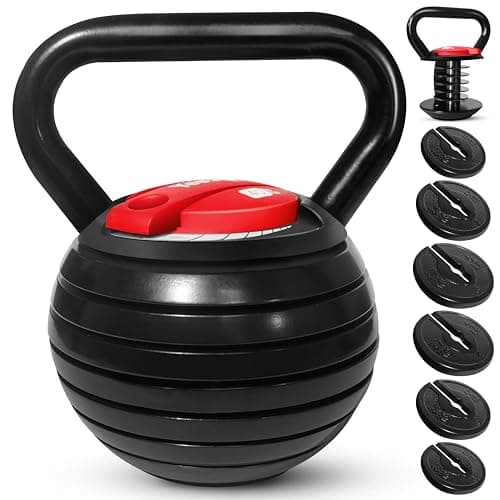
An adjustable bell is the apartment answer: one shell, several weights, one patch of floor. The Yes4All adjustable pick swaps plates to change its load, so it covers the light-press-to-heavy-swing range a single fixed bell cannot. The trade-offs are real and we would rather name them than not - the handle does not feel like a cast bell, plate swaps take a moment, and there are more parts to come loose than on a solid casting. Fixed vs. adjustable kettlebell works the whole decision through, and we review this bell at Yes4All adjustable kettlebell.
Who each pick is for
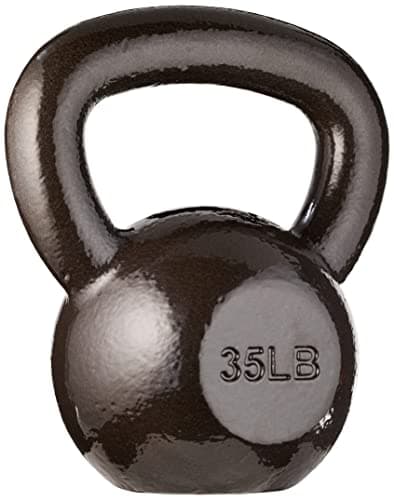
- Amazon Basics 35 lb - you are a reasonably active adult, swings are why you want a kettlebell, and you want one purchase that lasts. One-piece casting with no weld seam at the handle, which is where cheap bells fail. Published 1.50 in handle, 8.4 x 5.3 x 9.4 in. Too heavy for single-arm pressing if you are new to it.
- Yes4All 22 lb powder-coated - you want to press as well as swing, or you are starting from a lower base of strength. The powder coat is the best grip surface here, the flat base means it stores upright, and 22 lb is the weight that makes a get-up learnable. Note that this listing sits inside a 9-88 lb family, so confirm the 22 lb option is the one in your cart.
- Yes4All 10/15/20 lb set - two people train in this room, or you want the light bells that make single-arm work and get-ups possible. One-piece cast iron with no welds, 45 lb across the three, flat bases so they line up against a wall. No rack included, and 20 lb will be your ceiling for swings.
- Yes4All adjustable- the room is small and shared, or you want one bell to cover a light press and a heavy swing. Plate-adjustable, so it replaces several fixed bells for roughly one bell’s footprint. The handle feel and the plate swaps are the price you pay.
- Amazon Basics 20 lb vinyl-coated - you are on the tightest budget, you train on a floor you cannot damage, or you want a second light bell. Vinyl coat protects tile and cuts noise. 20 lb is light for swings, which is exactly why it also appears in our under-$100 picks.
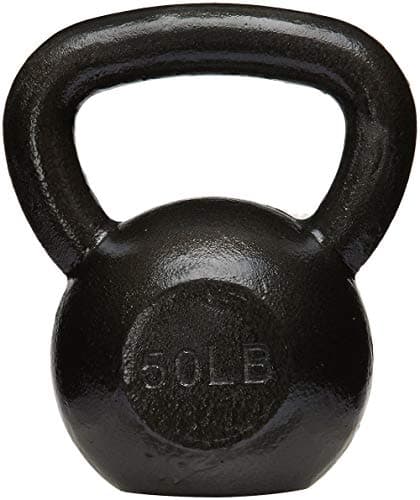
- Amazon Basics 50 lb - this is the second bell, not the first. 50 lb is where two-hand swings and loaded carries stay productive for years, and the listing publishes its weight tolerance (+/- 5%), which most do not. It is far too heavy for presses, snatches or get-ups as a starting bell, and awkward to carry upstairs.
What we left off, and why
No competition kettlebells. These are the steel bells with a uniform 35 mm handle and a uniform bell size at every weight, color-coded by kilogram. They are genuinely better if you compete or train the kettlebell sport, because your grip and your rack position never change as the weight goes up. They also cost several times what a cast bell costs for the same poundage, and a first home gym has better places to put that money.
No concrete-filled or HDPE-shelled bells. These turn up constantly in cheap three-piece sets, and they are a worse product in a way that matters: concrete is less dense than iron, so the bell is physically larger at the same weight, which changes the swing arc and makes the rack position clumsy. We would rather rank a smaller set of real cast iron.
No kettlebell racks. If you own one to three bells, flat bases and a wall are the answer, and a rack is furniture you do not need yet. If you ever get to six bells, revisit it - how to store home gym equipment covers the options.
And no neoprene-dipped vinyl sets in six pastel weights. Those are aerobics props. They are too light to load a hip hinge, they are usually priced per pound like jewellery, and the honest version of that purchase is one real bell plus a band kit for the light work.
Where a kettlebell fits in a first home gym
Honestly? Not first. If you own nothing, a pair of adjustable dumbbells and a bench will build more muscle across more of your body than any single kettlebell, and our beginner equipment page puts them in that order for good reason.
What a kettlebell adds, and adds cheaply, is conditioning and the hip hinge - two things a dumbbell-and-bench gym does badly. A bell is also the most apartment-friendly piece of load there is: it needs no frame, no bench and about four feet of floor. That combination is why it shows up in the $1,000 build and in the $300 build, and why do I need a kettlebellanswers “yes, but not first” rather than a flat yes.
If you already own dumbbells and are deciding whether a bell adds anything, kettlebell vs. dumbbell is the honest comparison, and can you build muscle with kettlebells answers the question underneath it.