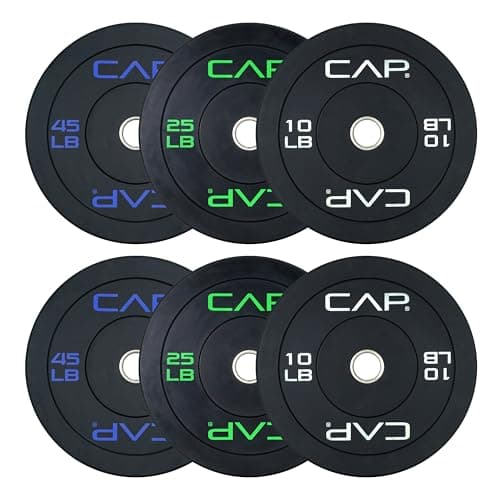
The CAP 160 lb Olympic bumper plate set is where a lot of first barbell gyms begin. It’s an economy set of rubber bumpers — enough weight to squat and deadlift from day one, and droppable without wrecking the floor underneath. That combination is exactly what a beginner needs from their first plates: a real starting load and the freedom to set a loaded bar down hard without flinching. It won’t be all the weight you ever own, but it’s the right weight to own first.
Who it’s for
This set is for the beginner making the jump from dumbbells to a barbell. You’ve decided you want to squat, deadlift, and press with a bar, you’ve got — or you’re about to get — a rack and a 45 lb Olympic bar, and now you need plates to load. The CAP 160 lb set is the honest answer to “how much do I start with?” It gives you a genuine working weight without asking you to buy hundreds of pounds you can’t lift yet.
It’s especially well suited to lifting at home, where the floor is your floor. Bumpers let you lower or bail a loaded bar without cracking a slab or chipping a plate, which is the exact peace of mind you want when you’re training solo in a garage or basement. Pair the set with proper home gym flooring and you have a base you can lift on hard. This is core gear in a first barbell setup — you can see how it fits the whole picture in our $1,000 Build.
Who should think twice? Anyone who isn’t actually going the barbell route. If your plan is dumbbells and a bench in a small apartment, plates and a bar aren’t your next purchase at all — and that’s a perfectly good plan. Our guide on dumbbells vs barbelllays out which path fits which lifter, and if you’re still unsure the rubber is worth the premium, are bumper plates worth it weighs it up. But if a barbell is the goal, 160 lb of bumpers is the sensible weight to start that chapter with.
What 160 pounds covers
The number that matters is 160 lb of plates, and the honest way to judge it is to picture it on the bar. Loaded onto a 45 lb Olympic bar, the whole set puts you a little over 200 lb total — a real working weight for a beginner learning to squat and deadlift. That’s enough to build genuine strength on the big lifts for a good while, not a token load you blow past in a week. For early squats and deadlifts in particular, it’s a well-judged starting point.
The second thing that matters is the bumper construction. These are rubber plates, which means the set is droppable without wrecking the floor. A dropped or lowered loaded bar is precisely the moment a hard floor takes damage, and the rubber absorbs that impact instead of passing it into the slab. The set carries a medium bounce — controlled enough for home lifting rather than the aggressive rebound of a competition plate.
The third is compatibility, and it’s refreshingly boring: the plates use the standard 2-inch Olympic bore, so they slide onto any 7 ft Olympic bar and its sleeves without fuss. That means the set drops straight into a normal barbell setup — no adapters, no odd sizing. The natural partner is a budget Olympic bar, and the PAPABABE 45 lb bar is the exact kind these plates are meant to load onto. Put those three together — a real starting weight, floor-safe rubber, and standard sizing — and you have plates that let a beginner start lifting properly on day one.
What owners report
We don’t test equipment in a lab, so this reflects the published specs and the pattern of what owners describe rather than our own numbers. The most common positive is peace of mind on the floor. Buyers lifting over a garage slab or a basement floor consistently point to the bumpers as the reason they can train the big lifts without babying every rep — setting the bar down at the end of a heavy deadlift stops being a worry.
The second recurring theme is that it’s an honest starting weight, not a marketing number. Owners note that 160 lb is enough to actually train on while they’re learning form, which is the whole job of a first plate set. CAP is a long-standing budget name in this space, and for economy plates the expectation reviewers set is simple and fair: solid, functional weight for the money, not a premium finish.
The third thing owners flag is one of practicality: bumpers are bulkier than iron. Because rubber is less dense than steel, a bumper plate is physically larger than an iron plate of the same weight, so the set takes up more room on a plate tree or against the wall. It’s never a problem in use — it’s just a storage reality to plan for, especially in a tight space. Give the set a home before it arrives and it’s a non-issue.
Where it falls short
The honest knocks are about longevity of the weight, not the quality of it. The clearest is that you’ll add weight within a year. Deadlifts climb fast once your form settles, squats follow, and a committed beginner will bump into the top of 160 lb sooner than they expect. That’s not a defect — it’s the nature of a starter set. The saving grace is that plates are modular: when you outgrow it, you add more of the same standard plates rather than replacing anything, so this set stays in your gym as the foundation.
The second is the storage footprint: bumpers take more shelf space than iron. If your gym is already tight, that larger diameter is worth planning around before the box arrives. Neither of these is hidden or unfair — they’re the exact trade you accept for floor-safe rubber at an economy price. The set does what it promises: it gets you squatting and deadlifting safely from day one.
The framing that keeps expectations honest is that this is a base, not a ceiling. Buy it knowing you’ll grow past the weight and want a little more room to store it, and neither shortfall will surprise you. Buy it expecting an all-the-weight-you’ll-ever-need set that tucks into a cupboard, and you’ve mismatched the tool to the job.
How it compares
The main comparison is bumpers against iron. Iron plates are more compact per pound and often cheaper, which is their real appeal — but they’re far less forgiving to drop, and for a beginner lifting solo over a home floor that matters. The CAP bumpers trade a little compactness and a little cost for the ability to set a loaded bar down without damage. For a first home barbell gym, that’s usually the right side of the trade.
The other way to place the set is as one piece of a barbell corner rather than a standalone buy. Plates only do their job alongside a bar to load and a rack to keep the lifts safe. The natural partners are the PAPABABE Olympic bar and a stand or cage from our best power racks and squat stands roundup — together they turn a bare corner into a place you can squat, press, and deadlift with catches under you. If you’re assembling the whole thing, our home gym essentials guide covers the order to buy in.
Seen that way, the CAP 160 lb set isn’t really competing with heavier or fancier plates — it’s competing with the temptation to overbuy weight you can’t lift yet, or to skip the barbell entirely because a full set feels daunting. As the entry point, it’s well-judged: enough to start, safe to drop, and easy to add to later.
The verdict
The CAP 160 lb Olympic bumper plate set is the honest starting weight for a first barbell gym. It gives a beginner a real working load for squats and deadlifts, protects the floor when a loaded bar comes down, and fits any standard Olympic bar without fuss. Judged as what it is — an economy starter set — it does exactly the job you need on day one and asks a fair price for it.
Buy it if you’re building a barbell gym and want the sensible first plates, and treat adding weight later as the plan, not a surprise — you’ll bolt more plates onto the same base rather than replace it. Load it onto a 45 lb Olympic bar, keep it inside a proper rack or squat stand, and set it over real flooring, and you’ve got the core of a first barbell setup. New to plates? Start with how to choose weight plates. See how the pieces cost out together in our $1,000 Build.
Think of these plates as the foundation you build the rest of your barbell training on. They’re not the last weight you’ll buy, and they’re not trying to be — they’re the right weight to start with, safe enough to lift on hard and standard enough to grow from. For a beginner stepping up to the bar, that’s exactly what a first plate set should be.