Skip to content

01

Best Weight Plates for a Home Gym

Measure the hole in your plates before you spend anything. A 1-inch plate will never fit a 2-inch Olympic bar, and that single mistake is the most expensive thing on this page.

By Stephen V., Home-gym enthusiastLast updated October 30, 2026How we pick
Affiliate disclosure: Barbell & Bench earns a commission when you buy through our links, at no extra cost to you. We only make money if you buy — never for recommending. How this works.

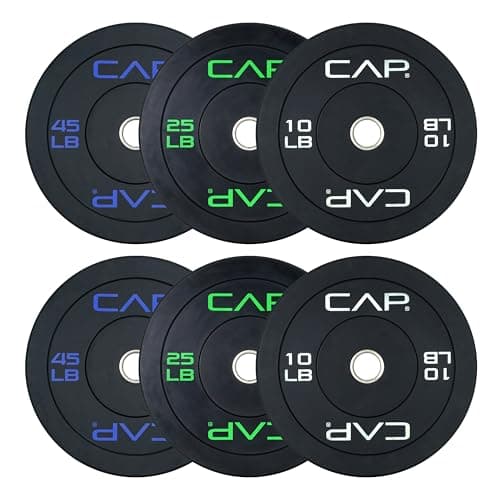
For most first home gyms the answer is the CAP 160 lb economy bumper set: pairs of 10, 25 and 45 lb on a 2 in Olympic bore with steel floating hubs. That gives you a loaded bar you can set down hard without destroying the floor, and a pair of 45s, which is the plate a cheap starter set usually leaves out.

But before any of that, do this: look at the hole in the middle. Plates come in two bore sizes and they are not interchangeable. A 2 in Olympic bore fits the 7 ft bars almost every rack and bench is designed around. A 1 in standard bore fits the cheaper, shorter bars sold in starter kits and spinlock dumbbell handles. Buying 1 in plates when you own an Olympic bar is the one mistake on this page that cannot be fixed with an adapter you will trust under a squat.

Once the bore is settled, there are only two more questions. Can you drop them? Rubber bumpers can be dropped and iron cannot, which matters more than it sounds if you deadlift alone with no rack. And how much weight do you actually need? Less than the marketing implies - a 45 lb bar plus a 160 lb set is 205 lb of loaded barbell, and a beginner squatting 205 lb has been training for a while.

One thing worth saying plainly, because it surprises people: iron is no longer the cheap option. On the picks below, an economy bumper set and a cast iron grip set of similar weight land in much the same bracket. Iron used to be the budget answer and bumpers the upgrade. Compare the live prices below rather than assuming.

Prices here come from our live price layer and were last verified November 12, 2026. Plate counts and bore sizes are each maker’s own published figures; we have not weighed or dropped anything on this page.

02

The picks, ranked

Six plate sets - ranked by the question each one answers

#ProductBest forScorePrice
1
CAP 160 lb Olympic Bumper Plate Set

A 160 lb economy bumper set — enough to squat and deadlift from day one, droppable without wrecking the floor.

Starter plate set8.1
$167.99 · View on Amazon

#ad · Price as of November 12, 2026 · Affiliate disclosure

2
CAP 100 lb Economy Olympic Bumper Plate Set

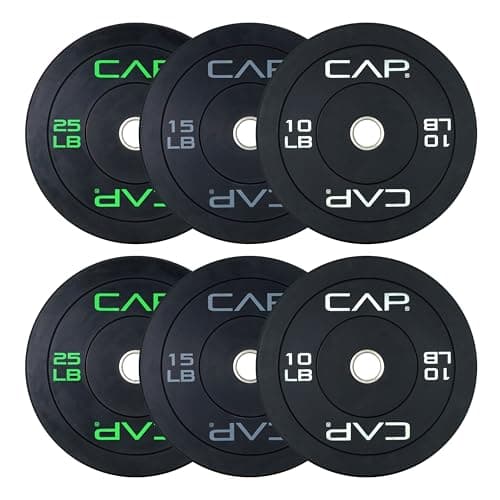
The cheapest honest way into droppable plates: pairs of 10, 15 and 25 lb on a 2 in bore with steel hubs.

Cheapest real bumper set8.2
$99.99 · View on Amazon

#ad · Price as of November 12, 2026 · Affiliate disclosure

3
Homegrown Lifting URA-MAX 160 lb Colored Bumper Set

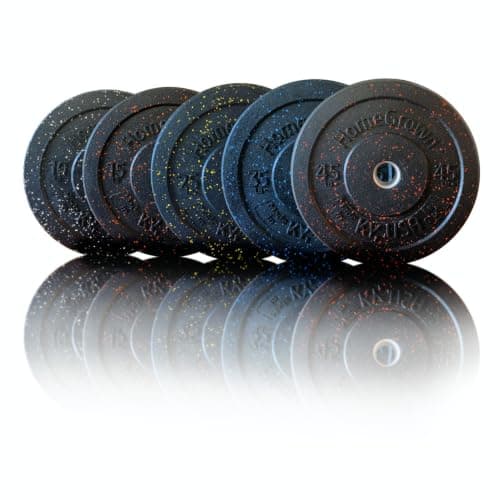
A crumb-rubber 160 lb set that includes a pair of 45s - the plate that makes a barbell load and look the way you expect.

Best set with 45s in the box8.5
$160.00 · View on Amazon

#ad · Price as of November 12, 2026 · Affiliate disclosure

4
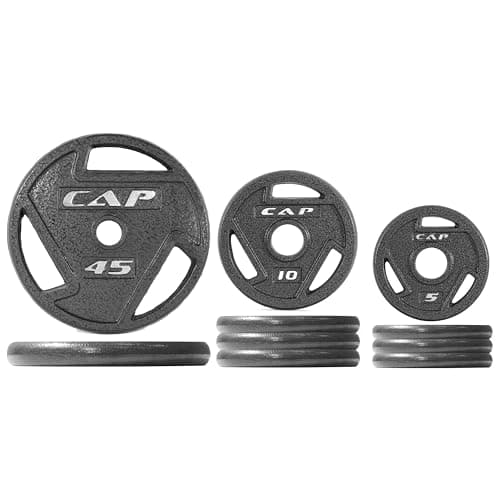
CAP 150 lb Elite Olympic Cast Iron Grip Plate Set

Iron, not rubber: 150 lb in a thin profile with grip holes, for a gym where the bar gets set down rather than dropped.

Best iron set8.1
$188.72 · View on Amazon

$199.99 6% off

#ad · Price as of November 12, 2026 · Affiliate disclosure

5
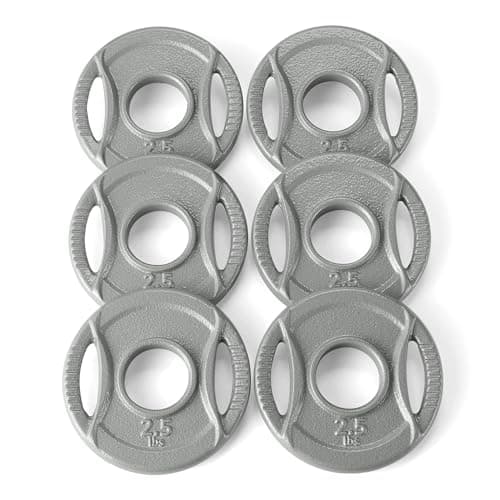
Amazon Basics 2.5 lb Olympic Grip Plates (Set of 6)

Six 2.5 lb Olympic plates - the cheapest thing you can buy that turns a stalled lift back into a progressing one.

Best for smaller jumps8.0
$25.47 · View on Amazon

#ad · Price as of November 12, 2026 · Affiliate disclosure

6
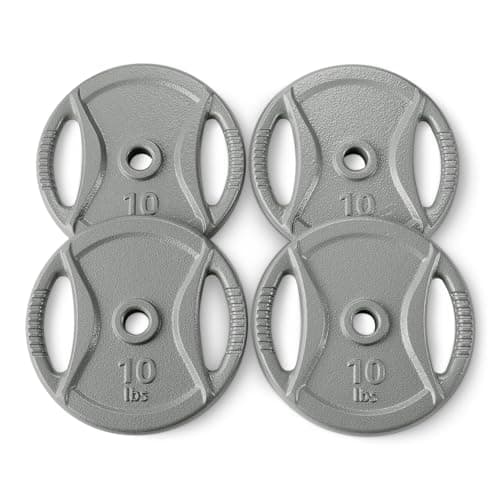
Amazon Basics 1-Inch Grip Plates, 10 lb (4-Pack)

Four 10 lb plates with a 1 in hole - the right answer only if the bar you already own is a standard bar, never an Olympic one.

Best for a 1-inch standard bar7.6
$40.49 · View on Amazon

$45.18 10% off

#ad · Price as of November 12, 2026 · Affiliate disclosure

03

Every pick, reviewed

CAP 160 lb Olympic Bumper Plate Set
01
Starter plate set

CAP 160 lb Olympic Bumper Plate Set

CAP Barbell

8.1

A 160 lb economy bumper set — enough to squat and deadlift from day one, droppable without wrecking the floor.

Total
160 lb
Type
Olympic bumper (2")
Bounce
Medium

What we like

  • Rubber bumpers protect the floor
  • Enough weight for early squats and deadlifts
  • Standard 2" bore

Trade-offs

  • You'll add weight within a year
  • Bumpers take more shelf space than iron
$167.99 · View on Amazon

#ad · Price as of November 12, 2026 · Affiliate disclosure

CAP 100 lb Economy Olympic Bumper Plate Set
02
Cheapest real bumper set

CAP 100 lb Economy Olympic Bumper Plate Set

CAP

8.2

The cheapest honest way into droppable plates: pairs of 10, 15 and 25 lb on a 2 in bore with steel hubs.

Total
100 lb
Includes
Pairs of 10, 15 and 25 lb
Bore
2 in Olympic
Hub
Steel floating insert
Bounce
Medium

What we like

  • Rubber bumpers mean a missed rep lands on the plate, not your floor
  • Steel floating hubs rather than a molded sleeve, at the cheapest tier
  • Color-coded weight markers, so you are not squinting at a worn number

Trade-offs

  • 100 lb on a 45 lb bar is 145 lb total - a squat will outgrow it inside a year
  • No 45s, so the bar looks and loads emptier than the number suggests
  • Medium bounce still bounces - plan where the bar lands
Value
10
Beginner-friendly
9
Build quality
7
Space fit
8
$99.99 · View on Amazon

#ad · Price as of November 12, 2026 · Affiliate disclosure

Homegrown Lifting URA-MAX 160 lb Colored Bumper Set
03
Best set with 45s in the box

Homegrown Lifting URA-MAX 160 lb Colored Bumper Set

Homegrown Lifting

8.5

A crumb-rubber 160 lb set that includes a pair of 45s - the plate that makes a barbell load and look the way you expect.

Total
160 lb
Includes
Pairs of 45, 25 and 10 lb
Construction
Recycled crumb rubber, urethane binder
Insert
Recessed stainless steel
Made in
Lexington, Kentucky, USA

What we like

  • A pair of 45s included - the one plate a starter set usually leaves out
  • Recessed stainless inserts, which resist the rust that kills plates in a damp garage
  • Made by a small US maker rather than relabeled from a catalog

Trade-offs

  • Crumb rubber is thicker per pound than virgin rubber, so sleeve space runs out sooner
  • Recycled rubber has a noticeable smell for the first few weeks indoors
  • Three plate sizes only - no 15s or 35s for fine jumps
Value
8
Beginner-friendly
8
Build quality
9
Space fit
6
$160.00 · View on Amazon

#ad · Price as of November 12, 2026 · Affiliate disclosure

CAP 150 lb Elite Olympic Cast Iron Grip Plate Set
04
Best iron set

CAP 150 lb Elite Olympic Cast Iron Grip Plate Set

CAP

8.1

Iron, not rubber: 150 lb in a thin profile with grip holes, for a gym where the bar gets set down rather than dropped.

Total
150 lb
Includes
4 x 5 lb, 4 x 10 lb, 2 x 45 lb
Bore
2 in machined Olympic
Finish
Baked enamel, raised markings
Grip
Integrated grip holes

What we like

  • Iron is far thinner per pound than rubber, so much more fits on the sleeve
  • Grip holes make the plates usable off the bar for carries and rows
  • Raised markings stay readable after the paint wears

Trade-offs

  • Iron does not absorb a drop - this set needs a mat and controlled lowering
  • Four 5 lb and four 10 lb plates give small jumps but a modest top end
  • Baked enamel chips, and bare iron rusts in a damp garage
Value
7
Beginner-friendly
7
Build quality
8
Space fit
10
$188.72 · View on Amazon

$199.99 6% off

#ad · Price as of November 12, 2026 · Affiliate disclosure

Amazon Basics 2.5 lb Olympic Grip Plates (Set of 6)
05
Best for smaller jumps

Amazon Basics 2.5 lb Olympic Grip Plates (Set of 6)

Amazon Basics

8.0

Six 2.5 lb Olympic plates - the cheapest thing you can buy that turns a stalled lift back into a progressing one.

Includes
6 x 2.5 lb (15 lb total)
Bore
2 in Olympic
Material
100% GRS-certified recycled iron
Grip
Integrated grip holes

What we like

  • Turns a 10 lb jump into a 5 lb jump, which is the difference between progress and a stall
  • Six plates - both ends of the bar plus spares for a dumbbell handle
  • Certified recycled iron, and the cheapest item in this whole category

Trade-offs

  • Not a plate set - this is an add-on to one you already own
  • Even 2.5 lb a side is a 5 lb jump, which still stalls an overhead press eventually
  • Iron, so nothing here is droppable
Value
10
Beginner-friendly
9
Build quality
7
Space fit
10
$25.47 · View on Amazon

#ad · Price as of November 12, 2026 · Affiliate disclosure

Amazon Basics 1-Inch Grip Plates, 10 lb (4-Pack)
06
Best for a 1-inch standard bar

Amazon Basics 1-Inch Grip Plates, 10 lb (4-Pack)

Amazon Basics

7.6

Four 10 lb plates with a 1 in hole - the right answer only if the bar you already own is a standard bar, never an Olympic one.

Includes
4 x 10 lb (40 lb total)
Bore
1 in standard
Material
100% GRS-certified recycled iron
Grip
Three-hole grip design

What we like

  • The cheapest way to add 40 lb to a standard 1 in bar or a spinlock dumbbell handle
  • Certified recycled iron with the weight cast into the plate
  • Grip holes, which most budget standard plates skip

Trade-offs

  • A 1 in plate will NEVER fit a 2 in Olympic bar - check your bar before you order
  • 10 lb is the only size in this pack, so your smallest jump is 20 lb
  • Standard bars are rated far lower than Olympic bars, which caps where this can take you
Value
9
Beginner-friendly
8
Build quality
7
Space fit
10
$40.49 · View on Amazon

$45.18 10% off

#ad · Price as of November 12, 2026 · Affiliate disclosure

04

How to choose

Step one: which bore does your bar have?

This is not a preference. It is a measurement, and getting it wrong means the plates do not go on.

  • 2 in Olympic. The sleeve the plates slide onto is about 2 inches across, the bar is usually 7 ft and 44-45 lb, and the sleeves spin. This is what a power rack, a squat stand or a bench press station expects. If you bought a bar from our barbell roundup, it is this one.
  • 1 in standard. The sleeve is about an inch across, the bar is shorter, lighter and usually does not spin. These come in cheap all-in-one weight sets and on spinlock dumbbell handles. They work, they are cheaper, and they cap out far lower - both in the weight the bar is rated for and in what plates are available.

If you are not sure, measure the end of the bar with a tape. One pick on this page is deliberately a 1 in set, for people who already own a standard bar and want more weight without replacing everything. Olympic vs. standard barbell works the whole comparison through, and how to choose weight plates is the long version of this section.

Step two: bumper or iron?

This is the question that decides your floor, your noise level and how much of the bar you can fill.

Published figures from the makers' own listings - the numbers that decide the purchase

PickTotalBoreMaterialPlates included
CAP 160 bumper160 lb2 inRubber, steel hubPairs of 10, 25, 45
CAP 100 bumper100 lb2 inRubber, steel hubPairs of 10, 15, 25
Homegrown 160160 lb2 inCrumb rubber, urethanePairs of 10, 25, 45
CAP 150 iron grip150 lb2 inCast iron, baked enamel4 x 5, 4 x 10, 2 x 45
Amazon Basics 2.5s15 lb2 inRecycled iron6 x 2.5
Amazon Basics 1 in40 lb1 inRecycled iron4 x 10

Bumper plates are rubber discs with a steel insert, all the same diameter regardless of weight, designed to be dropped. If you deadlift, that matters: the alternative to dropping a heavy deadlift is lowering it under control with a tired back, which is how people get hurt. Bumpers also protect the bar, protect the slab and are much quieter than iron. The cost is thickness - a bumper plate is far fatter per pound than iron, so a 2 in sleeve fills up faster than you expect.

Cast iron plates are thin, dense and cheap to make. The CAP iron grip set here fits 150 lb in a fraction of the sleeve space a bumper set of the same weight needs, which is the whole argument for iron: if you expect to get strong, iron is what lets you keep loading the bar. Grip holes also make iron plates usable off the bar for carries and rows. The cost is that iron does not forgive a drop - it chips, it dents the floor, and it is loud.

For a first home gym we lean bumpers, and bumper plates vs. iron plates lays out where that flips. Are bumper plates worth it is the shorter answer.

Step three: how much weight do you need?

Fewer plates than the big sets imply. Here is the arithmetic nobody puts on the box.

  1. Your bar is already 45 lb. A standard 7 ft Olympic bar weighs about 44-45 lb on its own, so an empty bar is already a real squat for many beginners. Our barbell cost guide covers the bar side of the budget.
  2. 100 lb of plates plus the bar is 145 lb. That is enough to squat, press and row for the first few months, which is exactly who the 100 lb set is for.
  3. 160 lb of plates plus the bar is 205 lb. This is the sweet spot for a first gym, and it is the set we would buy. A pair of 45s means you can put a plate a side on the bar, which is the first milestone most people care about.
  4. Everything above that you can add later, a pair at a time. Plates are the one thing in a home gym that you genuinely can buy incrementally with no penalty. Buy the set that covers the next six months, not the next six years.

How much weight do I need for a home gym runs the same numbers against real training programs.

The plate nobody buys, and should

Look at what a starter set gives you: often a pair of 10s, a pair of 25s and a pair of 45s. The smallest jump you can make on the bar with those is 20 lb - a pair of 10s. For a squat that is fine for a while. For an overhead press, 20 lb is an enormous jump, and it is where most beginners stall and conclude they have hit their limit.

A six-pack of 2.5 lb Olympic plates turns that 20 lb jump into a 5 lb jump. It is the cheapest item in this whole category, it is the last pick on this list by rank, and it does more for your actual progress than spending twice as much on a bigger set. If you buy nothing else from this page, buy small plates.

Below 2.5 lb you get into fractional plates - half-pound and quarter-pound discs used to micro-load a press. Those are a real tool and a real rabbit hole; what are fractional plates explains who needs them, which is a smaller group than the internet suggests.

Who each pick is for

  • CAP 160 lb economy bumper set - the default first set. Pairs of 10, 25 and 45 lb, 2 in bore, steel floating hubs rather than a molded sleeve, color-coded markers. 205 lb on the bar with a standard 45 lb bar. We review it at CAP bumper plate set, and it is the plate set inside our $1,000 build.
  • CAP 100 lb economy bumper set - the budget entry into droppable plates. Pairs of 10, 15 and 25 lb. The 15s are genuinely useful for 30 lb jumps, and the real catch is the missing 45s: 145 lb total on the bar, and a squat outgrows that inside a year. Also the pick if money is tight now and you plan to add a pair of 45s later.
  • Homegrown Lifting URA-MAX 160 lb - you want 45s and you want the better insert. Recycled crumb rubber with a urethane binder and recessed stainless steel inserts, made in Lexington, Kentucky. Stainless is the right call for a damp garage, where a cheap insert rusts. The honest cons: crumb rubber is thicker per pound than virgin rubber, so sleeve space goes faster, and recycled rubber smells for the first few weeks indoors.
  • CAP 150 lb Elite cast iron grip set - you expect to get strong, your floor is already protected, and you want sleeve space. 4 x 5 lb, 4 x 10 lb and 2 x 45 lb with machined 2 in holes, baked enamel and raised markings. The four small plates give genuinely fine jumps. Iron does not absorb a drop, so this needs a drop pad or a mat and controlled lowering.
  • Amazon Basics 2.5 lb Olympic grip plates, set of 6 - the cheapest progress you can buy. Six plates means both ends of the bar plus a spare pair for a dumbbell handle. Certified recycled iron, 2 in bore, grip holes. It is an add-on, not a set.
  • Amazon Basics 1-inch grip plates, 10 lb four-pack - only if you own a 1 in standard bar or spinlock dumbbell handles. 40 lb of certified recycled iron with grip holes, which most budget standard plates skip. It will never fit an Olympic bar, and 10 lb is the only size in the pack, so your smallest jump is 20 lb.

What we left off, and why

No calibrated competition plates. These are certified to a tight weight tolerance, usually in kilograms, and they are what powerlifting meets use. They are also several times the price of economy plates, and the tolerance matters only if you compete. An economy plate being a percent or two off makes no difference to whether you get stronger.

No urethane-coated plates. Urethane is tougher than rubber, quieter than iron, thinner than a bumper and gorgeous. It is also priced for commercial gyms that amortize it over a decade of members. Not a first-home-gym purchase.

No variation listings where the price does not name the weight. A good number of Amazon plate listings cover eight weights under one page, so the price you see may not be the set you think you are buying. We only ranked listings whose own title names the total, which is why this page is shorter than it could be.

And no “complete” bar-and-plate combo sets. They look like value and they usually pair a decent plate set with a bar that is the weak link - lower rated, non-spinning sleeves, unspecified tensile strength. Buy the bar on its own merits from our barbell roundup and the plates on theirs.

Buy the flooring before the plates arrive

Plates are the heaviest thing you will own and the only thing you will put down from waist height. Even bumpers transmit a real thud through a timber floor, and iron chips tile and cracks a thin slab topping.

A rubber mat or a small drop pad where the bar lands costs a fraction of the plate set and protects both. Our home gym flooring page covers whole-room options, flooring for deadlifting covers the drop zone specifically, and flooring on concrete handles the garage slab case. Do this part first - it is far easier than moving 200 lb of plates back off the floor afterwards.
05

Common questions

What size weight plates do I need for my barbell?

Measure the end of the bar. A 2-inch Olympic bore fits the 7 ft, roughly 45 lb bars that racks and benches are designed around, and the sleeves spin. A 1-inch standard bore fits shorter, lighter non-spinning bars and spinlock dumbbell handles. They are not interchangeable: a 1-inch plate will not go onto an Olympic sleeve, and a 2-inch plate will rattle loose on a standard bar. Check before you order, not after.

How much weight should a beginner buy?

Around 160 lb of plates for an Olympic setup, which gives you roughly 205 lb on the bar once you count the 45 lb bar itself. That covers squats, presses, rows and deadlifts for the first several months for most beginners. A 100 lb set is a legitimate cheaper start at 145 lb total, as long as you accept adding a pair of 45s later. Plates are the one home gym item you can genuinely buy a pair at a time with no penalty.

Are bumper plates better than iron plates?

For a first home gym, usually yes - because you can drop them. The alternative to dropping a heavy deadlift is lowering it under control with a tired back, and bumpers also protect your floor, your bar and your neighbors' patience. Iron wins on two counts: it is far thinner per pound, so much more weight fits on the sleeve, and grip holes make it usable off the bar. If you expect to get strong, buy iron or plan to switch.

Why do I need 2.5 lb plates?

Because without them your smallest jump is 20 lb. A typical starter set gives you pairs of 10, 25 and 45 lb, which means the least you can add to the bar is a pair of 10s. On a squat that is manageable for a while; on an overhead press it is enormous, and it is exactly where most beginners stall. A six-pack of 2.5 lb plates turns that into a 5 lb jump for the cheapest price of anything in this category.

Are cast iron plates cheaper than bumper plates?

Not reliably any more. Iron used to be the budget option and bumpers the upgrade, but economy bumper sets and cast iron grip sets of similar weight now land in much the same bracket - compare the live prices on this page rather than assuming. Choose on material instead: bumpers if you want to drop the bar and protect the floor, iron if you want sleeve space and plates you can carry.

Do bumper plates damage the floor?

Far less than iron, but they are not magic. A dropped bumper still transmits a heavy thud through a timber floor and will mark a soft surface over time. Put a rubber mat or a drop pad where the bar lands. On a garage slab the risk is mostly to the concrete surface and to your bar; upstairs the risk is the ceiling below you, and bumpers alone will not solve that.

Can I use 1-inch plates on an Olympic bar with an adapter?

Adapters exist and we would not trust one under a squat or a deadlift. The plate is being held by a sleeve that was not designed for it, and the failure mode is a plate coming off a loaded bar. If you own an Olympic bar, buy Olympic plates. If you own a standard bar and want to keep it, buy standard plates - that is exactly who the 1-inch pick on this page is for.

How many plates fit on an Olympic barbell?

It depends entirely on plate thickness, which is why the material question matters. Bumper plates are fat per pound, so a sleeve fills up long before you run out of ambition - this is the single most common reason people switch to iron. Cast iron is far thinner, so considerably more weight fits in the same sleeve length. If you are already planning for heavy squats, factor sleeve space in now rather than buying twice.

Read next

→

Plates are the second purchase, not the first.

They need a bar, and the bar needs a rack. The $1,000 Build puts the whole barbell setup in order, with a running total.