The short answer: home weight benches are rated between about 600 lb and 1,300 lb of total load, and the common sweet spot is around 800 lb. In our own registry the range runs from a 600 lb flat utility bench to a 1,300 lb commercial-style frame, with two benches carrying independently ASTM-certified ratings of 800 lb and 827 lb.
The part that catches people out: that number is you plus the bar plus the plates. A 200 lb lifter pressing 225 lb is loading the frame with 425 lb, not 225 lb. Which is why “800 lb” has far less headroom than it reads like at first glance - and why we would rather have a certified 800 lb rating than an uncertified four-figure one.
The published numbers, bench by bench
Here is every bench in our registry with the capacity its manufacturer publishes, and whether that figure is independently certified or the seller’s own claim. We have not load-tested any of these; this is a table of what the listings say, which is exactly the information you cannot easily compare while shopping.
Read that table carefully and you will spot the thing capacity-shopping gets wrong: the REP Nighthawk publishes the second-lowest number on the list and is built from heavier 7- and 14-gauge steel than anything below it. Capacity ratings are not a quality ranking. They are one spec, published inconsistently, and a serious brand quoting a conservative figure is not telling you its bench is weaker.
How to work out the rating you need
Three steps, and you can do it in your head.
- Step one: add your bodyweight to your target press.Not today’s press - the one you want in two years. 200 lb of you plus a 250 lb bench press is 450 lb on the frame.
- Step two: double it. That is your minimum rating. Doubling is not a standard - it is our margin, and we use it because real sets are dynamic and off-center: you unrack unevenly, you drive through your feet, the bar tips a few degrees. 450 lb of static load becomes a larger instantaneous load than the arithmetic suggests.
- Step three: prefer a certified number. If two benches are 800 lb certified and 1,000 lb claimed, we take the certified one every time.
Note the last row. A heavier lifter pressing a modest weight needs a higher-rated bench than a lighter lifter pressing a big one, because bodyweight is the larger term. That is the single most useful consequence of the “capacity includes you” rule, and it is why we wrote a whole guide to capacity-first picks for heavier beginners.
Benches by what their rating is for - live prices, last verified October 21, 2026
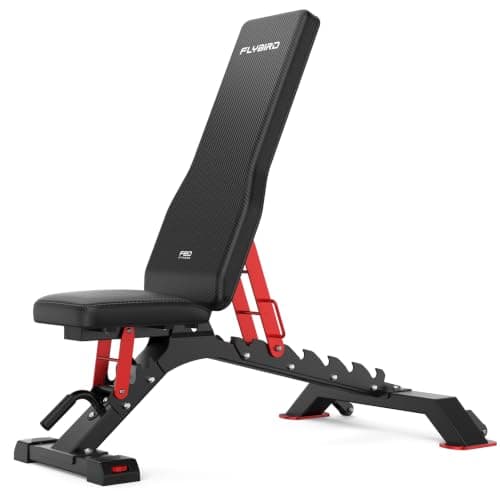
FLYBIRD WB7 Commercial Bench
FLYBIRD's heavy-duty model — a 1,300 lb rating and wider frame for anyone planning to load a barbell hard.
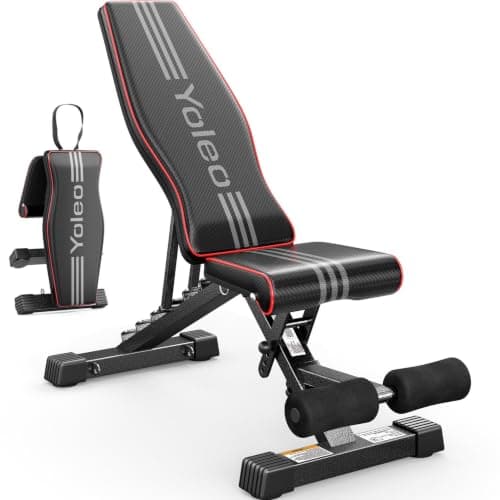
YOLEO Adjustable Weight Bench
A sub-$80 ASTM-certified bench that arrives 98% assembled — the cheapest bench we'd actually put a barbell over.
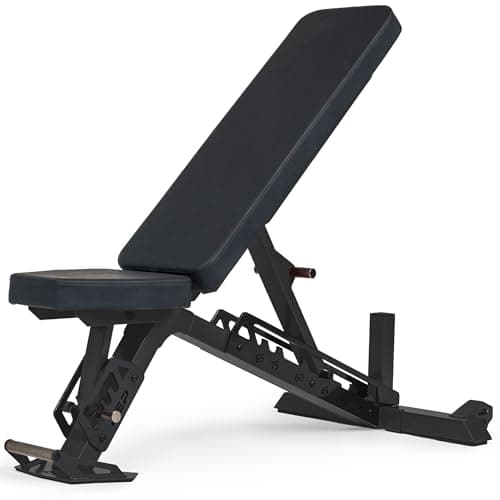
REP Nighthawk Adjustable Bench
A step up in build and pad quality from a respected strength brand — the bench to buy if you already know you'll stick with it.
#ad · Price as of October 21, 2026 · Affiliate disclosure
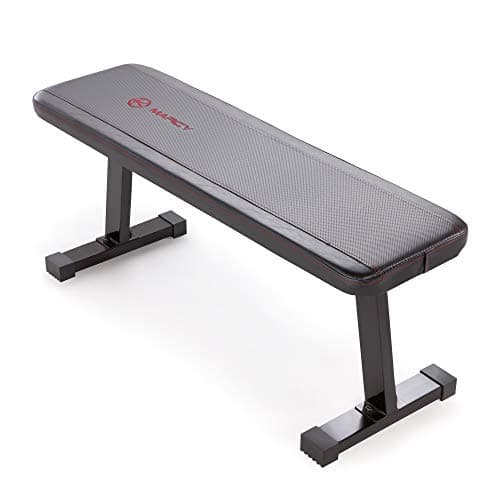
Marcy Flat Utility Bench
A simple 600 lb flat bench for people who only want to press and row — cheaper and steadier than a wobbly adjustable.
Certified vs. claimed: why we care so much
There is no regulation stopping a seller printing a capacity figure it has never had verified. A number on a listing can come from an independent test against a published standard, from an in-house static load test, or from a marketing meeting - and the listing usually does not say which.
ASTM certification is the one signal that cuts through it: an independent body has verified the bench against a published standard for that class of equipment. In our registry, two benches carry it, at 800 lb and 827 lb. Both cost less than the benches that claim more. That is not a coincidence - certification is a cost a brand pays specifically because it wants the number to be trusted.
Three things we treat as reassuring in the absence of certification: a stated test method, a brand with a reputation at stake in the strength market, and visible frame specs such as steel gauge and tube size. A bare four-figure number with none of those is the weakest form of the claim. More on reading a spec sheet in how to choose a weight bench.
What actually fails first (and it is not the frame)
Frames bending in half is rare. The failures home lifters actually report are more mundane and mostly happen well under the rated load:
- The backrest adjustment slipping.By far the most common. A ladder or pin mechanism that shifts a notch mid-press is alarming and is usually about tolerance in the mechanism rather than the steel’s strength. Check for play by pushing hard on the pad’s top corner before you ever load a bar.
- Bolts working loose. Every bench settles in the first few weeks. Re-torque after a fortnight and then twice a year - assembly guide covers which bolts matter.
- The pad compressing or tearing. Not a capacity issue but the thing you notice daily, and the main reason to spend more on a bench.
- Tipping, not breaking. On a narrow-footprint folding bench, an uneven unrack can shift the whole bench before anything structural complains. Load the bar evenly and keep the bench square to the rack.
Where capacity stops being the question
If you are inside the margins above, stop shopping on capacity and shop on the three things that affect every single set: pad width and firmness, the gap between seat and backrest on an adjustable bench, and whether the frame fits under your rack. A bench you can press on comfortably at a certified 800 lb beats a 1,300 lb frame with a pad that digs into your shoulder blades.
If you are a taller lifter, backrest length matters more than the rating - one bench in our registry publishes an extended 33 to 35 inch backrest with a detachable headrest for exactly this reason. If you are pressing inside a rack, check the bench height against your J-hook positions before you buy. And if a loaded barbell over your chest is the plan at all, the bench is only half the safety picture: read how to train without a spotter and do I need a power rack? before the first heavy single.
The full ranking, with every capacity figure and live prices, is in our bench roundup, and the capacity-first shortlist is best heavy-duty weight benches.
The same question for the rack
If the bench sits inside a cage, run the same arithmetic on the frame holding your barbell - and read the published figures just as carefully, because racks split theirs. How much weight a squat rack can hold explains why a 600 lb frame rating can come with 300 lb J-hooks, and which of those two numbers governs what you can safely load.