Measure your uprights before you read any further
Rack attachments are sold against a steel size, and getting it wrong is the single most common and most expensive mistake in this category. Three numbers decide everything:
- Upright size. Budget home racks are usually 2 x 2 inch tube. Mid-range frames are 2 x 3. Commercial-pattern racks are 3 x 3. An attachment designed for 3 x 3 will not clamp a 2 x 2 upright, and no amount of washers fixes it.
- Hole size and spacing. 5/8 inch and 1 inch holes are both common, and spacing runs from 1 to 2 inches. Pin-mounted attachments need both to match.
- Whether your rack is bolted down. A lat tower pulls up on the back of the frame. On a free-standing rack, the counterweight is the plates on the pin plus whatever is in the weight-storage posts - which is why several of these ship with plate storage tubes.
Then check the listing's own fitment line, which on two of our four picks names a single rack model. Our how to choose a power rack guide covers upright sizes properly, and how to assemble a power rack is worth reading before you add anything that bolts through the frame.
What an attachment adds that your rack cannot do
A bare four-post cage already squats, benches, presses overhead, pulls up and rack-pulls. It cannot do these, which is the entire reason this category exists:
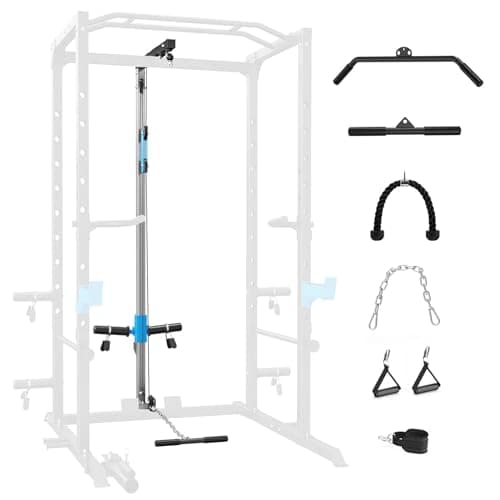
- A vertical pull with your hands loaded rather than your bodyweight. Lat pulldowns, for anyone who cannot yet do a pull-up or wants higher reps than they have pull-ups in them. Both cable picks here do this.
- A cable pushdown or a cable row. Constant tension through the whole range, which free weights never give you.
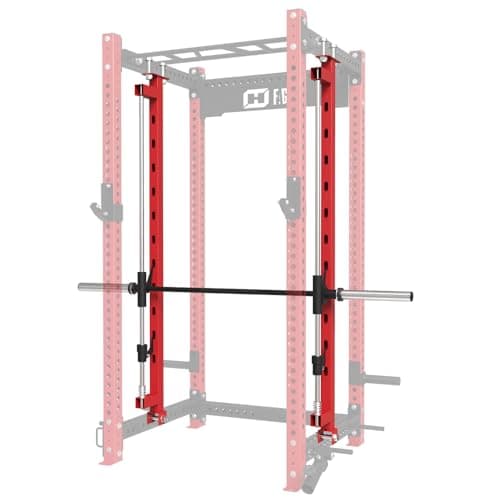
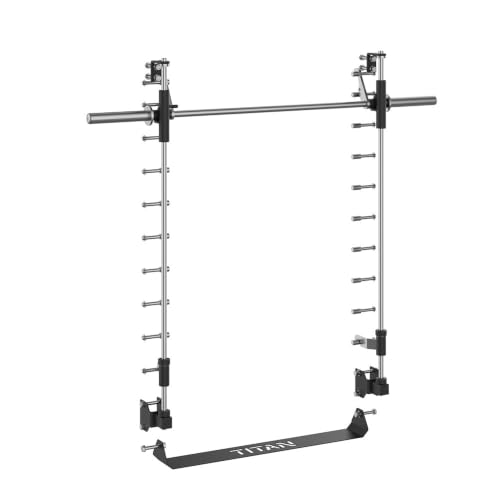
- A guided bar. A Smith attachment puts the bar on rails with catches at every pin height, which means you can press to failure alone. That is a safety feature, not a convenience.
Notice what is not on that list: dips, landmines and J-hook upgrades. Our registry holds no verified listing for a rack-mounted dip bar or landmine, and this site does not invent a product to fill a slot.
Fitment and published specs, side by side
The second column is the one that decides your purchase. Two of these four name a single rack model in their own listing text - the ULTRA FUEGO attachment is explicitly not a universal part, and the Titan is built for the X-3 80 inch bolt-down frame. If you own neither of those racks, your shortlist is two items long: the FAGUS if your uprights are 3 x 3, and the Mikolo pulley if they are anything at all.
Also worth reading literally: the published capacities describe different things. 176.4 lb on the ULTRA FUEGO is a maximum training mass on a pulley with a plate pin; 800 lb and 500 lb on the two Smith attachments are bar capacities on rails. They are not comparable numbers and we have not tried to rank them against each other.
Who each pick is for
- ULTRA FUEGO lat pulldown attachment - you own the ULTRA FUEGO cage, and nobody else. For that reader it is the clear best buy on this page: a genuine double-pulley station at 81 inches with five attachments and plate tubes included, for a fraction of a standalone cable machine. The listing states it is not a universal part. Believe it.
- FAGUS H Smith machine attachment - you own a 3 x 3 inch rack and want to press heavy alone. 800 lb published on the bar and 11 pin heights for the safeties, with the bar, guide poles and spotter hooks in the box. This is the most broadly fitting of the two guided-bar options because it is sold against a steel size rather than a brand.
- Titan X-3 Series 80 in Smith attachment - you own the Titan X-3 80 inch bolt-down rack. Built for that frame, 500 lb published on the bar, 111 lb of steel to get into the room. For any other rack this is the wrong purchase at any price.
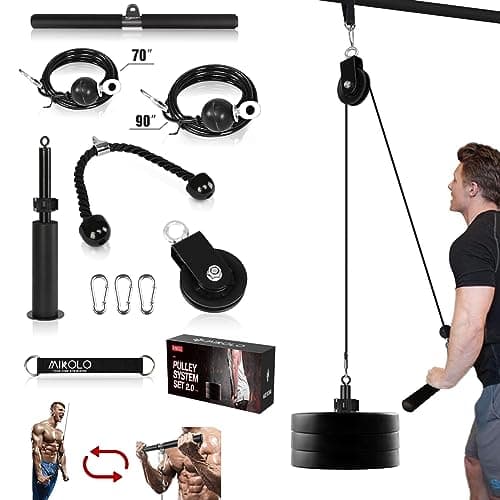
- Mikolo LAT and lift pulley system - the budget pick, and the one most readers of this page should buy. It hangs off whatever you have, loads the plates you already own, and does the two cable movements most people actually want. One cable, so no crossovers and no simultaneous high-and-low work, and no seat or leg hold-down - which means heavy pulldowns will lift you off the floor until you hook your knees under something.
The arithmetic worth doing before you buy any of these
A rack plus a cable attachment is not always cheaper than a cage that came with the cable system in the frame. Before you spend, price the honest alternative:
- If you already own the rack, an attachment is nearly always the right answer. You are buying one missing movement rather than replacing a frame that works.
- If you have not bought the rack yet, compare the total against a cage with an integrated pulley. Best all-in-one squat racks ranks those, and several of them land close to the cost of a mid-range rack plus a guided-bar attachment.
- If what you want is cables specifically, a dedicated machine may beat both. Best cable machines under $500 ranks what you can get under a hard cap, including selectorized stacks that need no plates.
And if the attachment you want is a pull-up bar: your rack already has one across the top. That is the whole point of the frame, and our pull-up bar vs. power rack guide covers why that makes a separate bar redundant.
What we left off, and why
No complete cages with a built-in cable stack. A frame that arrives with the pulley already in it is not an attachment, and they are ranked on best all-in-one squat racks under a hard rule: the pulley must be in the same frame.
No complete Smith machines. A freestanding guided-bar frame is a furniture-sized purchase rather than a bolt-on, and those are ranked on best Smith machines for a home gym.
No rack-mounted dip bars, landmines, J-hook upgrades or safety straps. All four are real and useful categories, and our registry holds no verified live listing for any of them. We do not invent a product to fill a slot - if a verified listing enters the registry, this page gets a fifth pick rather than a rewrite.
And no estimated fitment. Where a listing names one rack, this page names that rack. Where it names a steel size, this page names the size. We never tell you an attachment "should fit" a frame its maker does not list.