What “all-in-one” should mean, and what it usually means
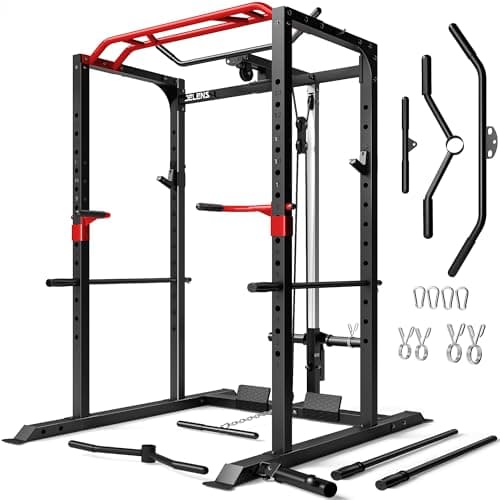
Listings use “all-in-one” for anything with more than one function, which makes it close to meaningless. For this page it means one specific thing: a squat rack with a cable system built into the same frame. That is the combination worth paying for, because it is the one that removes a second purchase and a second patch of floor.
A frame like that covers four of the five things a home gym needs. Squats and presses from the J-hooks, with safety arms so you can fail a rep alone. A pull-up bar overhead. Pulldowns, pushdowns, rows and face pulls from the cable. A landmine or dip handles on most of them for the odd jobs. What it does not give you is free-weight dumbbell work, and no rack ever will - see free weights vs. machines for where that line sits.
Three things get sold as all-in-one and are not what this page ranks:
- A bare cage with “optional” cable.Read the title carefully. “Optional cable pulley system” usually means not included. A good cage, but you are buying the cable separately - our racks and squat stands page ranks those on their own merits.
- A Smith machine. A guided bar on fixed rails is a genuinely different purchase with a different trade-off - more safety, less skill transfer. It has its own roundup at best Smith machines for a home gym and Smith machine vs. power rack settles the choice.
- A selectorized multi-gym. One frame, one weight stack, guided paths only, no barbell. Also a real product, also not a squat rack - best home gym machines covers those.
Plate-loaded or a weight stack?
This is the second real fork, and it is mostly about money and noise rather than training quality.
Five of the six picks here are plate-loaded: the cable runs to a pin you slide Olympic plates onto. That is why they are cheap - a steel weight stack is the heaviest and most expensive part of a commercial machine, and removing it removes most of the price. The costs are that you need plates (budget for them if you do not own any - how to choose weight plates covers which sizes first), and that changing weight means sliding iron rather than moving a pin.
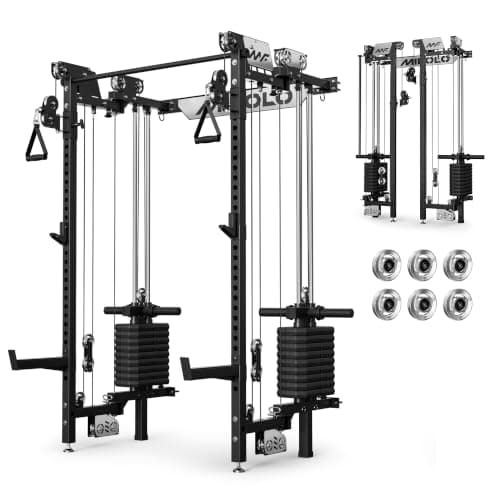
One pick, the Mikolo folding wall rack, includes a 100 lb selectorized stack. Weight changes take two seconds, nothing clanks, and no plates are required. It also costs several times the cheapest cage here and bolts permanently into wall studs. If quiet matters - a shared wall, a sleeping child, an apartment - read home gym noise reduction before you choose plate-loaded.
Read the last two columns before the first two. Every frame here is rated for more weight than you will ever put on it; not one of them shrinks to fit a room it does not fit. The Mikolo K6 is 67.5 in wide, the JEEKEE is 86 in tall, and the attachment in the last row raises its host cage to 82.7 in - which is why ceiling height is the first thing to measure, not the last.
Measure these four things before you order
- Ceiling height, to the lowest obstruction. Not the ceiling - the duct, the joist, the light, the garage door track. Then subtract your flooring thickness. A cage at 86 in needs a bit over 7 ft of genuinely clear height, and a pull-up bar you cannot hang from is decoration. If your room is short, our low-ceiling equipment page ranks what still works.
- Floor footprint, plus the cable swing. The published footprint is the steel. A cable crossover needs arm-span clearance on both sides and a pulldown needs room to sit. Add two feet all round to anything in that table.
- The door and the stairs. These ship in two or three boxes of long steel tube. A 60 in upright does not go round a tight stair turn. Measure the route, not just the destination - our moving equipment guide covers the awkward part.
- Whether you can drill. Only one pick here requires it, and that pick is also the best space-efficiency on the list. If you rent, it is out - wall-mounted vs. freestanding applies the same logic to bare racks.
Who each pick is for
- JELENS S11 - you want the most gym per dollar and you have a garage bay or a spare room. 2,000 lb rated on 50 x 50 mm steel, 13 laser-numbered upright positions, 12.5 sq ft, and the full attachment set in the box. The catch is height: under 80 in, so the pull-up bar is low for a tall lifter.
- SPORTSROYALS power cage - you want the longest accessory list. A 1,200 lb frame, a 500 lb-rated PU-coated cable, 14 height levels, and an inventory that includes the rowing bar, tricep rope, ankle strap, dip stands, six band pegs, a 360-degree landmine and a footboard. We rank it on several pages, including best garage gym equipment, and review it at SPORTSROYALS power rack.
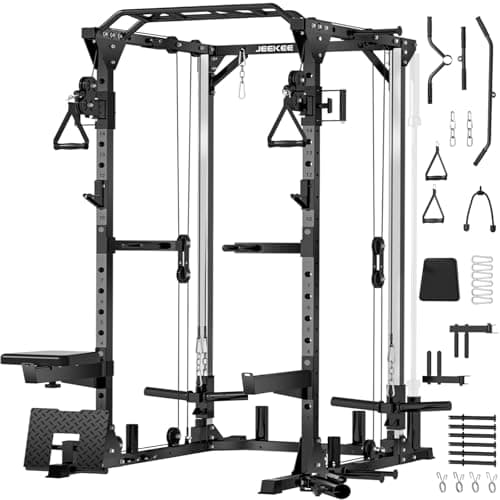
- JEEKEE power cage - you actually want cables, not just a lat bar. Two independent pulleys rated 500 lb, 20-plus attachments, a 2,000 lb frame on 1.5 mm wall steel, and a removable seat cushion on the safety arms so a heavy pulldown does not lift you off the floor. 86 in tall and 47 in deep - this one needs the room.
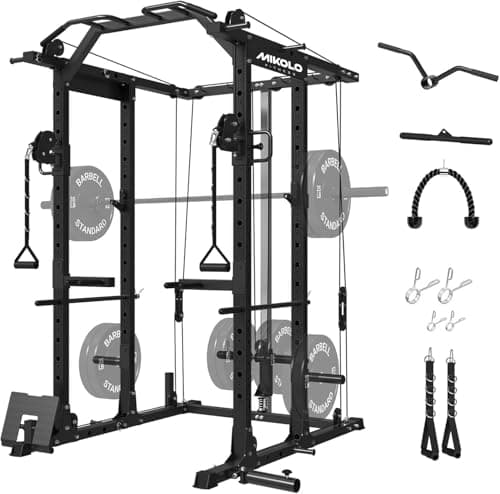
- Mikolo K6 - your bench is wide, or you want to train inside the cage properly. 41 x 60 in of internal space, which the maker states fits almost any weight bench, plus a 2:1 low row station with a footplate that folds flat. 230 lb of steel and eight reinforcing tabs. The widest footprint here at 67.5 in.
- Mikolo folding wall rack - the room has to go back to being a room. Published 9.5 sq ft open and 3 sq ft folded, five modes from folded to full crossover, dual independent pulleys across 28 heights, and its own 100 lb stack so there are no plates to buy or load. It bolts into studs, which makes it permanent and rules it out for renters.
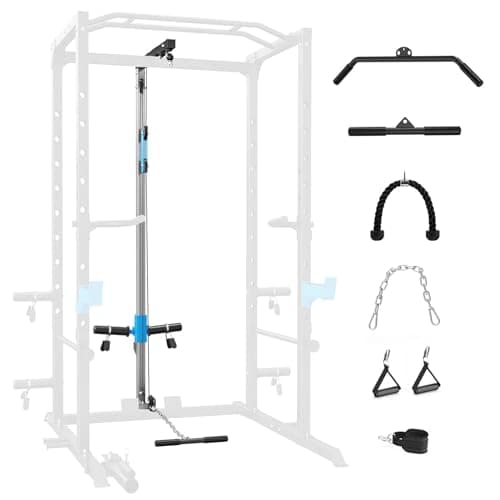
- ULTRA FUEGO lat pulldown attachment - you own the ULTRA FUEGO cage. A double-pulley system with a 176.4 lb published training ceiling, five handles included and plate storage added, for roughly a tenth of a new rack. The listing is explicit that it is not a universal part, so confirm fit with the seller before you order.
The honest case against buying one
An all-in-one frame is the right purchase for a lot of people and the wrong one for two specific situations, both worth naming before you spend several hundred dollars.
If you already own a rack, do not buy another. A rack-mounted pulley system costs a fraction of a new frame, hangs off the rack you have, and does pulldowns, pushdowns and rows. That is most of the cable value on this page for a tenth of the money. Our compact cable machines page ranks those, and do I need a cable machine makes the case that most small gyms genuinely do not.
If you have not started training yet, this is too much rack. The commonest expensive mistake in a first home gym is buying the frame before the habit. A squat stand, a bench and some load gets someone training this week for a fraction of the cost and the floor - which is exactly what our beginner equipment page recommends. You can add a cage later; nobody has ever regretted starting smaller.
Where an all-in-one is clearly right: you have the space and the ceiling, you already know you will be squatting and benching, you want a loaded vertical pull without a second machine, and you would rather make one purchase and assemble one thing. That describes a lot of garages. See garage gym setup for how the rest of the room should go around it.
What we left off
No four-figure functional trainers. Dual 200 lb stacks, aluminum pulleys and a Smith bar in one frame are excellent machines and sit several times above the budget this site is built around. Functional trainer vs. power rack explains which one earns the corner.
No cages whose cable is sold separately but whose title implies otherwise. If the pulley is an add-on, the honest comparison is against a bare cage plus the attachment price - which is exactly the comparison the last pick on this list exists to make.
No Smith-machine combos, even the ones that also have cables. A guided bar changes how you train rather than adding to it, and it deserves the separate decision we give it on is a Smith machine good for a home gym.
And no half racks or squat stands with a cable bolted on. Two posts and a cable tower is a less stable frame than a four-post cage and the cable loads it in exactly the direction it is weakest. Half rack vs. power rack covers why the fourth post matters more than people expect.