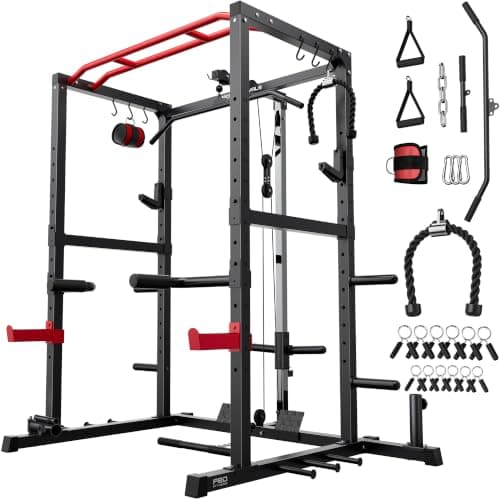
The safeties are the product. Everything else is convenience
A rack does exactly one thing that nothing else in a home gym does: it lets you get under a loaded barbell without a spotter and survive failing. Pull-up bars, plate storage, band pegs and cable pulleys are all nice. The safeties are why you are buying it.
So the ranking on this page runs on three questions, in this order:
- Will the safeties catch the bar? Look for a published catch or pin rating, separate from the frame rating. Where a listing gives only one number, assume it is the frame and treat the catches as unknown.
- Do they adjust low enough? Safeties set for a squat are useless for a bench press, where the bar needs to stop just above your chest. A rack with closely spaced holes through the bench zone is worth more than one with a higher headline rating.
- Will the rack stay put? A two-post stand is lighter and cheaper than a cage and will tip if you unrack unevenly or hit the uprights. Bolting it down or loading the base with plates is not optional at real weights.
Our how to choose a power rack guide works through the criteria in full, and how much weight can a squat rack hold digs into the rating question specifically.
What each rack publishes
The CAP row is the one to study, and not because it is a bad rack - it has sold for years and it does the barbell basics properly. It is the only listing here that publishes both numbers, which is to its credit, and the gap between them is instructive: a 600 lb frame with 300 lb catches. For a beginner squatting 135 lb that is entirely fine. For someone heading toward a 315 lb squat it is the ceiling, and it arrives sooner than the headline figure suggests.
The other four publish a frame rating or describe the safeties qualitatively without giving a catch figure. We have not invented one. If you are already lifting heavy, that silence is itself information, and best all-in-one squat racks covers the 2,000 lb-rated frames that sit just above this budget.
Cage, stand, or folding rack?
All three shapes are represented here because they answer different rooms, not different budgets.
- A four-post cage is the safest and the least convenient. You train inside it, the safeties run the full depth so the bar cannot miss them, and it owns its patch of floor permanently. If you have the space, this is the shape to buy.
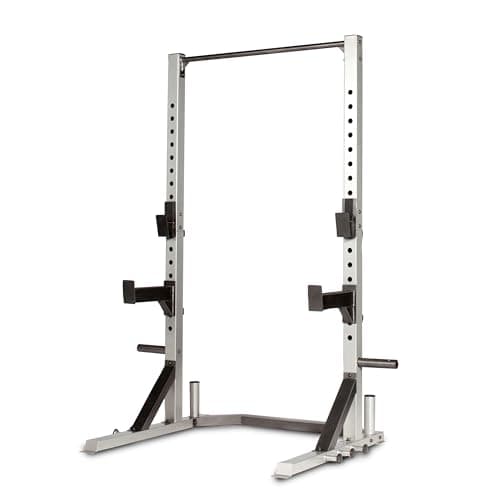
- A two-post stand is cheaper, lighter, and takes maybe half the floor. The safety arms stick out the front rather than running through the frame, so there is a little more thinking required about where the bar lands - and the whole thing wants bolting down or weighting before you load it seriously.
- A folding wall rack gives the room back. It is also the most permanent: it bolts into studs, which rules it out for renters entirely, and the uprights have to go where the studs are rather than where you want them.
Squat stand vs. power rack settles the first two properly, and wall-mounted vs. freestanding covers the third. For a first barbell setup in a room you own, a cage. For a room you rent, a stand.
What $500 does not buy, and what you still need
Two honest notes, because a rack is the single biggest line in a first home gym and it is easy to budget for the rack and forget what it needs around it.
The rack is roughly a third of the cost of being able to squat. You also need a barbell and plates, and on a budget build those together usually cost more than the rack did. Our best barbells and best weight plates pages cover both, and the $1,000 build prices the whole thing item by item with a running total.
Under $500 you do not get commercial steel. Three-by-three inch 11-gauge uprights with 5/8 inch hardware start well above this budget. What you get here is 2 by 2 inch tube in lighter gauges, which is genuinely adequate for the loads a first or second year lifter will put on it and is not the rack you would buy if you intended to squat 500 lb. That is a fair trade at this price and worth naming rather than glossing.
Who each pick is for
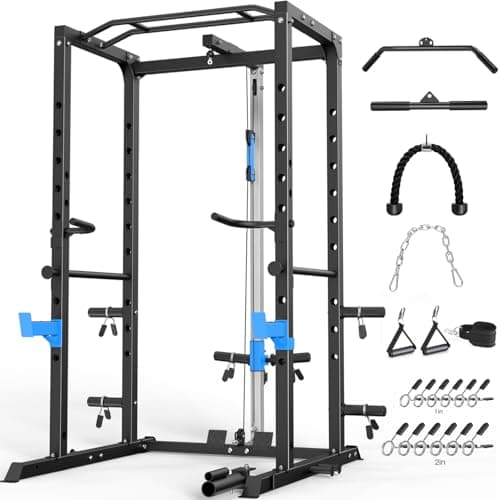
- SPORTSROYALS power rack - most people, if the floor space exists. A four-post cage with full-depth safeties plus a cable pulley for pulldowns and rows, all under the cap. Needs a dedicated corner and a long assembly.
- ULTRA FUEGO power cage - you want the cage without the cables. The plain four-post version of the same idea; note its lat attachment is cage-specific rather than universal if you add one later.
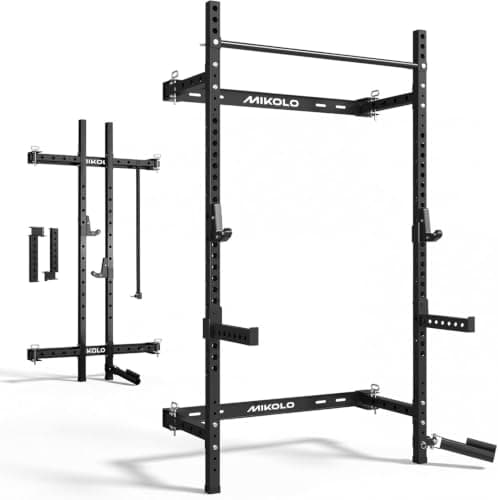
- Mikolo folding wall rack- the garage still parks a car. 1,000 lb rated on 2 by 2 inch steel, and it folds to a few inches deep. Bolts into studs, so it is not a renter’s purchase.
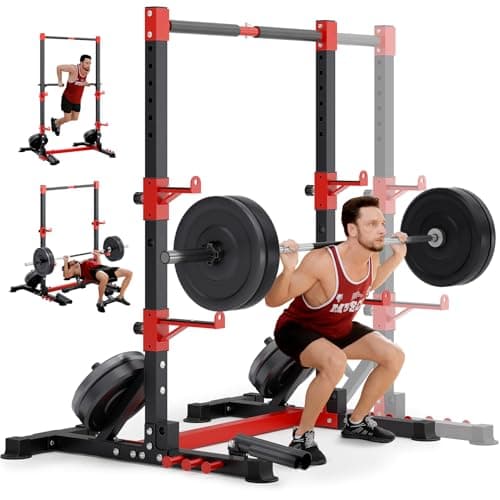
- YOLEO squat rack - the budget pick, and the right first rack for most beginners. Adjustable two-post stand with extended safety arms and a pull-up bar, at the lowest price here. Load the base or bolt it down before heavy sets.
- CAP Barbell power rack - you want a full cage from a brand that has been around. The only one here honest enough to publish its 300 lb catch rating, and that figure is the reason it is last. It is also the most expensive pick on this page now, so it is no longer the budget route into a cage that it used to be.
What we left off, and why
No cages with an integrated cable stack beyond the SPORTSROYALS. Several are excellent and most of them sit above $500, which makes them a different purchase; they are ranked on best all-in-one squat racks, where the qualifying rule is that the pulley is in the same frame.
No Smith machines. A guided bar is a different decision from a rack with safeties - it removes the balance demand rather than catching a failed rep - and those are on best Smith machines for a home gym.
No wall-mounted uprights sold without safeties, at any price. A pair of J-hooks on a wall will hold a bar for a press; it will not catch one. That is the single thing this page refuses to compromise on.
And no invented catch ratings. Four of the five listings here do not publish one, and the table says what each listing says rather than estimating from the frame figure. The gap between a frame rating and a catch rating is frequently large, and guessing at it on the component that stops a bar hitting your chest is not a guess worth making.