Closed hex or open frame - the only decision that changes what you can do
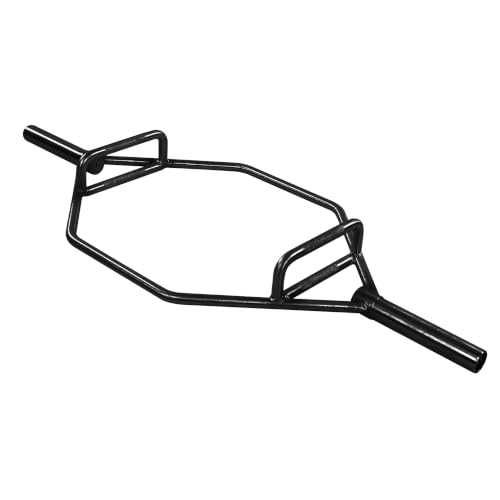
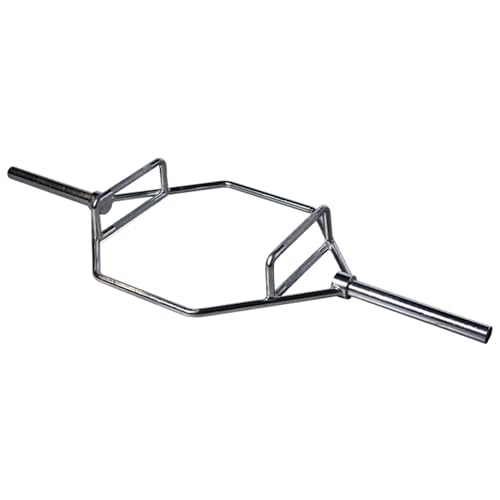
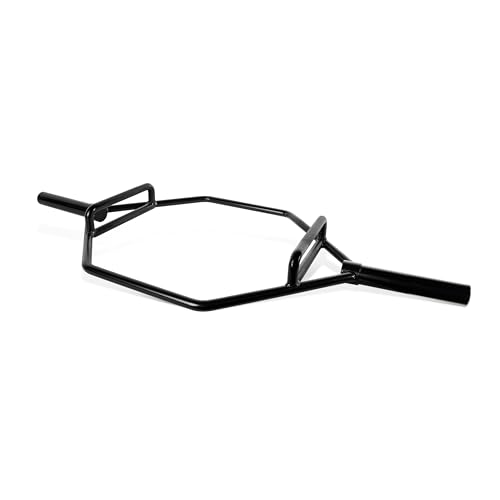
A closed hex is the classic shape: a hexagon of steel with handles on two sides and sleeves out of the ends. You stand inside it. It is more stable than an open frame because the load is enclosed around you, it is cheaper to make, and it is what four of the six picks here are. The limit is physical - you cannot walk forward out of a closed hexagon with a loaded bar, so carries and lunges are out.
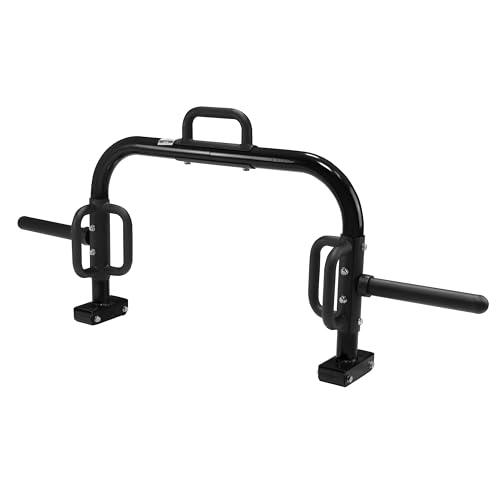
An open frame, sometimes called an open trap bar, is a U. You walk into the open end, and because nothing is behind you, you can keep walking. That unlocks farmer carries, walking lunges, split squats and step-ups with a loaded bar, which are some of the most useful exercises in a small home gym precisely because they need no rack. The trade-offs are real: an open frame is slightly less balanced if you set up off-center, and the open pick here is rated to 500 lb rather than 750 or 1,000.
Our honest read: if this is your only trap bar and you train in a space without a rack, the open frame earns its slot on exercise count alone. If you already own a rack and want a trap bar purely for heavy pulling, buy the closed hex and spend the difference on plates.
The numbers worth reading
Three honest notes on that table, because the listings are not consistent.
One listing contradicts itself on bar weight.The BalanceFrom bar’s feature text states “Product Weight: 45 Pounds” while the structured item weight on the same listing says 19 lb. A solid-steel hex bar rated past 1,000 lb is not a 19 lb bar, so we have recorded 45 lb and flagged the disagreement. Weigh it or confirm it on arrival rather than trusting either number for your training log.
Three listings do not publish a loadable sleeve length.That is the second most important number on this page and its absence is worth knowing before you order, particularly if you lift on bumper plates. We have written “not published” rather than estimating.
Capacity is the least useful number here. The spread is 400 lb to 1,000 lb and a home lifter will spend years below the bottom of it. Use it as a tiebreaker, and give the weight your floor and your drop zone can take more thought than the number stamped on the steel.
Handle height: why two is better than one
Most trap bars have handles on both sides of the frame - flip the bar over and you get a different starting height. This is genuinely useful and four picks here have it.
Raised handles sit a few inches higher, so the bar starts closer to your knees. That shortens the range of motion, demands less hip and ankle mobility, and is the right place for almost everyone to learn. It is also where you will pull your heaviest weights.
Flush or low handles sit level with the sleeves, giving a full-range pull closer to a conventional deadlift. Harder, more demanding of mobility, and the version to graduate to once the movement is comfortable.
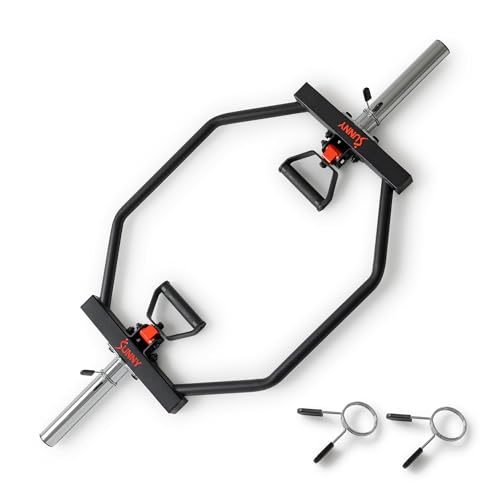
One pick - the chrome bar - has a single fixed handle height, which is the main thing you give up for its rust resistance. And one pick has 360-degree rotating handles, which let the wrist find its own angle. That is a real comfort benefit on heavy carries and rows, at the cost of bearings that can develop play over years.
Rackable, and why it is worth a look
Most trap bars are too short and too oddly shaped to sit in a power rack’s J-hooks. One pick here is 85.7 in long specifically so it does, and that changes what the bar is: you can set it at knee height for rack pulls, or at shoulder height to press from.
If you own a full-size rack, that is a genuine argument for the expensive bar - it is roughly three purchases in one. If you do not own a rack, it is 85.7 in of steel that needs real wall space to store and gains you nothing. Measure before you spend.
Who each pick is for
- CAP Olympic hex bar (combo grips) - the default first trap bar. 750 lb on a closed hex with a roomy 25 in interior opening, raised and flush handles with a medium knurl, and 9 in Olympic sleeves. The catches are a 52 lb bar weight, which starts your total high, and those 9 in sleeves, which are the shortest here and fill up fast with bumpers.
- BalanceFrom hex bar (1,000 lb) - most capacity and most plate room per dollar. Solid steel rather than hollow tube, stated past 1,000 lb, extra-long loadable sleeves and 1.97 in bar ends so standard 2 in plates slide on cleanly. At 21.65 in across it is the narrowest frame here, so a wide stance will touch steel - and see the bar-weight note above.
- CAP Deluxe open trap bar - you want the exercises, not just the deadlift. An open U-frame you walk into, so carries, lunges and split squats are all on the table, plus integrated loading jacks that lift the sleeves off the floor for plate changes - the best quality-of-life feature on this page. It also takes 1 in standard plates as well as 2 in Olympic, which nothing else here does. Rated 500 lb and tested to ASTM standards.
- Sunny Health & Fitness swivel hex bar - your wrists or elbows complain. The only pick with 360-degree rotating handles, plus 11 in sleeves, a 26 in frame, a 22 lb bar that one person can move easily, and two collars in the box. 400 lb is the lowest capacity here and the bearings are extra parts to wear.
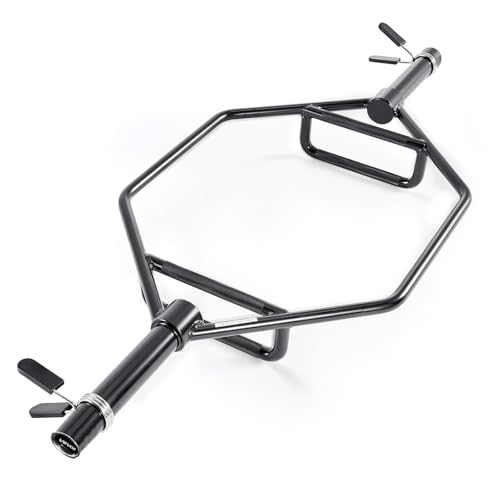
- VEVOR 800 lb chrome hex bar - an unheated garage or a humid basement. Chrome plating resists the rust that takes powder coat off a bar stored on a damp slab, and 800 lb on a bar under 23 lb is a good ratio. It costs roughly double the cheapest capable bar here, publishes no sleeve length, and has a single fixed handle height. Our rust prevention guide covers the cheaper way to solve the same problem.
- REP Fitness rackable trap bar - the buy-once bar. 1,000 lb, fully welded powder-coated steel from a brand that sells to commercial gyms, both handle heights, and 85.7 in long so it drops into a standard power rack for rack pulls and presses. Three to four times the price of the cheapest capable bar, and it needs a full-size rack and real storage space to be worth it.
What we left off, and why
No straight Olympic bars or EZ curl bars. Those are a different purchase and they have their own ranked page at best barbells for a home gym. A trap bar is a specialty bar; it is not a replacement for the bar you squat and bench with.
No bars with rotating sleeves at four figures. Sleeve rotation genuinely matters on a straight bar for fast Olympic lifts. On a trap bar, where you pull vertically and the bar never spins in your hands, it is close to irrelevant for home training.
No 1 in standard-only hex bars. They exist, they are cheap, and they are a dead end: every plate you buy later will be 2 in Olympic. The open-frame pick here takes both, which is the honest way to serve someone who already owns standard plates - see Olympic vs. standard barbell.
And no bars we could not confirm in stock. Two higher-capacity open-frame bars showed only a handful of units on the day this page was written, and one CAP trap bar came back as currently unavailable. A pick that is gone next week is not a recommendation.
Is a trap bar worth it before a straight bar?
For most first home gyms, no - and we would rather say so. A straight Olympic bar squats, benches, presses overhead, rows and deadlifts. A trap bar deadlifts, shrugs, carries and does a decent overhead press. One bar covers five movements, the other covers two or three, and they cost about the same. Buy the straight bar first.
Where a trap bar genuinely jumps the queue: if your lower back is the reason you are not deadlifting at all. A bar you will actually pull beats a bar you avoid. The same logic applies if you have no rack - you can load a trap bar heavy and pull safely from the floor with nothing else in the room, which is not true of a squat.
Read trap bar vs. straight barbell for the full comparison, do I need a trap bar for the short answer, and how to choose a trap bar for the criteria behind this ranking. If you are pulling heavy either way, a belt is the cheap accessory that makes the difference on a top set.