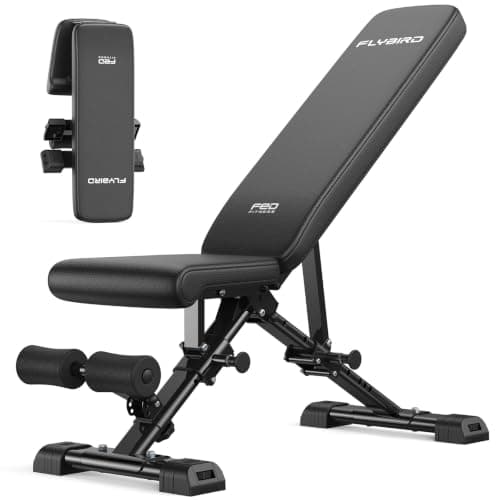
Under $200, certification is the only spec that matters first
Every bench listing in this price bracket publishes a capacity number. Almost none of them publish who checked it. That distinction is the whole buying decision at this budget, and it is worth being precise about the two words you will see:
- “ASTM-certified” means the listing claims the bench was tested against the ASTM standard for fitness equipment by somebody other than the brand. Two benches on this page state it: the WB5 at 800 lb and the YOLEO at 827 lb.
- “Rated” or a bare numbermeans the manufacturer says so. That is not nothing - a brand making a public claim has something to lose - but it is one party, not two. The WB7’s 1,300 lb, the WB3’s 750 lb and the Marcy’s 600 lb are all rated figures.
Here is the part most bench roundups skip: the number has to carry you plus the bar. A 600 lb bench under a 200 lb lifter has 400 lb of headroom, which is a lot of bench press for a beginner and not much at all for someone two years in. Our how much weight a weight bench can hold guide does that sum properly, and best heavy-duty weight benches ranks purely on rated load if that is your binding constraint rather than price.
The specs that separate these five
Three things to read off that table. The YOLEO has the highest certified number on the page, which is remarkable for the cheapest bench on it - what you give up is pad width and the number of back angles. The WB7 has the highest number full stop, and no third party behind it. And the WB3 is the only bench here that publishes a user height, which is why it is the pick for a long frame rather than a strong one.
Why the cheapest bench is not the budget trap you would expect
In most equipment categories the cheapest thing is the one to avoid. Benches are an exception, and it is worth saying why: a flat-incline bench is a simple object. Two pads, a hinge, a ladder of holes and a steel frame. There is not much to get wrong, and the cheap end of the market is competing on exactly the spec a buyer can check - the certification.
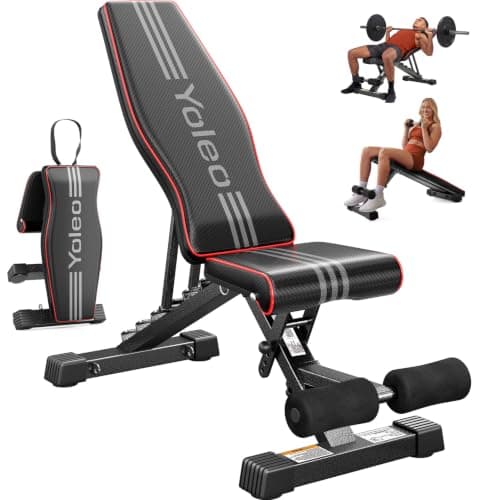
So the YOLEO at the bottom of this page is a real recommendation, not a wooden spoon. Its honest limits are a narrower pad - which matters if you are broad-shouldered or tall, and is exactly why it is absent from our benches for tall lifters page - and fewer back positions than the FLYBIRDs. If neither of those is you, the cheapest bench on this page is a fine bench.
Flat, or flat-incline-decline?
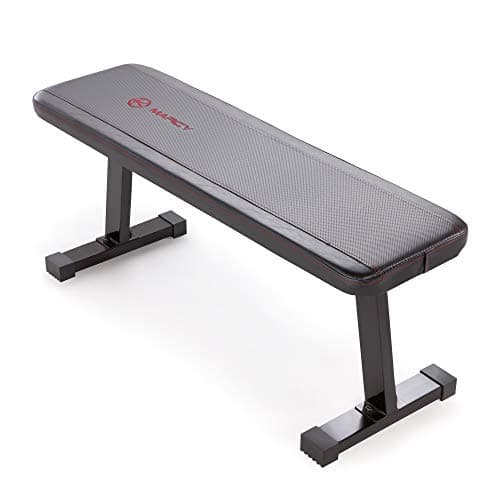
The Marcy is the only flat-only bench here and it is cheaper than three of the four adjustables. Whether that is a saving or a mistake depends on one question: do you want to press at an incline?
An adjustable bench hinges somewhere under your shoulder blades, so when it is flat you are lying across a seam with a bracket beneath your spine. A flat utility bench is one continuous pad with nothing underneath to find, which is steadier and more comfortable - and it costs less. What you lose is incline and decline, and that is a genuine loss for shoulders and upper chest. Flat vs. adjustable bench settles that trade in full. For most first home gyms the answer is adjustable, because one bench doing three jobs is the point of a small gym.
Who each pick is for
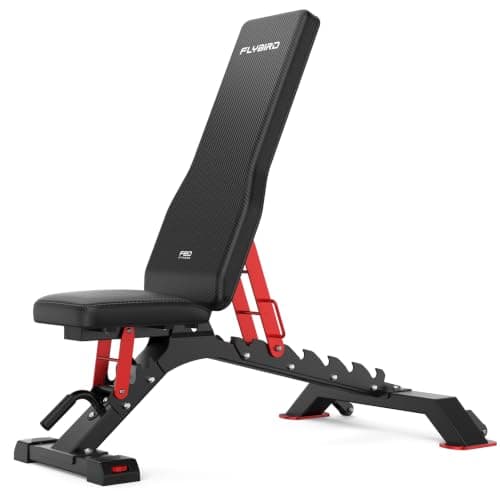
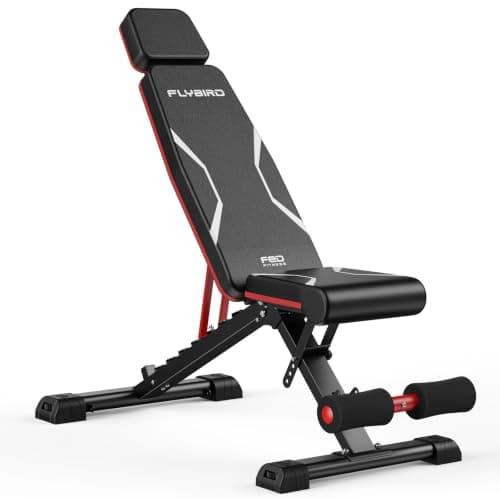
- FLYBIRD WB5 - almost everyone. The cheapest independently ASTM-certified bench that also folds flat and does flat, incline and decline. This is the default.
- FLYBIRD WB7 - you are going to bench a loaded barbell. 1,300 lb rated on a wider frame, and it sits right at the top of this budget.
- FLYBIRD WB3 - you are over about 6 ft 1 in. Extended 33 to 35 inch backrest and a detachable headrest, published as fitting to 6 ft 5 in.
- YOLEO adjustable bench - the budget pick, and the highest certified rating here. Buy it if the money is tight and you are not broad or tall.
- Marcy Flat Utility Bench - flat pressing, rows and step-ups only. One continuous pad, nothing under your spine, and the lowest price on the page.
What we left off, and why
No REP Nighthawk. It is our step-up pick on best adjustable weight benches and it costs more than twice this cap, so putting it here would make the title false. If you want to know what triple the money buys - heavier-gauge steel, seven back angles, a real brand warranty - read it there.
No bench-and-rack combos. A combo frame under $200 is compromising on both halves, and the rack half is the half holding a barbell over your throat. Best power racks and squat stands covers that purchase separately, which is how it should be bought.
And no uncertified sub-$60 benches, of which there are many. We do not rank a bench that publishes neither a certification nor a credible capacity, at any price. That is not a value judgment about cheap gear - the cheapest pick on this page is a bench we recommend. It is a judgment about paperwork on the one object you lie underneath.