The short answer: a weight bench costs between about $79.99 and $449.99, and the bench most beginners should buy sits near $149.98. That middle number buys an independently ASTM-certified 800 lb capacity, enough back and seat angles to press flat and incline, and a frame that folds flat against a wall. Spend less and you give up adjustment range and pad width; spend more and you are buying steel gauge, pad quality and finer angles.
Benches are the cheapest piece of a home gym that genuinely matters, which makes the price question unusually easy to answer well: there is a certified option under $79.99, so nobody has a good reason to buy an uncertified bench. Every price on this page is read live from our price layer and was last verified October 21, 2026.
The four tiers, and what changes between them
Bench listings run from $50 to $2,000 and the jumps are not smooth. These are the four points on that line where something real changes.
Two things in that table surprise people. First, the highest capacity is not the highest price - the 1,300 lb frame costs less than half the step-up bench, because the step-up is selling pad quality, steel gauge and seven angles rather than a bigger number. Second, certification does not track price either: the two cheapest benches here carry independent ASTM ratings and the three more expensive ones publish manufacturer-rated figures. Pay attention to which kind of number you are reading, and see how much weight a bench can hold for how to translate it into your own body plus barbell.
What drives the price
- Certification. Independent ASTM testing costs the manufacturer money and appears as a published, auditable figure rather than a round marketing claim. It is the single best value-for-money signal under $150.
- Steel and welds.Heavier gauge tubing, more of it, and better welds are most of what you feel as “solid.” This is where a $450 bench spends its money.
- The pad. Length, width, density and whether there is a headrest. Pad geometry is the one thing that is worth paying for when you are tall - see benches for tall lifters.
- Adjustment. Three back positions versus seven, a decline seat, a ladder versus a pop-pin. More positions means finer control of an incline angle, which matters more the longer you train.
- Storage. Folding flat is standard at the budget end and absent on some premium benches, which stand upright instead. Neither is better; they suit different rooms.
The three costs the price tag hides
A bench is never the whole purchase, and the add-ons are reliably bigger than the bench itself:
- Something to press. A bench with nothing to lift is furniture. Adjustable dumbbells run from around $125 to $750 depending on the ceiling you buy - see how much adjustable dumbbells cost - and a barbell plus plates is its own line item in how much a barbell costs.
- A mat. Around $30 for a stall mat. Bench feet mark finished floors, and dumbbells get set down beside the bench rather than placed gently. Our mats roundup covers the one-mat purchase.
- A rack, eventually. If the bench is the start of barbell pressing, you need somewhere to rack the bar and something to catch it - how much a power rack costs starts at a stand with safety arms. Benching a loaded bar out of nothing is the one genuinely dangerous habit in a home gym.
What we would buy at each budget
Those tiers in practice. Each pick below is the bench we would actually buy at that number, with the live price in the button.
What we would buy at each budget - live prices, last verified October 21, 2026
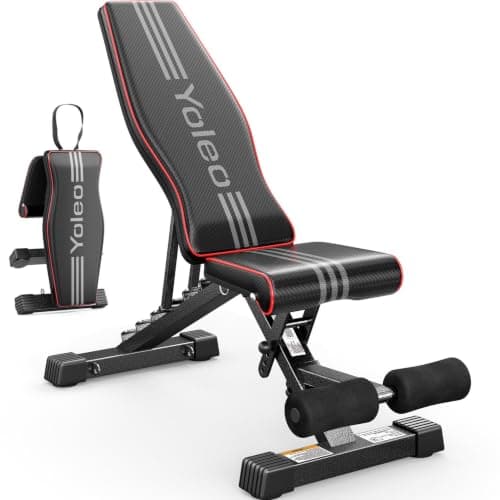
YOLEO Adjustable Weight Bench
A sub-$80 ASTM-certified bench that arrives 98% assembled — the cheapest bench we'd actually put a barbell over.
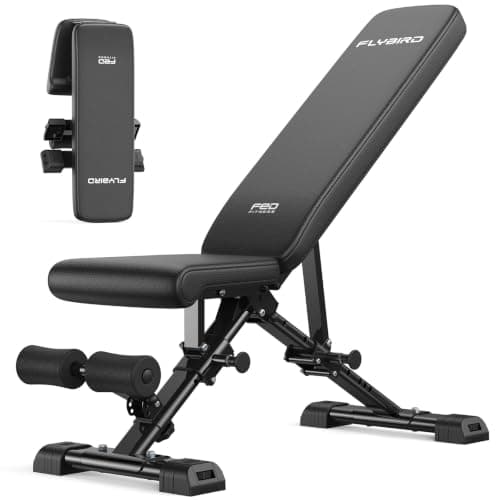
FLYBIRD WB5 Weight Bench
The default budget flat-incline-decline bench: ASTM-certified to 800 lb, folds flat, and pays for itself against a few months of gym membership.
#ad · Price as of October 21, 2026 · Affiliate disclosure
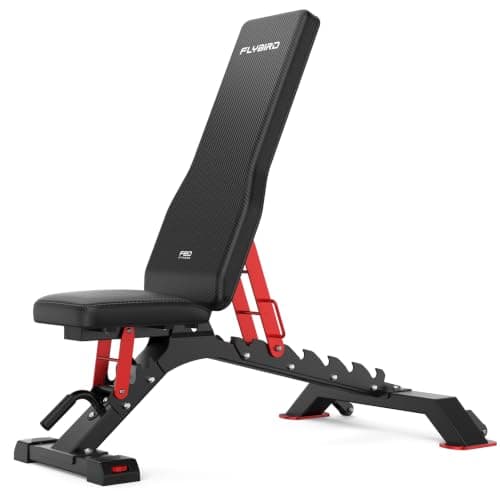
FLYBIRD WB7 Commercial Bench
FLYBIRD's heavy-duty model — a 1,300 lb rating and wider frame for anyone planning to load a barbell hard.
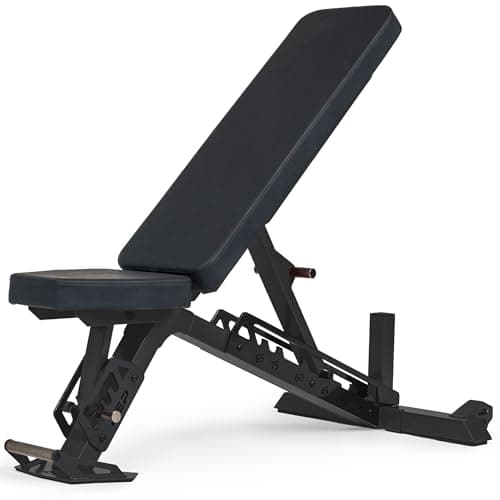
REP Nighthawk Adjustable Bench
A step up in build and pad quality from a respected strength brand — the bench to buy if you already know you'll stick with it.
#ad · Price as of October 21, 2026 · Affiliate disclosure
Where to spend less, honestly
Two legitimate ways to pay less than $79.99 for a usable bench. The first is to buy flat only: a welded flat utility bench has no hinge, no pins and nothing to wobble, costs around $75, and is steadier than any budget adjustable - you lose incline and decline, which is a real loss for shoulders and upper chest. Flat vs. adjustable settles that trade.
The second is to buy used. Benches depreciate badly, which is bad news when you sell and good news when you buy. Check the pad for splits, the vinyl for tears and the adjustment pins for play, and avoid anything with no published capacity at all - the certification you cannot verify is the one thing a used bargain cannot give you back. Our buying used guide has the checklist.
What we would not do is drop to an uncertified bench to save $20. The bench is the only thing between you and the floor while a loaded bar is over your chest, and at these prices certification is not a luxury - it is $10. If the whole budget is around $300, our $300 build shows how the certified bench still fits.