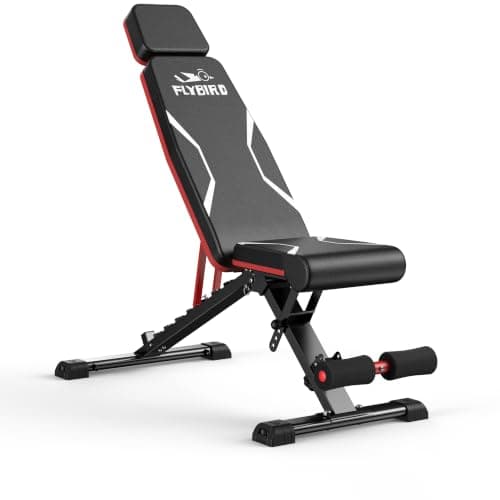
The three measurements that decide fit
Bench listings publish a dozen numbers and only three of them matter if you are tall.
- Backrest length. This is the one. Your shoulders need the pad and your head needs somewhere to go; a backrest in the high twenties leaves a 6 ft 3 in lifter with their head unsupported the moment the bench goes to incline. An extended backrest in the 33 to 35 inch range, or a flat bench long enough that the pad runs past your head, is what you are shopping for.
- A headrest, detachable or not. Cheap benches end the pad at the shoulder line. A headrest is the difference between pressing with your neck braced and pressing with your head cantilevered into the air - and a detachable one means you can remove it for flat work and put it back for incline.
- Pad width. A wide frame on a 10-inch pad feels like balancing on a beam. Wider is more stable for a big lifter, with one real trade-off: too wide blocks the shoulder blades from retracting on a bench press. Commercial-style frames sit at the generous end of that range, which is where most tall lifters want to be.
Seat height matters too, in the opposite direction from what people assume: tall lifters are usually fine, because the problem is short lifters whose heels dangle. If you are over 6 ft, a higher seat and longer pad are both working in your favour.
Two things to read off that table. First, the WB3 is the only bench here whose listing makes an explicit user height claim - up to 6 ft 5 in - which is why it is the top pick on a page about being tall. Second, the highest rating belongs to the WB7, and that matters more to a tall lifter than to anyone else, because bodyweight plus the loaded bar is what the frame actually holds. Our bench capacity guide does that sum, and our heavy-duty benches roundup ranks purely on rated load if that is your binding constraint.
Flat benches often fit tall people better
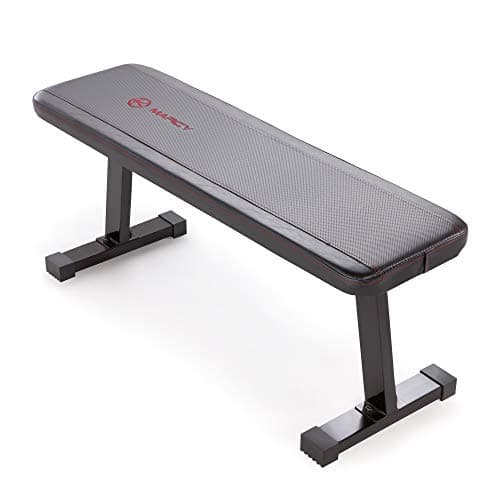
This is counter-intuitive and worth a paragraph. An adjustable bench has to hinge somewhere, and the hinge is usually just below your shoulder blades - so when it is flat, you are lying across two pads with a gap and a bracket under your spine. A flat utility bench is one continuous pad with nothing underneath to find.
For a tall lifter who mostly bench presses, rows and does step-ups, that single pad can be more comfortable and noticeably steadier than a budget adjustable - and it is cheaper. What you give up is incline and decline, which is a real loss for shoulder and upper-chest work. Flat vs. adjustable bench settles that trade properly; if you want one bench to do everything, buy adjustable.
What a tall lifter should change about the rest of the gym
The bench is the obvious fix. Three less obvious ones come up constantly for lifters over 6 ft, and all three are cheaper than the bench:
- Rack height and bar path. A long lifter needs the J-hooks higher for squats and the safeties set deeper, because a longer body travels further out of the hole. Check the upright hole spacing before you buy - best power racks and squat stands covers the five we recommend, and how to choose a power rack covers what to look for.
- Ceiling clearance. At 6 ft 4 in a standing overhead press needs roughly eight feet of room, which a lot of basements do not have. We wrote best equipment for low ceilings and minimum ceiling height for exactly that collision.
- Floor area, not floor thickness. Long limbs mean a wider lunge, a longer deadlift stance and more swept space around the bench. Our how much space guide gives the footprints; add a foot in every direction to the numbers you see quoted for an average lifter.
Who each pick is for
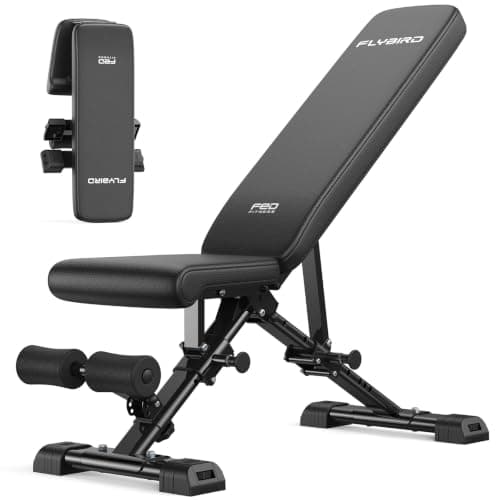
- FLYBIRD WB3 - the default for anyone 6 ft 1 in and up. Extended 33 to 35 inch backrest, detachable headrest, published fit to 6 ft 5 in, and it still folds away at 27 lb.
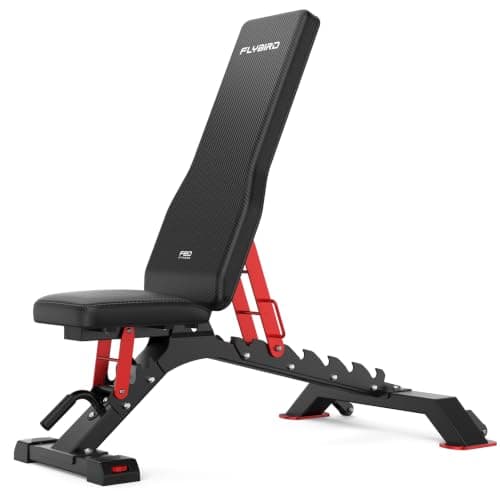
- FLYBIRD WB7 - tall and strong. The widest, highest-rated frame here at 1,300 lb, which is the one to buy if a loaded barbell is in your near future.
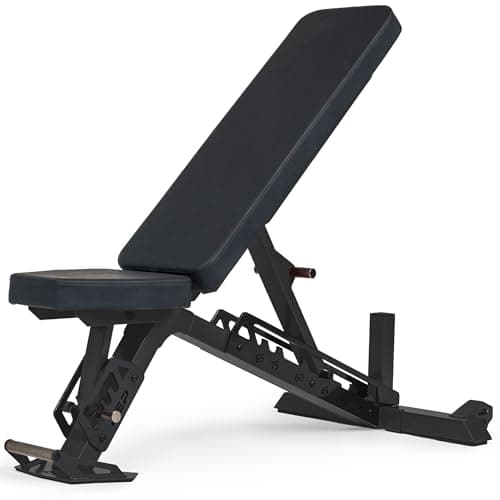
- REP Nighthawk - you want the angles. Seven back positions plus a decline seat means you can find the incline that suits a long torso instead of accepting the two a budget bench offers.
- FLYBIRD WB5 - around 6 ft, and you want the certification. The ASTM-certified 800 lb rating is the strongest paper on this page.
- Marcy Flat Utility Bench - flat pressing only, and nothing under your spine. The cheapest way for a tall lifter to get a steady, continuous pad.
What we left off
No sub-$80 adjustable benches on this page, including the YOLEO we recommend elsewhere as the cheapest bench we trust. It is a good bench for the money and its pad is narrower and shorter than a tall lifter wants - recommending it here would be recommending the exact problem this page exists to solve. It stays on best adjustable weight benches, where it earns its place.
No bench-and-rack combos or all-in-one stations. The fixed geometry of a combo is the hardest thing to fit a long body into, and when it does not fit there is nothing to adjust. If you want the machine route anyway, check the published user height on best home gym machines before you buy.
And no made-up numbers. Several benches on the market would probably suit a tall lifter well, but their listings publish no backrest length and no user-height rating - so there is nothing honest to rank them on. Four of the five picks here are ranked on published geometry; the fifth is ranked on being a single flat pad.