Three criteria, and only one of them is comfort
A weighted vest is a simple product with one job, which makes the shopping decision unusually clean once you know what to look at.
- The ceiling. Decide this from the movement you intend to load. For push-ups and step-ups, 20 lb changes the session. For dips and pull-ups, 20 lb is a year at most - you want 40 lb or more, because the whole point is that the vest keeps working after you get stronger. Our picks run from 20 to 50 lb, and stepping up from the 20 lb vest to the 50 lb one is the best-value jump on this page.
- The step size. This is the criterion buyers skip and then regret. Adding load to a pull-up in 10 lb jumps is brutal; adding it in 2.5 lb jumps is training. A vest built from many small blocks lets you progress like a dumbbell rack does. Only one listing here publishes its block count, and that is why it is ranked second despite a lower ceiling than the top pick.
- The bulk, which is a function of material. Iron is dense, so an iron vest is thinner for the same weight. Sand is cheap and bulky, and a bulky vest fouls a dip at the bottom of the rep where your chest meets the handles. Only two of these listings say which they use, which is itself a useful signal.
Our how to choose a weighted vest guide works through those in full, and do I need a weighted vest? is the prior question - for a beginner who cannot yet do five strict pull-ups, the honest answer is not yet.
What each vest publishes
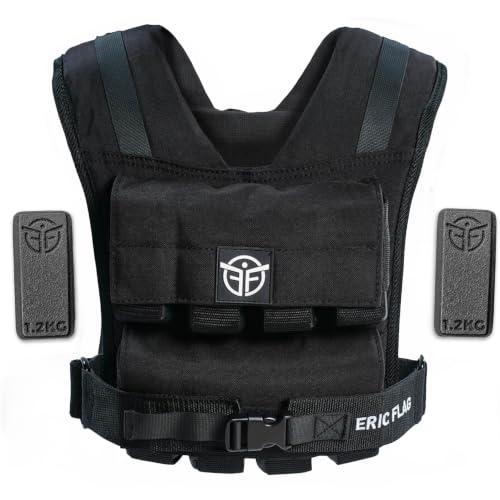
Four of the six rows read “not published” twice, and that is the honest state of this category rather than a gap in our research. Vest listings sell a lifestyle; they rarely sell a spec sheet. The two that do - the ERIC FLAG and the BAGAIL - both say “removable iron”, and the ERIC FLAG goes further and counts the blocks.
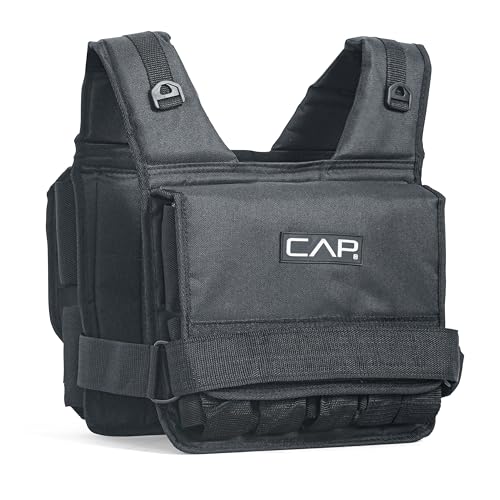
That does not make the silent listings bad products. The CAP 50 lb vest is our top pick precisely because the load and the price are both excellent, and CAP is the brand behind several picks on this site. It does mean you should expect to discover the step size when the box arrives, and plan the purchase around the ceiling instead.
Vest, dip belt, or plates in a backpack?
Three ways to add load to a bodyweight movement, and they are not interchangeable.
- A vest keeps the load tight to your center of mass, which means it works on everything: pull-ups, dips, push-ups, squats, step-ups, lunges and carries. It is the most versatile of the three and the only one you can wear for a whole session.
- A dip belt hangs plates between your legs. It loads pull-ups and dips better than a vest at heavy weights - 100 lb on a belt is normal and 100 lb of vest is not - and it is useless for anything else. We rank no dip belt yet: our registry has no verified belt listing, which we would rather say than fill the slot with a guess. Our how to choose a dip belt guide covers the criteria in the meantime.
- A backpack with plates is free if you own plates, and it is genuinely fine for step-ups and carries. On pull-ups it swings, and on dips it pulls you backwards out of position. Treat it as the way to find out whether you want a vest, not as the destination. If you need plates anyway, best weight plates covers those.
How to actually use 40 lb of vest
The mistake is treating a vest as a difficulty switch you flip once. It is a loadable implement, and it responds to the same progression as a barbell.
Add load in the smallest step the vest allows, not the largest. If you can do eight strict pull-ups at bodyweight, 10 lb will drop you to about five and 25 lb will drop you to one or two - which is a different exercise, not a harder one. Our progressive overload at home guide lays out the rep ranges that actually build strength.
Take it off for the warm-up and the last set. Weighted work belongs in the middle of a session, on the movements you are strongest at. A vest on a cold shoulder, or on the set where your form is already falling apart, buys nothing.
Check the frame you are hanging from. This is the arithmetic nobody does: a 200 lb lifter in a 50 lb vest puts 250 lb on a pull-up bar. That is inside every claim the frames on our power tower page publish, but it is a bigger fraction of those claims than most buyers picture, and it is well past what a cheap doorway bar is sold for. Load the bar, not just the lifter.
And treat squats and carries as the second use, not the first. A vest is a poor substitute for a loaded bar on a squat - 50 lb on your chest is one warm-up set for most people. Where it genuinely shines on legs is step-ups, lunges and walking under load, where the awkwardness of holding dumbbells is the limiting factor rather than the weight.
What this page is not about
Most of the search demand around weighted vests is walking, running and rucking, and nearly every listing we resolved is marketed that way. This page deliberately does not chase it. This site ranks strength equipment for a first home gym, and we have no basis - no testing, no clinical expertise - on which to tell you what wearing a vest on a walk does for your bones, your heart rate or your weight. If that is what you came for, a sports-medicine source is a better one than an equipment site.
What we can tell you is which of these vests holds the most weight, which breaks that weight into the smallest steps, which costs the least, and which listing actually publishes enough to check. That is the whole remit here, and it is the same remit as the rest of this site.
Who each pick is for
- CAP Barbell 50 lb vest - most people, and anyone who already does strict pull-ups and dips. The highest ceiling here at a lower price than the 40 lb fine-increment pick, from a brand this site already ranks in several categories. Expect bulk across the chest at full load.
- ERIC FLAG 40 lb vest - you want to progress in small steps. Sixteen removable iron blocks from 0 to 40 lb in a compact 1000D shell, with calisthenics named first in the listing. Costs several times the budget vest and tops out 10 lb lower than the CAP.
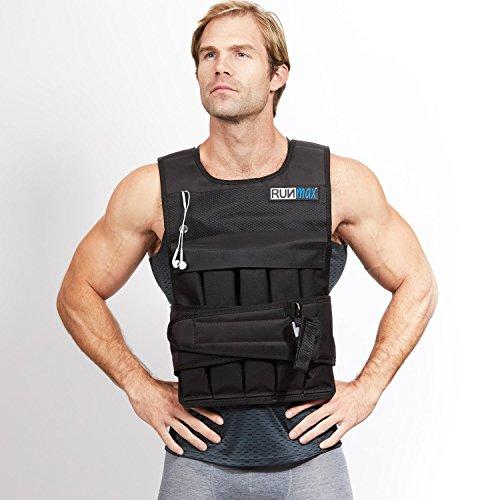
- RUNmax 40 lb vest - the value pick. Forty real pounds for about the price of one heavy dumbbell, from a listing family that runs to 140 lb. No shoulder pads on this variant, which keeps bulk down near the collarbones and makes long sets less pleasant.
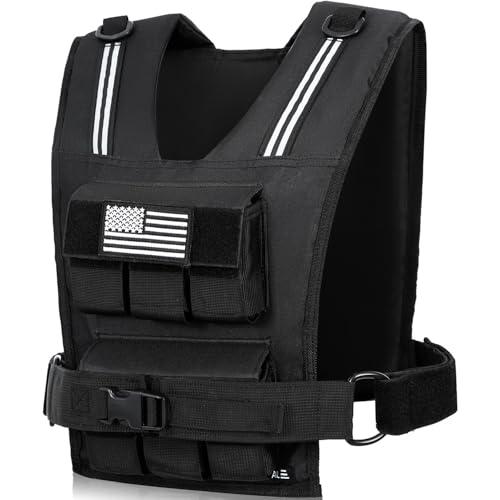
- BAGAIL 30 lb vest- the standard men’s shell does not fit you. Removable iron, three load options in the family, and explicitly listed for women as well as men, which most of this category is not. Costs about what the 50 lb CAP does for 20 lb less load.
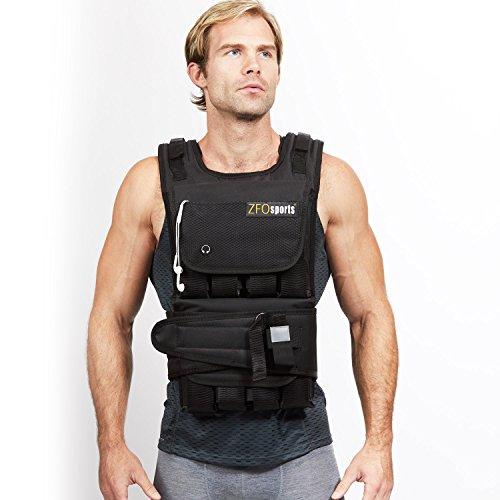
- ZFOsports 40 lb vest - the alternative 40 lb, and one of the longest-running listings in the category. Its title publishes nothing beyond the weight, so buy it on the strength of the load figure or buy the ERIC FLAG for the detail.
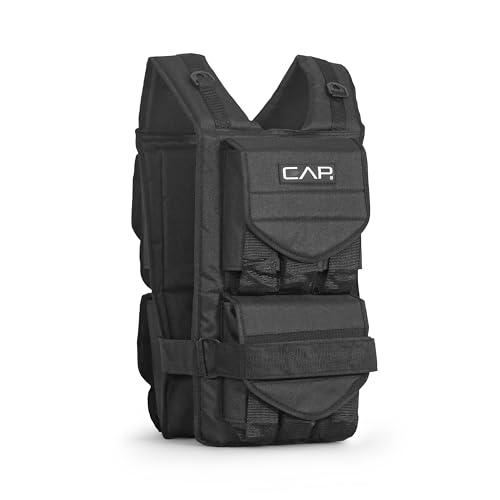
- CAP 20 lb vest - the budget pick, and the right first vest if you are still working toward a strict pull-up. Twenty pounds is a real jump on push-ups, dips and step-ups, and this is the cheapest honest way to get it.
What we left off, and why
No sand-filled walking vests under 15 lb. They are the bulk of this category by sales volume and they are cardio products: too light to load a pull-up, too bulky to wear under a dip. Nothing against them, but ranking them here would be ranking them for a job they are not sold to do.
No plate carriers. A carrier plus two steel plates is a legitimate way to wear 40 lb and it is how a lot of people do it. It is also a two-purchase decision with sizing that matters more than any vest here, and our registry has no verified carrier or plate-pair listing. We would rather leave the slot empty.
No dip belt, for the same reason, and that is the one omission that genuinely costs this page something: above roughly 50 lb a belt is the better tool and we cannot point you at a verified one yet.
And no comfort verdicts. We have not worn these. Four of the six listings publish no fit information at all, and a sentence like “sits snugly without bouncing” written by someone who has never put it on is exactly the kind of invention this site does not do.