Skip to content

01

Best Dip Station for a Home Gym

A dip is the cheapest heavy pressing exercise there is - no bench, no rack, no plates. Five picks ranked by how high the bars sit, because that single number decides which version of the exercise you actually get.

By Stephen V., Home-gym enthusiastLast updated November 13, 2026How we pick
Affiliate disclosure: Barbell & Bench earns a commission when you buy through our links, at no extra cost to you. We only make money if you buy — never for recommending. How this works.

Buy the HEMERIS adjustable dip bar. It publishes the widest height range of anything here - 28.7 to 46.3 inches across ten locking levels - and that range is the whole product. At the top settings a lifter of average height can hang their legs straight and do a real dip; at the bottom it drops to parallette height for push-ups, L-sits and floor work. One frame, the full span. The budget pick is the RELIFE dip bar: a plain parallel-bar pair, claimed to 400 lb, for the least money we would put bodyweight on.

Three picks cover the cases the HEMERIS does not. If you want a frame that feels planted rather than two stands you place yourself, the Bongkim heavy-duty station claims 800 lb across seven levels and is the only listing here rated by its maker for outdoor use. If you want adjustability without the price, the SPORTSROYALS DP3 converts between parallette height and dip height and costs roughly half the HEMERIS. And if you are honest that what you actually want is floor work - L-sits, planche progressions, deep push-ups - the Rubberbanditz parallettes are the right tool and the other four are the wrong one.

One thing to settle before you spend anything, because it is the mistake this category punishes: bar height decides the exercise, not the brand. A dip needs enough height that your feet clear the floor with your arms locked out - for most people that is somewhere in the 40-inch region, more if you are tall. Buy a 30-inch stand and you have not bought a dip station; you have bought a parallette, and every dip you do on it will be a tucked dip with your knees bent and your shins crossed. That is a real exercise and it is not the one on the box.

Prices come from our live price layer and were last verified November 22, 2026. Every figure below is quoted from the listing’s own title - the capacities are manufacturer claims with no independent certification behind them, and we have not load-tested anything.

If you would rather one frame did dips and pull-ups both, and your ceiling is a dollar figure, best power tower under $200 ranks the freestanding frames under that cap and says plainly what the cheapest of them stops publishing.

02

The picks, ranked

Five dip stations - ranked

#ProductBest forScorePrice
1
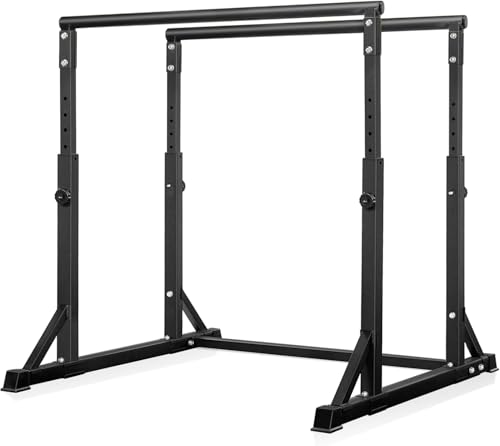
HEMERIS Adjustable Dip Bar (10-Level)

The widest published height range here — 28.7 to 46.3 inches across ten locking levels — which is what lets one frame do floor work, tucked dips and full dips.

Best overall8.3
$99.99 · View on Amazon

$129.99 23% off

#ad · Price as of November 22, 2026 · Affiliate disclosure

2
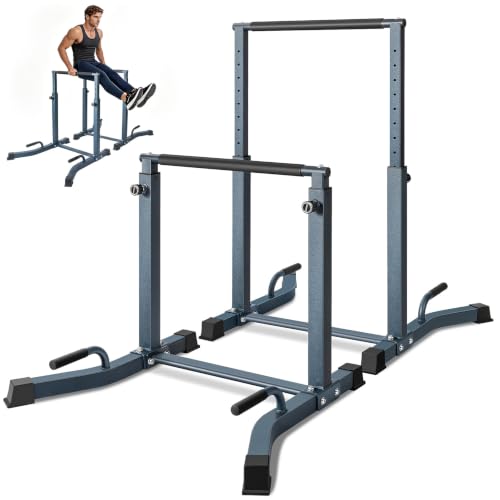
Bongkim Heavy-Duty Dip Station (7 Levels)

The sturdiest frame in this group and the one listing that names L-sits and pull-ups alongside dips — the pick if you want a station rather than a pair of stands.

Best heavy-duty8.1
$125.99 · View on Amazon

$169.99 26% off

#ad · Price as of November 22, 2026 · Affiliate disclosure

3
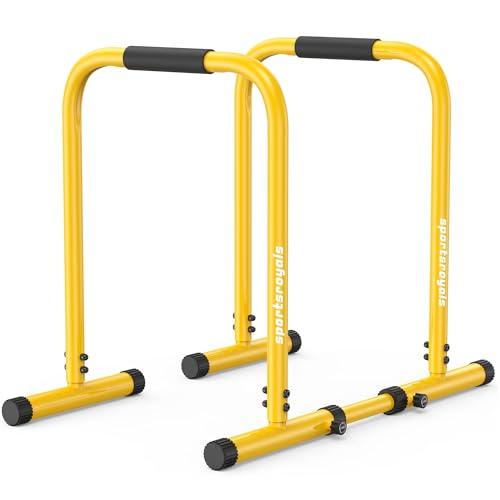
SPORTSROYALS DP3 Adjustable Dip Bar

Adjustable dip stands that double as parallettes, from the brand behind our power tower pick — the cheapest adjustable frame we would put bodyweight on.

Best value8.0
$59.99 · View on Amazon

#ad · Price as of November 22, 2026 · Affiliate disclosure

4
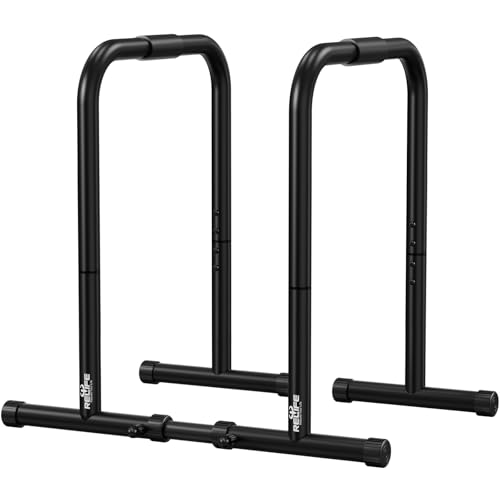
RELIFE Dip Bar Station (400 lb)

The long-running budget dip bar — a plain, well-reviewed parallel-bar pair that does dips and nothing clever, which is the point.

Budget pick7.8
$57.99 · View on Amazon

$69.99 17% off

#ad · Price as of November 22, 2026 · Affiliate disclosure

5
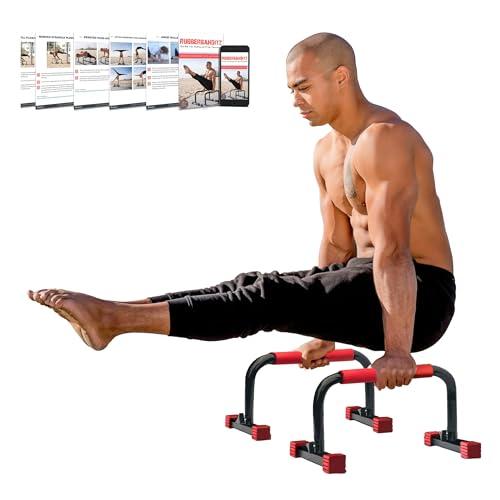
Rubberbanditz Parallettes

Floor-height parallettes, not dip stands: the pick for L-sits, planches and deep push-ups, and honest about only doing tucked dips.

Best for floor work7.5
$39.99 · View on Amazon

#ad · Price as of November 22, 2026 · Affiliate disclosure

03

Every pick, reviewed

HEMERIS Adjustable Dip Bar (10-Level)
01
Best overall

HEMERIS Adjustable Dip Bar (10-Level)

HEMERIS

8.3

The widest published height range here — 28.7 to 46.3 inches across ten locking levels — which is what lets one frame do floor work, tucked dips and full dips.

Height range
28.7-46.3 in, 10 levels
Capacity
1,200 lb (maker's claim)
Steel
1.5 mm thick
Type
Freestanding pair, adjustable

What we like

  • Ten locking heights from 28.7 to 46.3 in — the widest published range of any pick here
  • At full height a taller lifter can hang their legs straight instead of tucking
  • The highest published capacity on this page by a wide margin

Trade-offs

  • The 1,200 lb figure is the maker's own claim with no independent certification behind it
  • 1.5 mm steel is thin for that claim — expect some flex at the top settings
  • Two separate stands means the gap between them is set by you, every session
Value
8
Beginner-friendly
9
Build quality
7
Space fit
9
$99.99 · View on Amazon

$129.99 23% off

#ad · Price as of November 22, 2026 · Affiliate disclosure

Bongkim Heavy-Duty Dip Station (7 Levels)
02
Best heavy-duty

Bongkim Heavy-Duty Dip Station (7 Levels)

Bongkim

8.1

The sturdiest frame in this group and the one listing that names L-sits and pull-ups alongside dips — the pick if you want a station rather than a pair of stands.

Height levels
7, adjustable
Capacity
800 lb (maker's claim)
Use
Dips, L-sits, calisthenics; indoor or outdoor
Finish
Matte black

What we like

  • The listing rates it for outdoor use, which none of the cheaper picks here claim
  • 800 lb claimed on a visibly heavier frame than the sub-$60 stands
  • Seven locking levels cover tucked dips through to full dips

Trade-offs

  • Roughly three times the price of the cheapest capable dip bar on this page
  • No height range in inches is published in the listing title, only the level count
  • Heaviest frame here to move and store between sessions
Value
6
Beginner-friendly
8
Build quality
9
Space fit
6
$125.99 · View on Amazon

$169.99 26% off

#ad · Price as of November 22, 2026 · Affiliate disclosure

SPORTSROYALS DP3 Adjustable Dip Bar
03
Best value

SPORTSROYALS DP3 Adjustable Dip Bar

SPORTSROYALS

8.0

Adjustable dip stands that double as parallettes, from the brand behind our power tower pick — the cheapest adjustable frame we would put bodyweight on.

Capacity
400 lb (maker's claim)
Type
Adjustable parallette and parallel bars
Height range
Not published in the listing title

What we like

  • Converts between parallette height for floor work and dip height for dips
  • From a brand already in our registry for its power tower, rather than an unknown
  • Cheapest adjustable pick here by a clear margin

Trade-offs

  • 400 lb claimed capacity is the lowest on this page alongside the RELIFE
  • The listing title publishes no height range, so confirm it fits your reach before buying
  • Light enough that it wants a flat, grippy floor under it
Value
10
Beginner-friendly
8
Build quality
7
Space fit
9
$59.99 · View on Amazon

#ad · Price as of November 22, 2026 · Affiliate disclosure

RELIFE Dip Bar Station (400 lb)
04
Budget pick

RELIFE Dip Bar Station (400 lb)

RELIFE REBUILD YOUR LIFE

7.8

The long-running budget dip bar — a plain, well-reviewed parallel-bar pair that does dips and nothing clever, which is the point.

Capacity
400 lb (maker's claim)
Type
Parallette and parallel bars
Height range
Not published in the listing title

What we like

  • The least you can spend on a dip bar we would actually load with bodyweight
  • One of the longest-listed dip bars on Amazon, so the owner feedback is deep
  • Small enough to slide under a bed or into a closet between sessions

Trade-offs

  • 400 lb claimed, uncertified, and that figure includes you plus any added weight
  • No published height range in the listing title — check your reach first
  • No adjustment story in the title beyond the parallette/parallel-bar description
Value
10
Beginner-friendly
8
Build quality
6
Space fit
10
$57.99 · View on Amazon

$69.99 17% off

#ad · Price as of November 22, 2026 · Affiliate disclosure

Rubberbanditz Parallettes
05
Best for floor work

Rubberbanditz Parallettes

Rubberbanditz

7.5

Floor-height parallettes, not dip stands: the pick for L-sits, planches and deep push-ups, and honest about only doing tucked dips.

Type
Low parallettes / push-up bars
Use
Push-ups, L-sits, handstand and floor work
Capacity
Not published in the listing title

What we like

  • The right tool for L-sits, planche work and deep push-ups, which tall dip stands do badly
  • Lowest, most stable center of gravity of anything on this page
  • Packs flat and travels — the only pick here you could take to a park

Trade-offs

  • Too low for a full dip: you can only do a tucked dip with your legs bent
  • The listing title publishes no weight capacity at all
  • A single-purpose purchase if dips are genuinely what you came for
Value
8
Beginner-friendly
7
Build quality
8
Space fit
10
$39.99 · View on Amazon

#ad · Price as of November 22, 2026 · Affiliate disclosure

04

How to choose

Bar height is the spec. Everything else is secondary

Dip equipment gets sold on capacity numbers and steel thickness, and both matter far less than the one measurement most listings bury: how high the handles sit off the floor.

  • Roughly 40 inches and up — a full dip. Arms locked out at the top, legs hanging straight or slightly behind you, full range at the bottom. This is the exercise you are shopping for, and it needs real height because your whole body has to clear the floor.
  • Roughly 30 to 40 inches — a tucked dip. Knees bent, shins crossed behind you, feet tucked up. It still trains chest and triceps hard. It is fiddlier, it limits how heavy you can go later, and taller lifters run out of room fastest.
  • Under about 20 inches — parallettes. Not a dip station at all. These are for push-ups with a deeper range, L-sits, tucked planches and handstand work. The Rubberbanditz pick lives here and the page says so plainly rather than pretending otherwise.

Which is why the adjustable frames lead this ranking. A stand with ten locking levels is not a gimmick - it is the difference between a purchase that works for a 5 ft 4 in lifter doing floor work and a 6 ft 2 in lifter doing weighted dips, and between a frame you outgrow and one you do not.

What each listing actually publishes

Specs quoted from each listing's own title, with live prices as of November 22, 2026

PickHeight / adjustmentClaimed capacityCheck price
HEMERIS adjustable dip bar28.7-46.3 in, 10 levels1,200 lb, 1.5 mm steel
$99.99 · View on Amazon

$129.99 23% off

#ad · Price as of November 22, 2026 · Affiliate disclosure

Bongkim heavy-duty station7 levels; range in inches not published800 lb; rated for outdoor use
$125.99 · View on Amazon

$169.99 26% off

#ad · Price as of November 22, 2026 · Affiliate disclosure

SPORTSROYALS DP3Adjustable parallette / dip height; range not published400 lb
$59.99 · View on Amazon

#ad · Price as of November 22, 2026 · Affiliate disclosure

RELIFE dip barParallel bars; range not published400 lb
$57.99 · View on Amazon

$69.99 17% off

#ad · Price as of November 22, 2026 · Affiliate disclosure

Rubberbanditz parallettesFloor height - tucked dips onlyNot published
$39.99 · View on Amazon

#ad · Price as of November 22, 2026 · Affiliate disclosure

Three of the five publish no height range in their listing title, which is the single most useful omission to know about before you order. We have not filled those cells with an estimate. If height is your binding constraint - and for a tall lifter it is - the HEMERIS is the only pick here that tells you the answer up front, and that is most of why it is first.

Read the capacity column with some skepticism in both directions. None of these numbers is independently certified, and 1,200 lb on 1.5 mm steel is a claim rather than a measurement. Equally, the practical load is you: a 200 lb lifter adding a 45 lb plate on a dip belt is at 245 lb, which is comfortably inside even the lowest 400 lb claim here. Capacity is rarely the thing that fails on a dip stand. Stability is.

Why a dip is worth a dedicated purchase

It is the cheapest heavy pressing exercise in a home gym, and that is not a small claim in a category where the alternative is a bench, a rack, a bar and a plate set.

  • It loads chest, triceps and front delts hard with no equipment but your bodyweight. For most beginners a bodyweight dip is harder than any dumbbell press they own the weight for.
  • It scales in both directions. Too hard? Bend your knees, use a band, or do the lowering half only. Too easy? Hang a dumbbell from a belt. There is no other pressing movement with that range on a $50 purchase.
  • It costs almost no floor space and no ceiling height. Unlike a pull-up bar, nothing has to be mounted overhead - which makes it one of the few genuinely good answers for a low room. Our best equipment for low ceilings page covers the rest of that problem.

The honest counterweight: dips are hard on the shoulders if you go deep before you have the mobility for it, and the standard advice is to stop when your upper arms reach roughly parallel with the floor rather than sinking as far as you can. How to do dips at home covers the setup and the depth question properly, and do I need a dip station makes the case both ways before you spend.

Two stands, or one frame?

Worth understanding because it changes the experience more than the price does.

Two separate stands (the HEMERIS, the SPORTSROYALS, the RELIFE) means you set the gap between the handles yourself. That is a genuine advantage - you can match the width to your shoulders, and narrow versus wide changes how much the triceps do versus the chest. It is also the thing that goes wrong: the stands can creep apart under load on a slick floor, and you are re-measuring the gap every session unless you mark it.

One connected frame (the Bongkim) fixes the width for you. Nothing creeps, nothing needs setting up, and the whole thing feels more planted - which is worth real money once you start adding weight. You give up the width adjustment and you pay more.

For a first dip purchase, two stands on a rubber mat is the sensible, cheap answer. Put something grippy under them - our best rubber gym flooring page ranks the mats, and a single dense mat is the cheapest fix for stands that slide.

Who each pick is for

  • HEMERIS adjustable dip bar - almost everyone. Ten levels from 28.7 to 46.3 inches is the widest published range here, so it does floor work, tucked dips and full dips from one purchase. The 1,200 lb claim on 1.5 mm steel is a claim, not a certificate.
  • Bongkim heavy-duty station - you want one planted frame, not two stands. Seven levels, 800 lb claimed, and the only pick its listing rates for outdoor use. Roughly three times the cheapest option here.
  • SPORTSROYALS DP3 - adjustability on a budget. Converts between parallette and dip height for about half the HEMERIS, from a brand already in our registry. The listing title publishes no height range, so check your reach.
  • RELIFE dip bar - the budget pick. A plain 400 lb parallel-bar pair that does dips and nothing clever, with years of owner feedback behind it. No published height range and the lightest build here.
  • Rubberbanditz parallettes - you want floor work. L-sits, planche progressions and deep push-ups, with the most stable low center of gravity on the page. Tucked dips only, and the listing publishes no capacity at all.

What we left off, and why

No power towers and no wall-mounted pull-up and dip frames, even though both do dips perfectly well and both are picks we stand behind elsewhere. A power tower is bought for the pull-up bar, with the dip station as the bonus; ranking it here on its secondary movement would bury the cheaper, better answer for someone who only wants dips. Both are on best pull-up bars for a home gym, which ranks by where each frame mounts, and on best power towers for a home gym, which ranks the free-standing frames on their own. If you want pull-ups and dips from one purchase, buy there, not here - and our pull-up bar vs. dip station guide picks between them.

No rack-mounted dip attachments. If you already own a power rack, a pair of dip handles that pin into the uprights is cheaper than anything on this page and steadier than all of it. That reader needs best power racks and squat stands rather than a standalone frame.

No wooden parallettes. Several are in stock and some look excellent, but their listings publish neither a capacity nor a height, which leaves nothing honest to rank them on against the picks above.

And no certified capacity claims, because there are none. Every number in the table is the manufacturer’s own. That is normal for this category and worth saying out loud rather than repeating the figures as though somebody checked them.
05

Common questions

What is the best dip station for a home gym?

The HEMERIS adjustable dip bar, for most people. It publishes the widest height range of anything we rank - 28.7 to 46.3 inches across ten locking levels - which means one purchase covers floor work, tucked dips and full dips as you get taller settings dialled in. If you would rather have one connected frame than two separate stands, the Bongkim station claims 800 lb across seven levels and is the only pick its listing rates for outdoor use.

How high should a dip bar be?

High enough that your feet clear the floor with your arms locked out at the top, which for most people means somewhere around 40 inches and more if you are tall. Below roughly 40 inches you are doing a tucked dip with your knees bent and shins crossed - still a real exercise, just a fiddlier one that limits how heavy you can go later. Under about 20 inches you have parallettes, which are for push-ups and L-sits rather than dips.

Are cheap dip bars safe?

The capacity is rarely what fails. Even the lowest claim we rank here is 400 lb, and a 200 lb lifter with a 45 lb plate on a dip belt is at 245 lb - comfortably inside it. What actually goes wrong on cheap stands is stability: two separate stands can creep apart under load on a slick floor. Put them on a dense rubber mat and mark the spacing. Worth knowing that none of these capacity figures carries an independent certification; they are manufacturer claims.

Can you build muscle with just a dip station?

For your chest, triceps and front delts, yes, and further than most people expect. A bodyweight dip is harder than any dumbbell press most beginners own the weight for, and it scales in both directions - bend your knees or use a band to make it easier, hang a dumbbell from a belt to make it harder. What it will not do is train your back or your legs, so it is one purchase in a gym rather than the gym.

Dip station or power tower - which should I buy?

Buy a dip station if dips are what you want and a power tower if you want pull-ups too. A tower gives you both from one frame and takes much more floor space; a pair of dip stands costs a fraction as much, stores under a bed and does one movement properly. Since a pull-up and a dip are the two halves of a bodyweight upper body, plenty of people end up wanting both - in which case the tower is usually the cheaper route than buying two things.

Do I need a dip station if I own a power rack?

Probably not. A pair of dip handles that pin into your rack's uprights costs less than any standalone frame here and is steadier than all of them, because it is bolted to something that weighs 150 lb. A standalone dip station earns its place when you do not own a rack, when your room cannot take one, or when you want something that stores away between sessions.

Read next

→

Dips, pull-ups, or both?

They are the two halves of a bodyweight upper body, and if you want both a single tower is usually cheaper than two purchases. We put them side by side.