The short answer:a 7 ft, 45 lb Olympic barbell that is genuinely good enough for a beginner’s first year or two costs about $74.99at today’s prices. Mid-range bars - better knurl, higher published tensile strength, proper sleeve bearings - run roughly $200 to $350, and competition-grade bars start around $500 and climb. For a first home gym, the entry tier is not a compromise you will regret.
The answer people actually need: the bar is the cheap part. A 160 lb starter bumper plate set is $167.99right now, which is several times what the bar costs. Budget “a barbell” and you will be short; budget bar plus plates plus collars and the number is honest. Every price on this page is read live from our price layer and was last verified October 21, 2026.
The price tiers, and what each one buys
Barbell pricing is unusually rational. You are paying for four things in order: the steel’s published tensile strength, how well the sleeves spin, the quality and aggression of the knurl, and the finish that stops it rusting. A beginner benefits from exactly none of those four as much as they benefit from owning more plates.
Note the pattern: the jump from entry to mid-range buys refinement, not capability. Both bars hold the same plates, sit in the same rack, and let you squat the same weight. If the choice is a $250 bar with 160 lb of plates or a $75 bar with 300 lb of plates, the second gym trains you for longer.
The purchase is bar + plates + collars, not “a barbell”
This is the single most useful thing on the page. A bar on its own does nothing. Here is the real shopping list, priced live:
That is why we put the barbell third in a first home gym, after dumbbells and a bench. It is not that the bar is bad - it is the best strength tool there is - it is that the full barbell line item is the biggest single expense in the room. The sequencing argument is in what to buy first and dumbbells vs. barbell.
What we would buy at each stage - live prices, last verified October 21, 2026
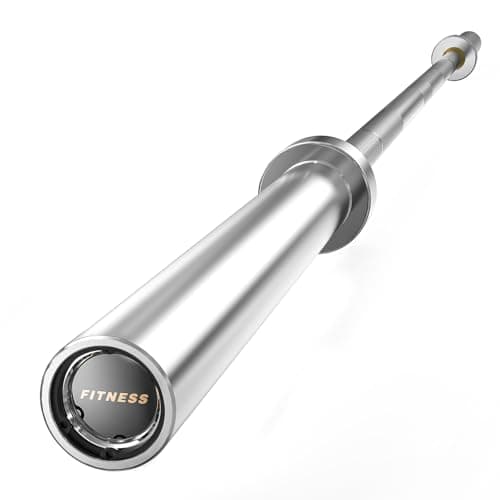
PAPABABE 7 ft Olympic Barbell (45 lb)
A 7 ft, 45 lb Olympic bar with a hybrid knurl — plenty of bar for a beginner's loads.
#ad · Price as of October 21, 2026 · Affiliate disclosure
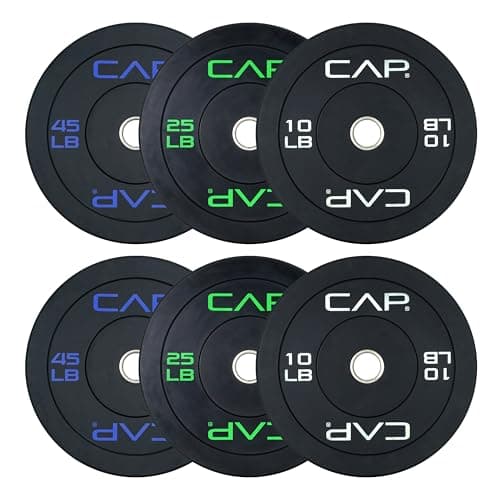
CAP 160 lb Olympic Bumper Plate Set
A 160 lb economy bumper set — enough to squat and deadlift from day one, droppable without wrecking the floor.
#ad · Price as of October 21, 2026 · Affiliate disclosure
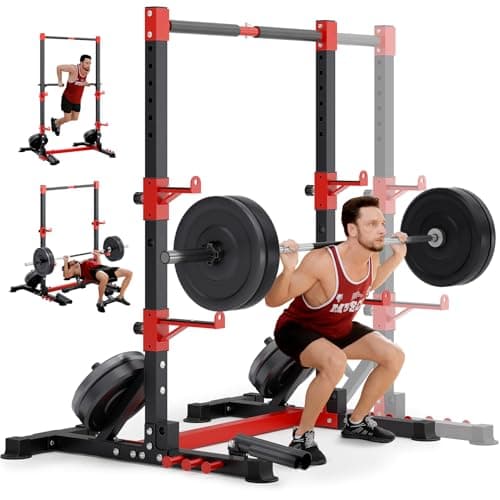
YOLEO Squat Rack
An adjustable squat stand with a pull-up bar and extended safety arms — the safest way for a solo lifter to start barbell training on a budget.
#ad · Price as of October 21, 2026 · Affiliate disclosure
What makes one bar cost six times another
- Tensile strength (PSI).A published figure for how much stress the steel takes before it deforms. Entry bars often do not publish one; mid-range bars quote 150,000 PSI and up. It matters when the bar is loaded well past a beginner’s numbers.
- Sleeve rotation. Cheap bars use a simple bushing or none at all; better bars use bronze bushings or needle bearings so the sleeve spins freely. This matters most for cleans and snatches and barely at all for a squat or a press.
- Knurl. The cut pattern where you grip. A hybrid knurl, like the entry bar we recommend, is a compromise that works acceptably for everything. Aggressive knurl holds better on heavy pulls and tears your hands on high-rep work.
- Finish. Black oxide, zinc, chrome and stainless differ mainly in how long they resist rust. If the bar lives in a garage this is worth real money - see preventing rust.
- Weight tolerance. Competition bars are certified to be the weight stamped on them. A home bar might be a pound out either way, which affects nothing you will ever do.
Where a cheap bar genuinely is a false economy
We recommend the entry tier, with three exceptions where spending more is the right call.
- You are going to do Olympic lifting. Cleans and snatches need sleeves that spin freely, and a bar that does not will punish your wrists. That is a bearing bar, and it is a real reason to spend.
- The bar lives somewhere cold and damp. A better finish in an unheated garage is cheaper than replacing a rusted bar. See the garage gym picks.
- You are already strong. If you are pulling well into the high hundreds, buy published tensile strength rather than hoping. Most readers of this page are not here yet, and that is fine.
What we would never do is buy an unbranded bar with no published length, weight or rating to save twenty dollars. A bar is a load-bearing piece of steel you put over your throat; the specs being published at all is the minimum bar for trust. Are cheap dumbbells any good? applies the same logic to the other end of the gym.
Used barbells: where the real savings are
Plates and bars are the two best used buys in a home gym, because steel does not have a service life and shipping is what makes them expensive new. A used bar at half price with a little surface rust and an intact knurl is a good deal; so is a pile of iron plates from a garage clear-out.
Check three things in person: roll the bar on a flat floor to see if it is bent, spin each sleeve, and look for deep pitting rather than surface speckle. Full checklist in buying used home gym equipment, and the best time to buy covers when new prices actually drop - which, for barbells, is less often than for everything else.
So what should you spend?
For a first home gym: entry-tier bar, more plates. Take the $74.99 bar, put the difference into a 160 lb bumper set, add collars, and you have a barbell setup that will take you through a couple of years of progress. Buy the rack at the same time, because a bar with nowhere to be racked only trains deadlifts.
If you are not sure the barbell is the right purchase at all, that is a fair question and we answer it honestly in do I need a barbell? - plenty of home gyms run on dumbbells for a long time, and the movement-pattern page shows exactly what you can and cannot cover without one.