The short answer, at today’s prices: a two-post squat stand with safety arms starts around $169.99. The cheapest full four-post cage we would recommend is about $189.99. A mid-range cage with dip handles and a landmine runs about $299.98, and an all-in-one cage with a built-in cable stack is about $309.99. A folding wall-mounted rack sits at roughly $264.92 - you pay for the fold, not for less rack.
The answer that saves money: the rack is not the purchase. The purchase is rack plus barbell plus plates, and the bar and plates together usually cost more than a budget rack does. Every figure on this page is read live from our price layer and was last verified October 21, 2026.
The four tiers, priced live
Rack pricing tracks two things almost perfectly: how much steel is in it, and how many jobs it does. Here is what each tier in our registry costs right now and what the money buys.
Two things jump out of that table. First, the jump from a stand to a cage is small money - if you have the floor space, a cage is close to the same price as a good stand. Second, the all-in-one cage with a cable stack is the best value on the list if you were going to buy cables anyway, because a separate cable station costs more than the difference. That is why it is the rack in the $2,000 Build and on the garage gym list.
What we would buy at each price point - live prices, last verified October 21, 2026
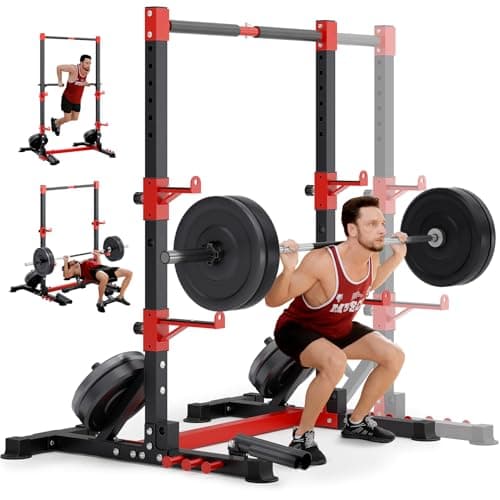
YOLEO Squat Rack
An adjustable squat stand with a pull-up bar and extended safety arms — the safest way for a solo lifter to start barbell training on a budget.
#ad · Price as of October 21, 2026 · Affiliate disclosure
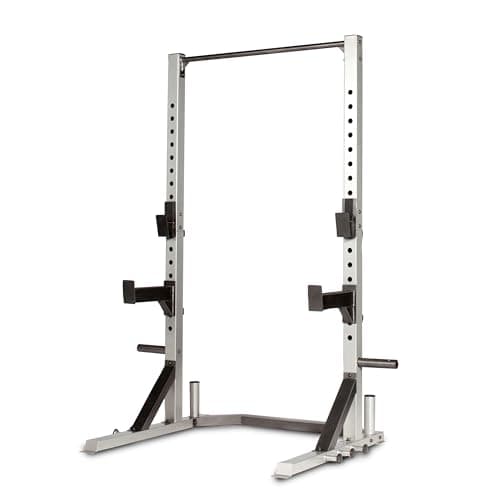
CAP Barbell Power Rack
A long-running budget cage with a pull-up bar and attachments — a lot of rack for well under $200.
#ad · Price as of October 21, 2026 · Affiliate disclosure

SPORTSROYALS Power Rack
A multi-function cage with a cable pulley system — turns a barbell corner into a near-complete gym without a separate machine.
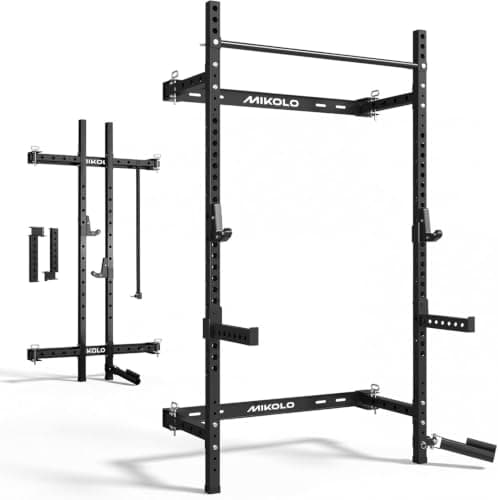
Mikolo Folding Wall-Mounted Rack
A 2×2 folding rack that mounts to the wall and swings flat — the answer for a garage that also has to park a car.
The three costs a rack price tag hides
This is the part that turns a $200 purchase into a $500 one. None of it is a surprise if you plan for it, and all of it is a nasty surprise if you do not.
- A barbell and plates. $74.99 for a 7 ft, 45 lb Olympic bar and $167.99for a 160 lb bumper set at today’s prices. A rack with no bar trains nothing. Full breakdown in how much does a barbell cost?
- Flooring under the feet. A rack on a bare slab grinds into the concrete and drums through the room; a rack on carpet or timber will mark it. One dense rubber mat solves it for very little - our mats picks - and a drop pad under the bar is a separate item again.
- A bench, if you want to press. The rack holds the bar; something has to hold you. Budget for it alongside, from the bench roundup.
Add those up and a “$169.99rack” is realistically a mid-three-figure station. That is not an argument against it - it is the best money in a home gym once you are committed - it is an argument for buying it third, which is exactly the order in what to buy first.
What makes an expensive rack expensive
If you have looked at specialist strength brands and wondered where several hundred extra dollars goes, it is these four things - and only one of them matters much to a beginner.
- Upright size and steel gauge.Budget racks use 2 x 2 inch tube in 12- or 14-gauge steel. Commercial racks use 3 x 3 inch in 11-gauge. The difference shows up as rigidity at heavy loads, not as a safety cliff at a beginner’s weights.
- Hole spacing and hardware standard. The thing that actually determines whether you can buy attachments in five years. A proprietary hole pattern locks you in; a common one does not.
- Safety device design. Pin-and-pipe safeties, flip-down arms and strap safeties behave differently and have different published ratings. Read the catch rating, not the frame rating - on our cheapest cage those two numbers differ by half.
- Depth and footprint. A 24 inch deep cage is tighter to walk out of than a 30 inch one. That is a liveability spec, and it is covered in how to choose a power rack.
Where to spend and where to save
Our position, applied consistently: save on the frame, never on the safeties. A budget cage used inside its published catch rating is a safe solo setup, and the money you did not spend on 3 x 3 inch steel buys plates - which is what actually makes you stronger. A rack with no safety arms, or with safeties you cannot set at the right height for your depth, is not a bargain at any price; it is a bar holder.
Two places where spending more is genuinely justified. If floor space is the binding constraint, the folding wall rack costs more than a basic cage and is worth it - see wall-mounted vs. freestanding. And if you want cables, buying the cage that already has a pulley is cheaper than buying a cage and a cable station separately - do I need a cable machine? works through whether you do.
Finally, the cheapest route of all: used. Racks are thick steel that does not wear out, and shipping is most of what makes them expensive new. Check the base welds and the J-hook contact points, confirm the safeties are present and correct for the model, and read buying used home gym equipment before you drive anywhere.