The short answer: home squat racks publish frame ratings from about 600 lb to 1,000 lb - but the figure that governs your training is the J-hook and safety catch rating, and it is frequently half the frame number. One of the most popular budget cages publishes exactly that split: a 600 lb frame with 300 lb catches. The catches are what your loaded bar rests on, so 300 lb is the real answer for that rack.
That distinction is the whole page, because it is the one marketing never leads with. A “1,500 lb capacity” headline on a rack whose J-hooks are rated for 400 lb is not a lie, it is just not the number you shop on. Read the lower figure, always.
The three ratings a rack can publish
- Frame or total capacity. What the welded structure bears in total, including plate storage and anything hanging off it. The biggest, most quotable number.
- J-hook capacity. What the removable hooks you unrack the bar from can take. Smaller parts, bolted or seated rather than welded, so usually the lower figure.
- Safety catch or spotter arm capacity. What the arms that catch a failed rep can take. This is the figure that matters for safety rather than convenience, and it is the one some listings quietly omit.
When all three are published, the lowest one is your rack’s honest limit. When only the frame figure is published, treat the rack as unrated for catch load and keep well inside it - and prefer a competitor that publishes the breakdown. Our how to choose a power rack guide covers the rest of the spec sheet: steel gauge, hole spacing, depth and footprint.
Three of those five rows say “see listing” on purpose. Where a manufacturer does not publish a separate catch rating, we are not going to invent one, and neither should any other site - a steel gauge is not a load rating. Check the listing on the day you buy, because manufacturers do update published figures.
How much do you actually need?
Work out your real number instead of buying the biggest one. Take the heaviest weight you expect to have on the bar in two years, not today - then add margin:
- Beginner squatting the bar plus 100 lb. Your working load is around 145 lb. A 300 lb catch rating is double what you need, and will stay comfortable for a long time.
- Intermediate squatting 250 lb. You are inside a 300 lb catch rating but without much headroom. This is the point where a rack with four-digit published figures stops being overkill.
- Strong lifter squatting 350 lb or more. Buy a rack whose published catch rating clears that with real margin, and prefer a brand that publishes the breakdown rather than one headline number.
- Anyone doing pull-ups on the rack. Add your full bodyweight - plus any weighted-vest or dip-belt load - to whatever the pull-up bar is rated for.
The relevant comparison is our bench capacity guide, which does the same arithmetic for the bench - and benches are the component where bodyweight plus bar matters most, because both sit on the same frame.
What ratings do not cover
Published figures are static load ratings. They describe weight resting on a component, not weight arriving at speed. Three things fall outside them:
- Dropping a loaded bar onto the catches from lockout. Lowering a failed rep onto safeties is normal use. Dropping a bar from shoulder height is an impact load several times the static weight, and it is how hooks bend.
- Off-centre racking. Putting the bar back on one hook first concentrates the load on a single point and can tip a narrow stand. Keep plate loading even, and read how to anchor a power rack if tipping worries you.
- Assembly quality.A rack’s rating assumes every bolt is torqued and the frame is square on a level floor. Half-tightened bolts on an uneven slab are the most common real-world failure, not steel giving way - how to assemble a power rack covers it.
The racks we would buy, by rating
Three picks that cover the honest range. Each links to the full roundup entry with its published figures and live price.
Ranked by published capacity - live prices, last verified October 21, 2026
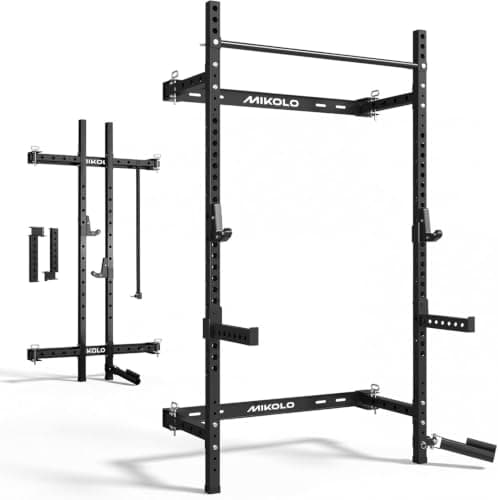
Mikolo Folding Wall-Mounted Rack
A 2×2 folding rack that mounts to the wall and swings flat — the answer for a garage that also has to park a car.

ULTRA FUEGO Power Cage
A straightforward multi-function cage with J-hooks, dip handles, and a landmine — solid mid-price value without the cable complexity.
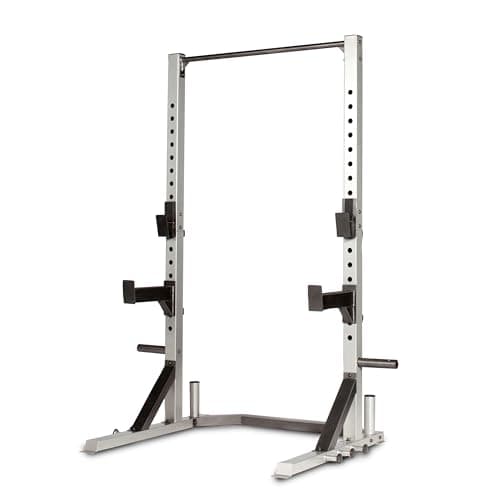
CAP Barbell Power Rack
A long-running budget cage with a pull-up bar and attachments — a lot of rack for well under $200.
#ad · Price as of October 21, 2026 · Affiliate disclosure
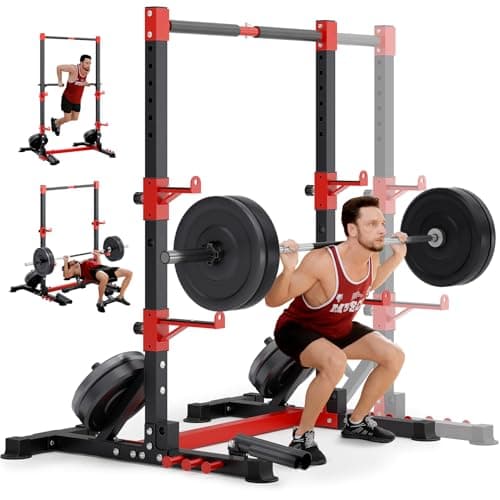
YOLEO Squat Rack
An adjustable squat stand with a pull-up bar and extended safety arms — the safest way for a solo lifter to start barbell training on a budget.
#ad · Price as of October 21, 2026 · Affiliate disclosure
One thing worth more than the rating
Having safety arms at all, and setting them every session. A 600 lb frame with the safeties left in the garage is less safe than a 300 lb-rated stand with the arms set an inch below your bottom position - because the failure mode in a home gym is not steel bending, it is a solo lifter stuck under a bar nobody is coming to lift off. How to train without a spotter is the page we would rather you read than a spec sheet, and home gym safety covers the rest.