The spec that matters most at this price, and why
A barbell has two different strength numbers and they describe different failures.
- Load rating is how much total weight the maker says you can hang on the sleeves. Under $100 these run from 500 lb to 1,500 lb in our registry, and every one of them is far more than a beginner will ever load. As a safety number it is almost never the binding constraint.
- Tensile strength, in PSI, is how hard the steel can be stressed before it deforms permanently. This is the number that decides whether a bar springs back after a heavy squat or stays slightly bent forever. 190,000 PSI is a genuine strength-bar figure; 100,000 PSI is adequate for a beginner and will be fine under a beginner's loads; no published figure means you are trusting the brand rather than the spec.
Both of those sit above the third thing that actually ruins cheap bars, which is the sleeve. A sleeve that does not rotate transmits every bit of plate inertia into your wrists and elbows. Bushings rotate adequately; needle bearings rotate well; a cheap welded sleeve with no bushing at all barely rotates. That is why the Garvee and the papababe women's bar outrank bars with equally honest steel - their listings name their bearing hardware.
Our how to choose a barbell guide works through knurl, whip and sleeve design properly, and Olympic vs. standard barbell is the page to read first if you are not sure which plates you own.
What each bar publishes
Two rows deserve a second read. The papababe 7 ft bar publishes neither a capacity nor a tensile figure, which is why it sits fourth here despite being the top pick on our main barbell page - that page ranks on the bar's own weight, where 45 lb and a sensible price win. Nothing about the missing specs makes it a bad bar; it makes it an unverifiable one, and on a page that ranks by published rating that costs it three places.
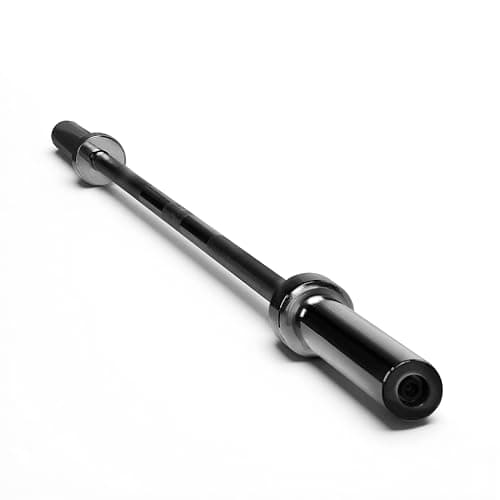
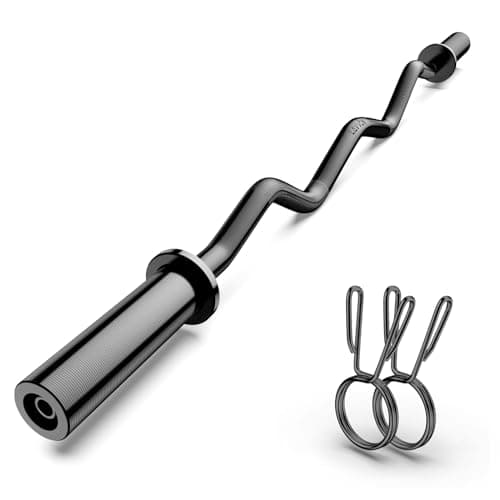
And the EZ curl bar is not a first barbell. It is 47 inches long with a cambered shaft: it will not sit in a rack, you cannot squat with it and you cannot bench with it. It is the cheapest Olympic-sleeve bar we rank and it is a genuinely good second purchase for curls, skull-crushers and close-grip presses. Buying it as your only bar would be a mistake, and we would rather say so than let a budget slot imply otherwise.
Who each pick is for
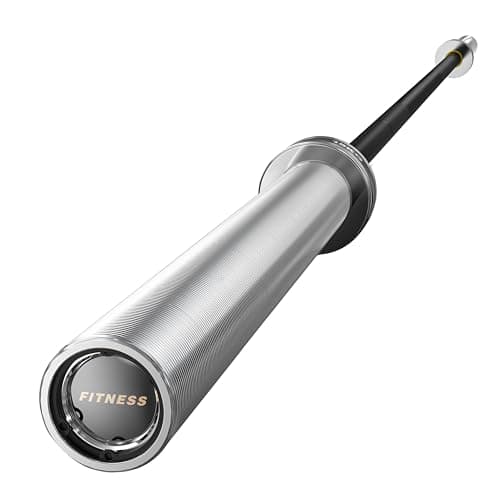
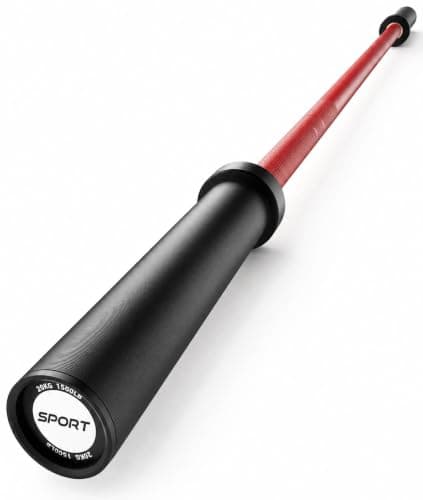
- Garvee 7 ft Olympic barbell - most people. The only bar under $100 in our registry publishing both a 1,500 lb rating and a 190,000 PSI tensile figure, with needle bearings and brass bushings for real sleeve rotation and dual powerlifting and Olympic knurl markings. 45 lb before a plate, so you need somewhere to put it down - see the rack note below.
- papababe 6.5 ft women's bar - smaller hands, or anyone who finds a 28 mm shaft hard to hold. 25 mm grip, 35 lb, 1,000 lb rated, hybrid bearings, and a 51.57 inch shaft that the listing confirms fits inside a power cage - which is the detail that trips up most shorter bars.
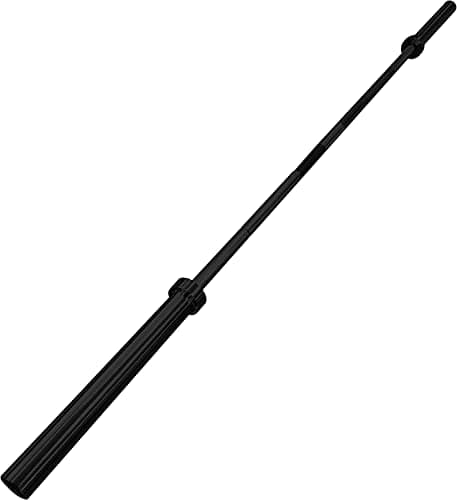
- CAP 35 lb 7 ft barbell - you want full length but 45 lb of empty bar is too much to start with. Full 7 feet, ten pounds lighter, 500 lb rated on 100,000 PSI steel with a volcano knurl and a center knurl for squats. Honest spec, honest price.
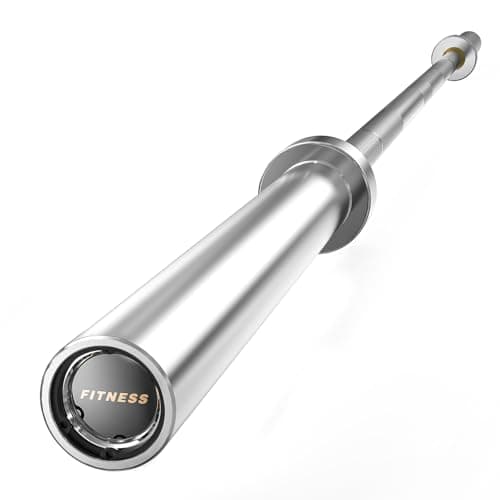
- papababe 7 ft Olympic barbell - the standard choice, and our top pick when the ranking is by bar weight rather than by published rating. 45 lb, 7 feet, 2 inch sleeves. Its listing publishes no capacity or tensile number, and we are not going to supply one.
- CAP 28 lb 6 ft barbell- the rack, the garage or the ceiling is too short for seven feet. 6 feet, 28 lb, 500 lb rated on the same 100,000 PSI steel. Check your rack's inside width before you buy a short bar: the sleeves need to clear the uprights.
- LAVVON Olympic EZ curl bar - the budget pick, and a second bar rather than a first. 47 inches, 500 lb rated, nickel-plated, two spring collars in the box. Curls, skull-crushers and close-grip pressing for less than any straight bar here.
The arithmetic nobody does before buying a cheap bar
A bar under $100 is the cheapest part of being able to squat, and it is worth saying that out loud before you spend.
- You need plates. A 45 lb bar is a working set for a true beginner and nothing more; a 160 lb bumper set costs more than any bar on this page. Our weight plates ranking covers bore, material and total weight in that order.
- You need somewhere to put it. Squatting and benching a loaded bar alone without safeties is the one genuinely dangerous thing in a home gym. A rack typically costs two to four times the bar. Best power rack under $500 ranks frames by whether their safeties will catch a failed rep.
- You need collars. Only the EZ bar here ships with any. Spring collars are a few dollars and they are not optional on a bench press.
Put together, a bar, plates and a frame is the bulk of a beginner's budget - which is exactly what the $1,000 home gym build costs out line by line.
What we left off, and why
No standard 1 inch bars. They are cheaper still and they are a different, incompatible product: 1 inch plates will never fit an Olympic sleeve and vice versa. Buying into the 1 inch standard is the one mistake in this category you cannot fix later - Olympic vs. standard barbell explains it properly.
No trap or hex bars. A specialty frame is a different purchase from a straight bar, and ours are ranked on best trap bars for a home gym by frame shape.
No bars above the cap, including the serious 190,000 to 215,000 PSI competition bars. Our registry holds none above $100 today, which is why all six picks fit under it - but a genuine competition bar is a real upgrade and this page should not imply otherwise.
And no filled-in specs. Where a listing publishes no capacity, no tensile figure, no shaft diameter or no bar weight, this page says so. On the component you load with hundreds of pounds and hold over your chest, an estimate is worse than a blank.