What each step up the price range actually buys
This is the page's whole argument, so here it is as plainly as we can put it. Walking up from the cheapest frame under the cap:
- The cheapest frame gets you a freestanding pull-up bar and dip handles, adjustable in height, and no published specification of any kind. No capacity, no bar height, no footprint. You are buying the product category, not a particular product.
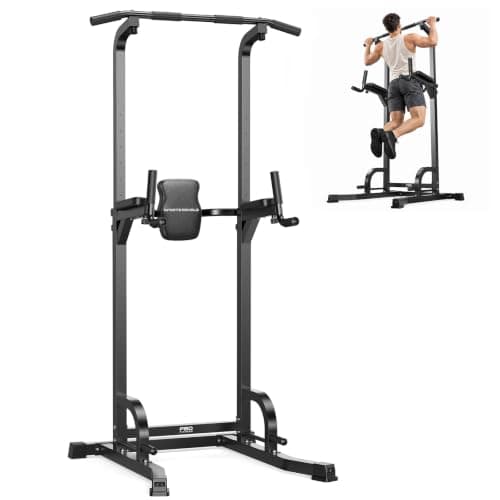
- Roughly double that buys you published numbers. The 360 lb SPORTSROYALS is the only tower at any price in our registry that publishes a real bar-height range, and it states its footprint and its backrest count too. If you have a 7 foot basement ceiling or you are unusually tall or short, that information is worth more than claimed capacity you will never test.
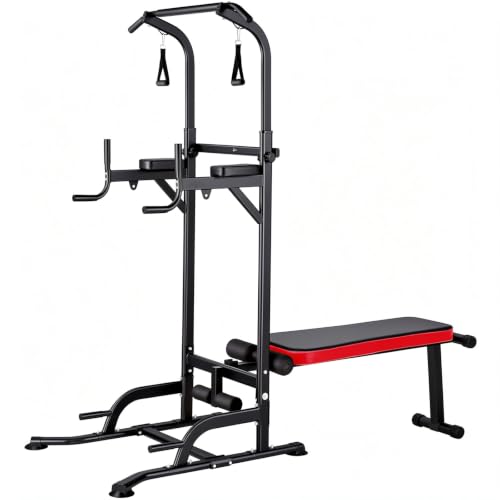
- The same money, spent differently, buys a second station instead of information: the Arlopu arrives with a folding adjustable bench and four training ropes at a claimed 400 lb, which is a press and a pull from one purchase.
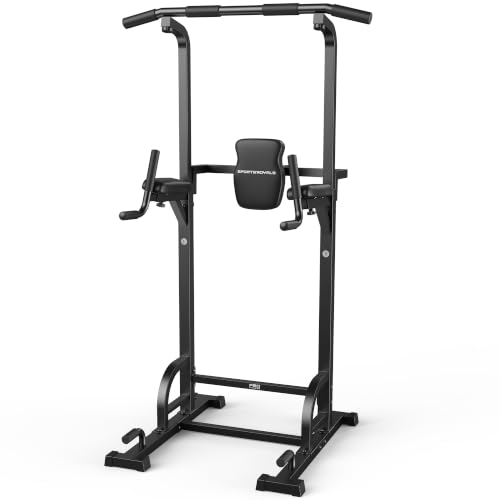
- The last few dollars under the cap buy a bigger claim and a stated base: 450 lb and an H-frame on the SPORTSROYALS 450, which is the most specific thing any listing here says about the part of a tower that actually fails.
And what no amount of money under $200 buys: a folding frame, a published handle width, an independently certified capacity, or a bar-height range on four of the five picks.
Capacity claims, and how to read them
Every capacity figure on this page is the manufacturer's own number. None of these listings cites an independent standard the way the better weight benches cite ASTM - so a frame claiming 450 lb is a frame described as 450 lb, not a frame tested to it.
That matters less than it sounds, because the arithmetic has a lot of slack. A 200 lb lifter wearing a 50 lb weighted vest puts 250 lb on the bar, which is inside every published claim here with room to spare. What a tower actually fails at is tipping, not bending: the frame rocks forward when you lean into a dip or kip a pull-up. A wide base resists that; a narrow one does not; and only one listing here tells you which it has.
The free fix nobody mentions: put two plates or a pair of heavy dumbbells on the base rails before you train hard. It kills nearly all the movement, and no listing on this page suggests it.
What each pick publishes
Read the third column, not the second. The two frames claiming 450 lb publish a bigger number than the 360 lb SPORTSROYALS and tell you far less about what arrives in the box. If your ceiling is tight or your height is unusual in either direction, the published detail is the more useful purchase.
And read the Tappio row as a genuine warning rather than a quirk: three blank cells is what the cheapest frame in a category costs you in information. It is still a legitimate pick - a cheap frame somebody actually uses beats the perfect frame they talk themselves out of - but measure your room and keep the receipt.
Who each pick is for
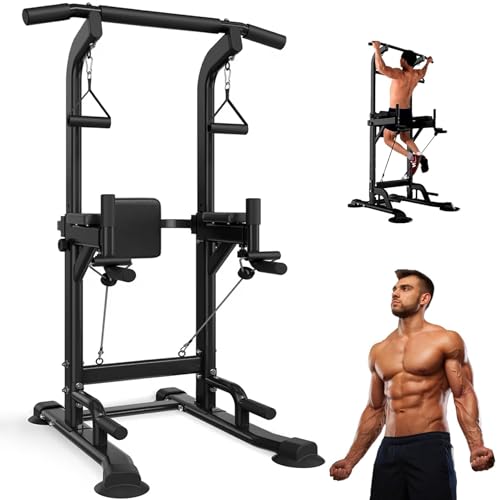
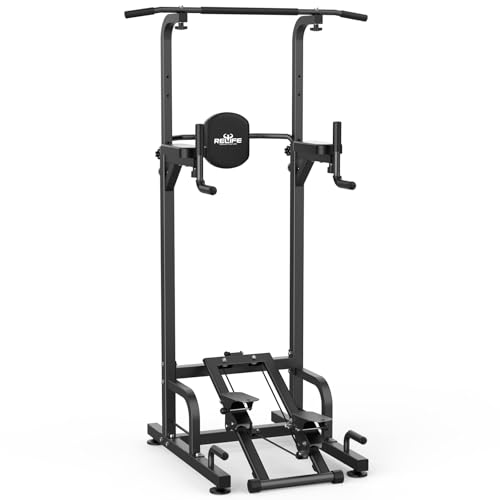
- RELIFE power tower - most people under the cap. The cheapest 450 lb claim in our registry, covering pull-ups, dips and elevated push-ups, with enough headroom under $200 that a small price move will not push it over. You will have to measure your own ceiling, because the listing will not tell you.
- SPORTSROYALS 360 lb tower - a low ceiling, a tall lifter, or anyone who wants to know what they are buying. Bar height 57.09 to 83.07 inches over 8 levels, a published 44 by 38 inch base, a 5-position backrest for hanging knee raises. Lowest claimed capacity here, which is still well clear of a lifter in a vest.
- SPORTSROYALS 450 lb tower - you want the base spelled out and you are willing to spend to the top of the cap. The only listing in this group that states its base geometry, and the only one that names leg raises as a station.
- Arlopu tower with folding bench - one purchase, two jobs. A folding adjustable bench and four training ropes in the same frame at 400 lb claimed. The bench is short and the angles coarse, as integrated benches always are - our sub-$200 bench ranking is the upgrade path when it stops being enough.
- Tappio power tower - the budget pick, and the right call if you are not yet sure you will train. Roughly half the price of the 450 lb frames, adjustable, freestanding, and silent on every specification. Weight the base and keep the receipt.
The purchase you should consider instead
Three honest alternatives, because a page with a price cap in the title should say when the category is the wrong answer.
- A no-drill doorway bar costs a fraction of the cheapest tower here, uses no floor at all, and does pull-ups and hanging knee raises just as well. If you have a doorframe and pull-ups are the point, buy that. Best pull-up bars ranks the mounted options by where each one fixes.
- A dedicated dip stand is cheaper than most towers and dips are its primary movement rather than its second one. Best dip stations ranks those by how high the bars sit.
- A power rack does pull-ups as a side effect of being a barbell frame. If a barbell is anywhere in your plan within a year, the tower is a purchase you will regret - the bar across the top of a rack is the same bar. Best power rack under $500 covers that bracket.
What a tower does that none of those do: it needs no drill, no doorframe and no joist, and it adds dips and hanging knee raises from the same frame. For a renter with floor space and no permission to make holes, it is the most complete bodyweight station under $200.
What we left off, and why
No folding tower, because there is not one under the cap. The one in our registry sits well above $200 and is ranked on best power towers for a home gym. That absence is the most important thing a $200 cap does to this category, and we would rather name it than quietly leave the slot empty.
No mounted bars of any kind. Doorway, joist, ceiling and wall-mounted bars are excellent and most of them are cheaper than everything here, but what you choose between with those is where it fixes, not how it stands.
No assisted pull-up machines. A weight stack that helps you up is a different product, and our registry holds no verified entry for one. The closest honest answer we rank is a lat pulldown machine to build the pull before you attempt it bodyweight.
And no invented specs. Four of these five publish no bar-height range, three publish no footprint and one publishes no capacity at all. Every one of those cells says so. A pull-up frame is a thing you hang your entire bodyweight from, and estimating its rating from the photographs is not a service to anybody.