What each shape is actually for
Read the Shape column first. Nothing else on this page matters until you know which of the four things you are buying, because a fabric hip band and a tube set are not competing products - they are two different purchases that happen to share a search term.
Tube sets: the dumbbell substitute
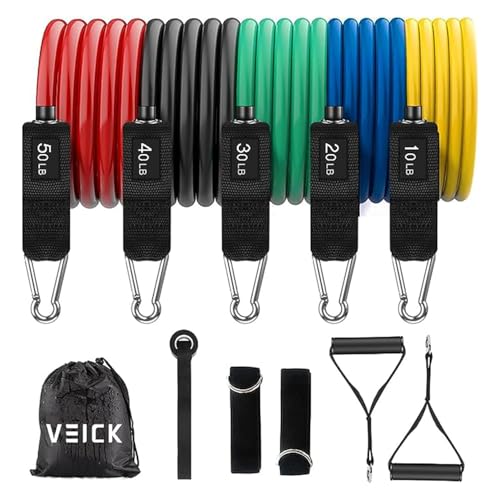
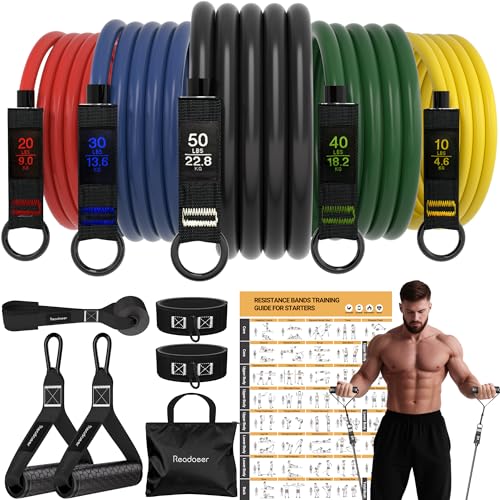
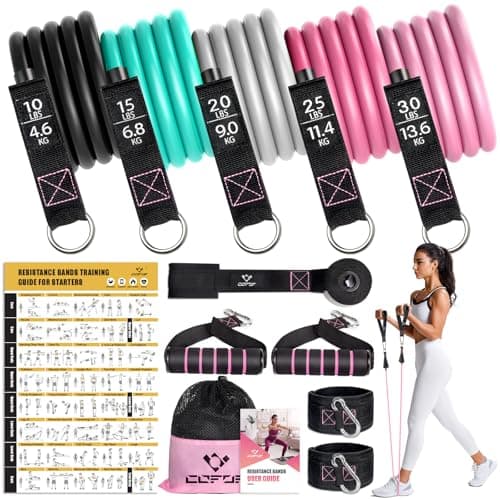
A tube set is the closest a band gets to being a gym. Clip tubes onto a handle, anchor the other end to a door or stand on it, and you have chest presses, rows, overhead presses, curls, triceps pushdowns, lateral raises and lat pull-downs. The two picks here publish a rating per band - 10, 20, 30, 40 and 50 lb - which matters, because stacking two tubes is how you make a jump you can actually plan.
The honest limits: a tube set tops out. Even stacked, the resistance is nominal and the curve is wrong for heavy lower-body work - you cannot meaningfully load a squat with tubes. And tubing degrades from the inside with no warning before it snaps. Rotate your bands, inspect them, and never stretch one towards your face.
Where a tube set is genuinely the right answer: an apartment where weights are not an option, travel, and the first few months of training when any resistance beats none. Our apartment home gym page builds a whole setup around that constraint, and can you build muscle with resistance bands gives the straight answer on how far it goes.
Long loops: the cheapest upgrade in a home gym
If you own a pull-up bar and cannot yet do a pull-up, a set of long loops is the single best few dollars you will spend on this whole site. Hook a loop over the bar, put a knee or a foot in it, and you do full-range reps from day one. Then you move to a thinner band, then to none. That is a real progression, and without it a pull-up has no scaled version.
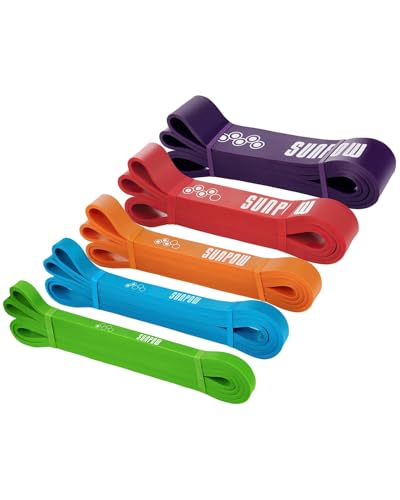
The pick here publishes five bands from a 5-30 lb assist up to 50-145 lb, which covers someone who cannot hang yet through to someone grinding out their eighth rep. Long loops also do band-resisted bench press and squats off a power rack, plus hip and shoulder mobility work.
Safety matters more with these than with any other band. A thick loop under heavy tension stores real energy; if it slips off a bar or a foot it travels. Set it up deliberately, check the anchor, and keep your face out of the line. How to do pull-ups at home walks through the band progression properly.
Fabric hip loops and flat bands: the two specialists
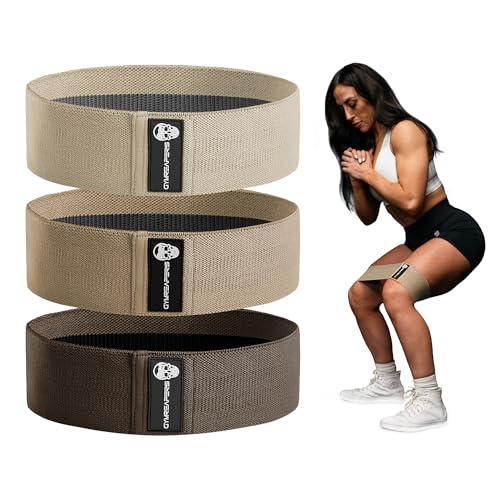
Fabric hip loops solve one annoying problem: latex mini bands roll up your thighs the moment you squat. The fabric pick here has a rubber grip strip through the middle to stop exactly that. They are for glute and hip work - side steps, banded squats, thrusts, step-ups - and they will not replace a tube set for anything above the waist.
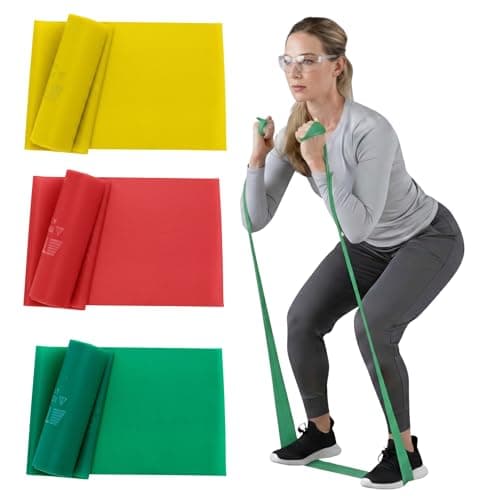
Flat therapy bands are the cheapest useful thing in this category and the most skipped. They are too light to build strength and they are not supposed to build it: they are for shoulder warm-ups, external rotations, mobility and rehab. If you bench or press overhead, a few minutes of flat-band work beforehand is the most reliable shoulder-health habit there is - see how to warm up before lifting. We review the pick at THERABAND resistance band kit.
Latex, allergies and lifespan
Almost every band worth buying is natural latex, including five of the six here, and latex allergy is real. If anyone in the house reacts to latex gloves, read the listing before ordering - the long-loop pick states its latex is 99.9% free of soluble proteins, which helps but is not a guarantee. Fabric hip bands are the one latex-free shape.
On lifespan, set your expectations honestly. Bands are a consumable. Tubing cracks from the inside, loops thin at the contact point, and ultraviolet light and heat accelerate both - so do not store them in a hot garage or a sunny window. Budget on replacing a well-used set every year or two, which is still cheap, and inspect before every session. A band that fails mid-rep is the only injury risk in this entire category.
Who each pick is for
- 5-tube set with handles and a door anchor- you want bands to be your strength training, and you want one box that covers everything. Five stackable tubes, handles and a door anchor, which is what unlocks rows and pull-downs in a room with nothing to hang from. The site’s long-standing no-space strength pick, and it sits in our $300 build for that reason.
- VEICK stackable 10-150 lb set - you want to know what you are adding. Five 48 in tubes rated individually at 10, 20, 30, 40 and 50 lb, stacking to a nominal 150 lb, with ankle straps and a door anchor. The 48 in length is the one catch: short for a tall lifter doing standing overhead work.
- SUNPOW pull-up assist loops, set of 5 - you own a pull-up bar and cannot yet use it, or you want to load a barbell lift with bands. Five levels from a 5-30 lb assist to 50-145 lb. No handles, so it is not a tube-set replacement.
- READAEER 10-150 lb set - the tightest budget, or you are tall. The same five-tube formula with 55 in tubes, the longest here, at the lowest price anything complete reaches. Thinner handles and no published warranty are the trade.
- Gymreapers fabric hip bands, 3 levels - glute and hip work that does not involve a band rolling up your leg. Fabric with a rubber grip strip, three levels so it progresses, from an actual strength-gear brand. Sized by circumference, so check the listing chart.
- THERABAND kit - warm-ups, shoulder health and rehab. Three light flat bands, the ones physical therapists hand out, for the price of a coffee. Deliberately too light to build strength.
What we left off, and why
No band “home gym systems” - the kits with a stand, a board, pulleys and a bar that claim to replace a rack. Some of them are decent machines, but they cost many times what a band set costs and they belong in the same conversation as a cable machine, not a bag of bands. If a pulley is what you want, our compact cable machines page ranks the real thing, starting with a rack pulley that costs about the same.
No pastel neoprene sets in six weights. Priced per pound like jewelry, too light to load a hip hinge, and sold on the picture rather than on a published resistance. One flat band kit plus one real hip band set does the same work honestly.
No figure-eight, ring or ankle-only bands. They are each fine for one narrow exercise and none of them is worth a slot over the four shapes above.
And no sets whose listing publishes no resistance at all. If a band set cannot tell you what the bands are rated at, there is nothing to rank it on.
Where bands fit in a first home gym
Bands are the best first purchase and almost never the best only purchase. A tube set gets someone training this week, in an apartment, for less than a single adjustable dumbbell - and that matters more than any spec on this page, because the habit is the hard part.
What bands cannot do is load a squat or a deadlift heavily, and that is the ceiling. Once you are training consistently, a pair of adjustable dumbbells and a bench will out-work any band set, which is why our beginner equipment page puts them in that order.
The exception, and it is a permanent one: long loops and flat bands stay useful forever. Someone squatting 300 lb still warms their shoulders with a flat band and still uses a loop to add tension to a bench press. Those two never get outgrown. Resistance bands vs. dumbbells is the honest head-to-head, and do I need resistance bands answers the question underneath it.