What Tonal is known for, stated fairly
Tonal gets compared against because it solved a real problem elegantly. Its own homepage describes it as “a complete home gym on your wall” with 250 pounds of digital weight and 340-plus exercises, which means the machine occupies wall space rather than floor space and holds no plates at all. It provides expert coaching and Smart View form feedback, adapts the program as you train, tracks progress for everyone in the household on a single membership, and arrives with professionals who mount and test it for you. A refurbished first-generation line is sold alongside the current Tonal 2.
That is a coherent product and none of the picks below match it as a whole. What follows is not an argument that Tonal is bad. It is an answer to a specific question that a lot of people type into Google: what does the hardware alone cost, if I buy it as hardware?
Two honest notes on the comparison itself. First, we do not quote Tonal’s price. It is not in our live price layer, its product pages would not load for our fetcher on the day this page was written, and we do not type prices in from memory - check tonal.com. Second, we will not translate “digital weight” into pounds of steel. Electromagnetic resistance and a weight stack are measured differently, no published source supports an exchange rate between them, and inventing one would be the easiest way to mislead you on this entire page.
What a mechanical cable station actually replaces
Strip the software out and Tonal’s hardware does three things. Every pick here does at least two of them.
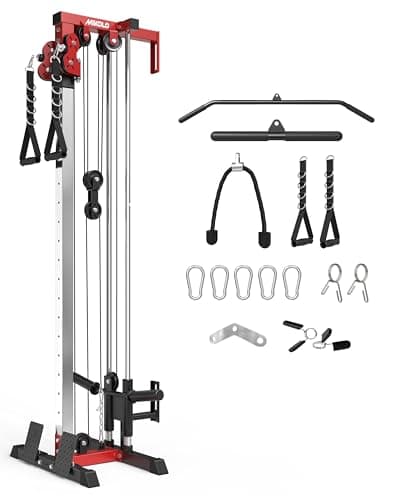
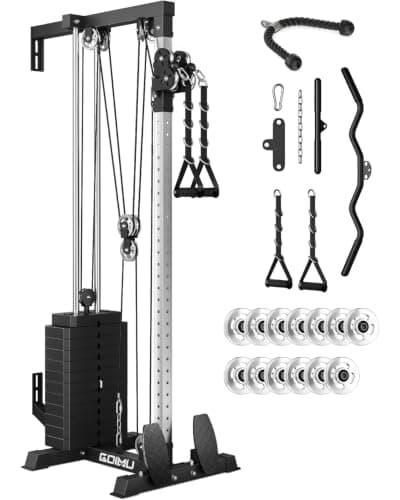
- Adjustable-height cable resistance. This is the core mechanic, and every pick below has it. Pulldowns, rows, presses, flyes, curls, pushdowns, face pulls and cable squats all come from a pulley you can move up and down. The Goimu publishes 33 height positions and the Mikolo wall station 19.
- A footprint that is not floor space.Two picks bolt to a wall, which is Tonal’s signature trick. The Goimu publishes a 24 by 33 inch wall footprint; the Mikolo wall station is 82 inches tall. Both leave the floor clear.
- Fast weight changes. This is where the picks split. A selectorized pin stack changes weight in a second, which is what makes drop sets and supersets practical. A plate-loaded pulley is cheaper and slower - two trips to the weight posts per change. Our functional trainer roundup ranks these machines on exactly that axis.
What none of them replaces: the coaching, the form feedback, the automatic progression and the household tracking. If you want structure, it has to come from a written program. Ours are free: home gym workout plan and progressive overload at home cover the programming a subscription would otherwise hand you.
How the five picks compare
Read the resistance column with one caveat we state on the machines’ own pages: where a pulley runs a 2:1 ratio, the weight you hang is not the weight you feel. The Goimu publishes a 2:1 adapter specifically so you can drop to half-weight for light, high-rep work, which is useful and also means the stack figure and the felt load are two different numbers. We report what each listing publishes and do not re-derive it.
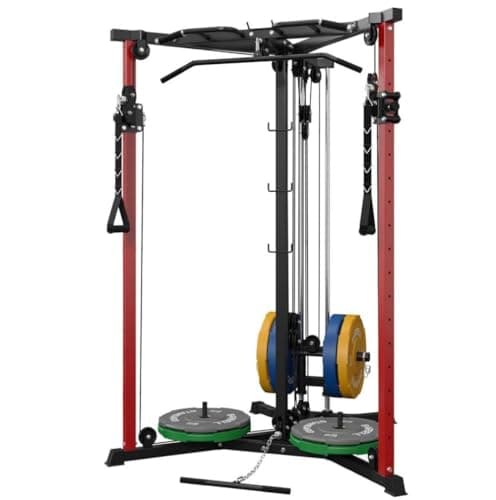
The two wall-mounted picks are the ones that feel most like the thing you were looking at, and both carry the same hard constraint: they bolt into a structural wall. The Goimu listing specifies concrete or masonry, which rules out a lot of stud walls and nearly every rental. If that describes your room, the freestanding crossover is the pick and the trade is about 20 square feet of floor.
What you save, and what it costs you
The arithmetic is the reason this query exists, so here it is without a dollar figure attached to the thing we cannot verify.
You buy once. Every pick here is a single purchase with no membership attached, and the most expensive of them is a three-figure number on our live price layer today - less than the whole barbell gym we cost out on the $1,000 build. There is no recurring line on your card, and if you sell the machine in three years it is a used machine rather than a dead subscription.
You assemble it yourself. Tonal sends professionals to mount and test the unit. These arrive flat-packed: the Marcy is 369 lb of boxes, the Mikolo crossover 154 lb, and the wall-mounted pair need a drill, the right anchors and a stud finder or a masonry bit. That labor is real and it is on you.
You bring your own program. No coach, no form feedback, no adaptive progression, no tracking. For a disciplined trainee this is a non-issue and a free written plan does the job. For someone who needs a session queued up and a voice telling them to go, it is exactly the thing they were paying for - and that person should buy the product that does it rather than talk themselves into hardware.
You may need plates. Two of the five are plate-loaded. If you do not own plates, add that to the cost - our best weight plates page prices the sets, and a plate-loaded machine plus a plate set often lands near a selectorized machine anyway.
Who each pick is for
- Goimu WM2-V4 wall station - the closest thing in shape to what you were looking at. Wall-mounted, dual pulleys over 33 heights, and a 155 lb pin-select stack so weight changes take a second. Needs concrete or masonry, and it is the most expensive wall pick.
- Mikolo wall-mount station - the budget pick, and the best value on this page. The same wall-mounted dual-pulley idea, plate-loaded, with a lat bar, cable bar and tricep rope included. 82 inches tall, so check a basement ceiling first.
- Mikolo cable crossover - you cannot drill the wall, or you rent. A freestanding dual-pulley frame with a pull-up bar across the top, which is one movement no cable can replace. Costs you about 20 square feet of floor permanently.
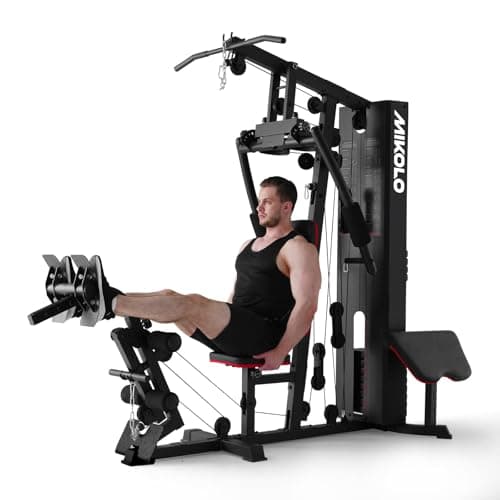
- Mikolo Home Gym Station - you want legs in the same machine. A 152 lb stack feeding high, mid and low pulleys plus a leg press, with a lifetime frame warranty. Needs 80 inches of ceiling before you sit down.
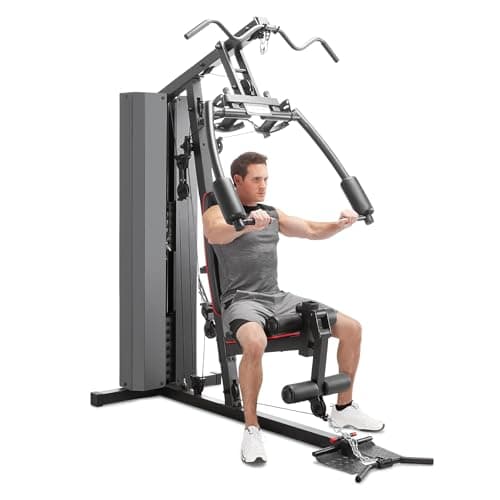
- Marcy MKM-81010 - you already row or pull down more than a 150 lb stack can give you. Two hundred pounds on the pin, press arms for chest and rowing patterns, and 85 inches of height that a low basement will rule out.
What this page leaves off, and why
No other digital trainers. The obvious cross-shops here are the other subscription-based wall and tower systems, and we rank none of them: they are not sold through any network we can verify, we cannot resolve a live price for them, and a page that ranks products it cannot check is the thing this site exists not to be.
No buy link for Tonal, anywhere. We do not monetize a product we cannot verify, and we are not going to put an affiliate link on the thing this page is nominally competing with.
No dollar comparison. It would be the easiest paragraph on the page to write and the least defensible: we could not load Tonal’s pricing pages, so the saving is yours to compute from the live prices here and whatever tonal.com quotes you.
And no resistance conversion. If you came here wanting to know whether 155 lb of steel “equals” 250 lb of digital weight, the honest answer is that nobody publishes a basis for that comparison. What we can tell you is that a 155 lb pin-select stack is a serious load for cable work, that two of these machines publish 200 lb and 400 lb figures, and that the ceiling most home trainees hit first is the program rather than the machine.
For the barbell answer to the same budget - which is what we would actually recommend to a beginner reading this - the $1,000 build puts a rack, a bar, plates and a bench in a room for a single one-time spend, and weight machines vs. free weights at home argues it out properly.